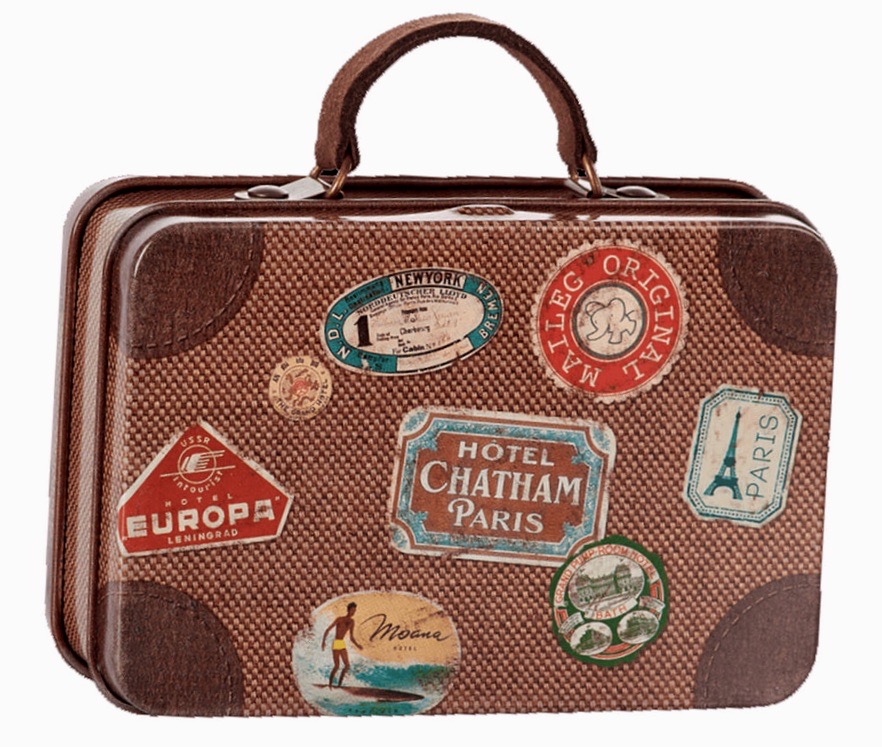
After the Missus and I reached our rapprochement with Paris, we thought the time might be right for a ramble in the French countryside. And so we embarked upon a Folie des Grandeurs Tour of the great châteaux of the Loire Valley.
Once we had painstakingly secured a rental car at the eternally chaotic Charles de Gaulle Airport, we drove south to Amboise and checked into the entirely charming Château de Pray.
(A word here about the Missus, who was a Hotel Booking Goddess way before the Internet made travel planning a piece of cake. She consistently found the most amazing places for us to stay throughout our many journeys. The Château de Pray was just one more among them.)
The Missus:
It wasn’t easy finding the ideal hotel prior to the internet. You were basically going by single-paragraph descriptions in guidebooks with no guest reviews or hotel websites with photos. I always bought at least three guidebooks for every country in Europe so I could compare their suggestions. All three suggested the best place to stay in the Loire Valley was the centrally located Tours, with loads of inexpensive accommodations and restaurants catering to tourists, no pun intended. A town full of tourists? I scratched that one right away.
Instead, as I researched all the châteaus, I read up on the surrounding villages to see which was considered the most picturesque. Amboise sounded perfect and was also in a convenient location for all our sightseeing. As we were traveling off-season, I chose the 4-star Château de Pray, as they offered great rates for staying in such a beautiful, historic building.

Perfectly located on the south bank of the Loire, the castle has watched over the valley for centuries and holds the secrets of some of the finest chapters in French history. A stone’s throw from Amboise, the castle, a 4-star hotel and Michelin starred restaurant, is nestled in a wooded 5 acre park home to traditional French gardens, patios, a market garden and heated pool.
Inside, the cosy lounges, refined rooms, gastronomic restaurant… invite you to enjoy a charming stay next to the Loire.
The Missus:
I’m always nervous checking into a new hotel, hoping it lives up to its glowing description.
The Château de Pray was above and beyond my expectations! As seen in the photo above, the magnificent manor house, grounds and gardens were a big Wow, and we had high hopes for our accommodations. On checking in, a charming desk clerk insisted on escorting us to our room, passing a life-size suit of armor on the way. She opened the door and we entered a huge room decorated with period furniture, fabrics and antiques, with an elegant desk positioned by a window overlooking the gardens. Our complimentary room service breakfast would be served there, she explained. She smiled and left us to unpack as we stood stunned. We generally do not stay in such luxurious places, and certainly not for the low nightly rate I had gotten.
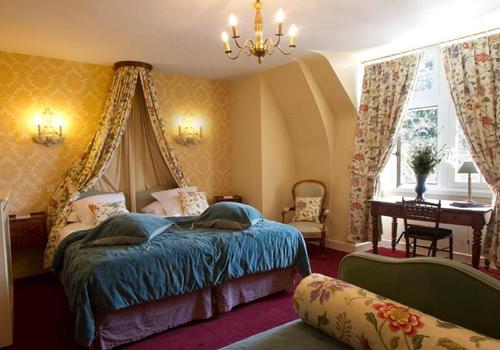
I opened the door to the bathroom, and though lovely, it contained just a small tub. As John never takes baths and our reservation said room with shower, I VERY reluctantly returned to the front desk to ask if there was a similar room with shower. I felt like a total ingrate and I really loved our room and didn’t want to change it. The desk clerk smiled once more saying, “Madame, you have two bathrooms.” Stunned, I muttered “Merci,” and “Je suis désolé” (I’m sorry) and wandered back upstairs. Sure enough, a door we thought led to a closet contained a huge second bathroom with shower. I never wanted to leave.
Amboise, with its central location, turned out to be the ideal launching pad for our château crawl.

Our first stop – no surprise – was Château d’Amboise,

The chateau was built on the foundations of an old fortress, its position perched high on a promontory over looking the Loire, offering a solid defence against any intruders. The chateau was seized by Charles VII in the mid 1400’s after its owner, Louise d’Amboise was involved in a plot against the monarchy. He was later to be pardoned but the chateau remained in the hands of the king.
In 1429 Joan of Arc passed through the town on her way to defeat the English at Orleans.
In the late fifteenth century, following his marriage to Anne of Brittany at Langeais, Charles VIII decided to turn the old castle of his childhood days into a luxurious palace but not long after the work was completed, Charles met his death here – not in the defence of his kingdom – but by banging his head on one of the many low doorways!
Ouch.
As we discovered in our foray through the French countryside, the Loire Valley contains two generations of châteaux: Medieval fortresses designed to ward off rivals, and Renaissance castles designed to show up rivals.
Château Royal de Blois, as it happens, provides a combination of both, as Visit European Castles details.
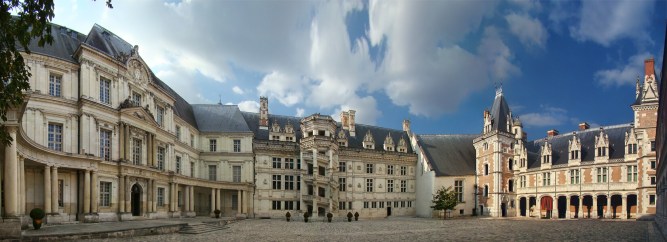
Chateau Royal de Blois is a former Royal castle in Blois, built between the 13th and the 17th century. This unique castle in the Loire valley consists of four wings, each in their own architecture style. There are remains of the 13th-century Medieval fortress, a Louis XII Gothic-style wing, a Francis I Renaissance-style wing, and the Gaston of Orléan Classical-style wing.
At the castle you can visit the Royal apartments and a Fine Arts Museum with works by Ingres, Rubens, Boucher and more. All this is set in architectural splendor.
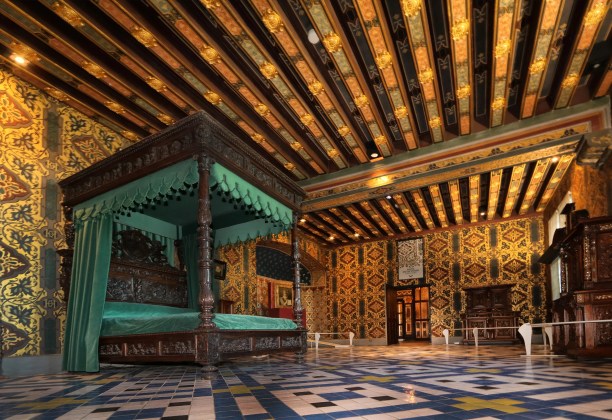
A taste of the royal apartments . . .
The Missus:
This particular room was at one point a rather un-royal apartment, as in 1588 Catherine de Medici, former Queen and wife of King Henri II, was exiled to Blois by her son, King Henri III. She would die in this bed one year later at age 69. Prior to that was a lifetime of marital, political and power-grabbing drama. The battle with her husband’s beloved mistress Diane de Poitiers played out in many of the châteaux we visited. Stay tuned for some amazing historic shenanigans.
And a smattering of the royal artwork . . .
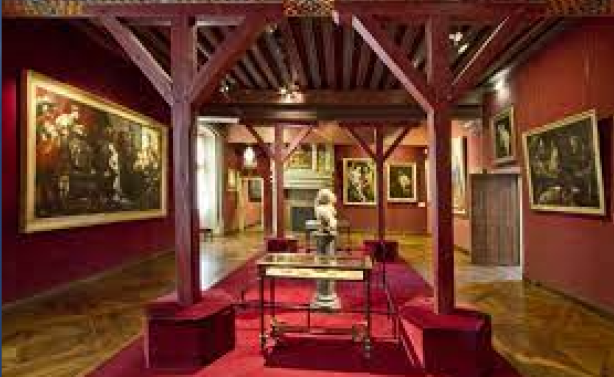
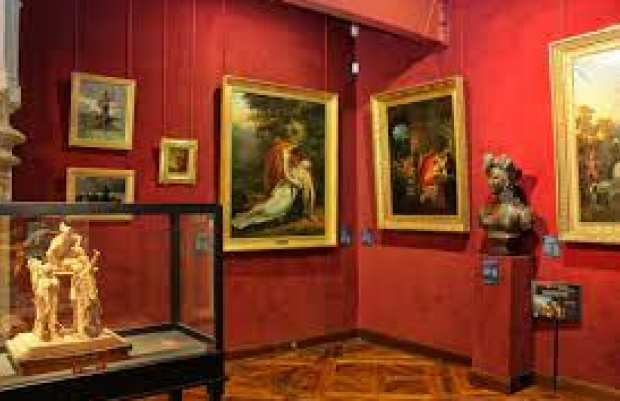
Those royals were flush, yeah?
Not far from Blois sits Château de Chambord, the largest castle in the Loire Valley and another twofer of medieval and Renaissance design.
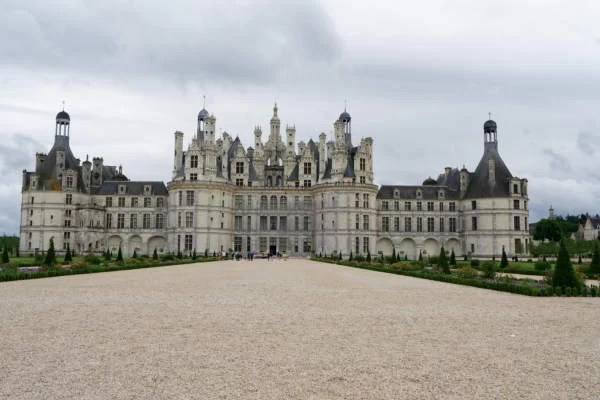
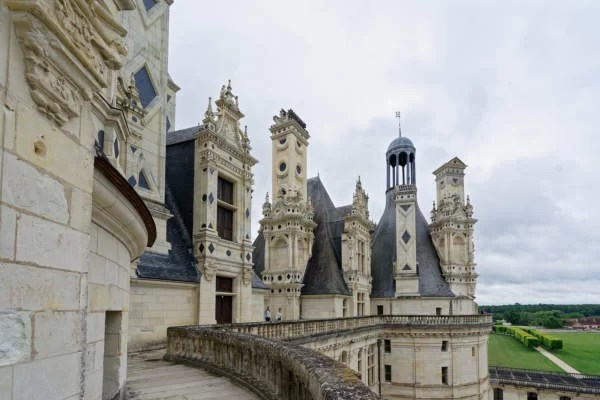
The Château de Chambord is one of the most widely recognised of the Loire Chateau with its distinctive French Renaissance architecture which, in the 16th century, blended French medieval design with classical Renaissance structures. The chateau which was constructed by King Francis 1 of France as a hunting lodge is surrounded by 13,000 acres of wooded park which is a game reserve. The chateau is most noted for its extraordinary roofscape and open double-spiral staircase [inspired by Leonardo Da Vinci!].
The roofscape . . .
The staircase . . .
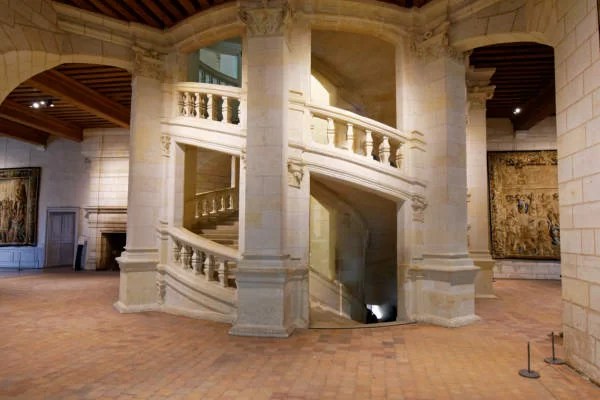
Superb!
Also nearby is Le Château de Cheverny, which is home to lots of history.
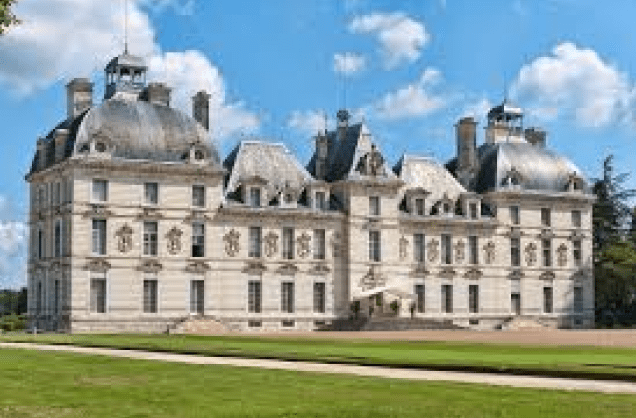
The domain of Cheverny belonged to the Hurault family for more than six centuries. Financiers and officers in the service of several kings of France, their château is one of the largest in the Loire Valley and is still inhabited by the descendants of the Huraults, the Marquis and Marchionesse of Vibraye.
Of the first château, built in the sixteenth century, only a few signs remain, visible in the common areas. In the middle of the sixteenth century the title became the property of Diane de Poitiers, mistress of King Henry II, who sold the château and grounds to the son of the previous owner and his wife.
Their son, Henri Hurault, and his wife Marguerite Gaillard of La Morinière, built the current château between 1624 and 1630 . . . Élisabeth, Marquise de Montglas, daughter of Henri and Margérite completed the interior decoration around 1650 with the help of the painter Jean Mosnier.
Cheverny is also heralded as the most magnificently furnished château of the Loire.

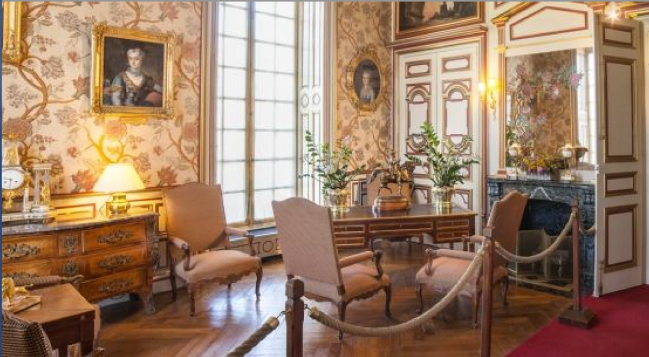
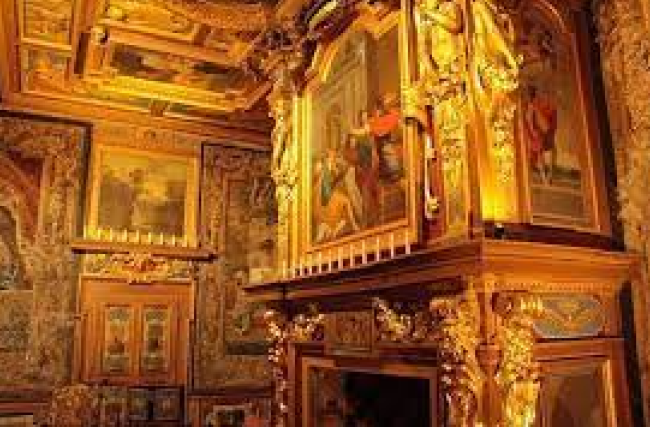
Lots more magnificently furnished rooms here.
Given that the Missus is a planner so gifted she could have organized the D-Day invasion (except with more stylish uniforms), it’s no surprise that our château crawl was a model of geographic efficiency. Our second castle cluster began with the Gothic and Renaissance Château Chenonceau, here described by Visit European Castles.

The castle was built in 1513 and houses many tapestries and an impressive art collection including Old Masters. After the Palace of Versailles, it’s the most visited castle in France.
Chenonceau is a castle built by women, many famous French women have left their mark on this castle including: Katherine Briçonnet (the first owner), several Queens and Royal mistresses, and heiress Marguerite Pelouze. During the First World War the castle was a military hospital. The Menier family, who have lived here since 1913, helped to smuggle out people escaped the Nazi tyranny.
The castle has several gardens, including a Renaissance garden, an English-style garden, a maze, and a flower garden.
This pinkies-up tour comes courtesy of History Tea Time with Lindsay Holiday.
One of the aforementioned royal mistresses was – wait for it – Diane de Poitiers, who “[helped] to transform Chenonceau from a simple country house to the jewel of the Renaissance that it is today.”
The Missus:
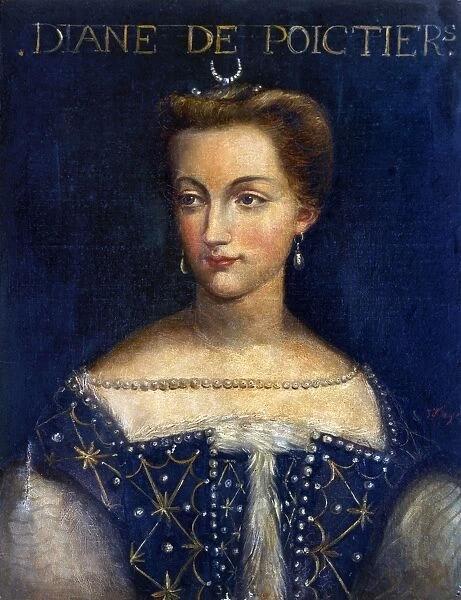
In case you have no time for the wonderful “pinkies-up-tour,” here are the highlights: When King Henri II inherited Chenonceau, his wife, Catherine de Medici was delighted as she had always wished to live there. That was not to be (not yet . . .) when Henri instead gave the sumptuous castle to his beloved mistress Diane de Poitiers, interestingly, 23 years his senior. (They began their lifelong affair when he was just 15 and she 38.)
And get a load of this from a Royal Rivalries travel blog:
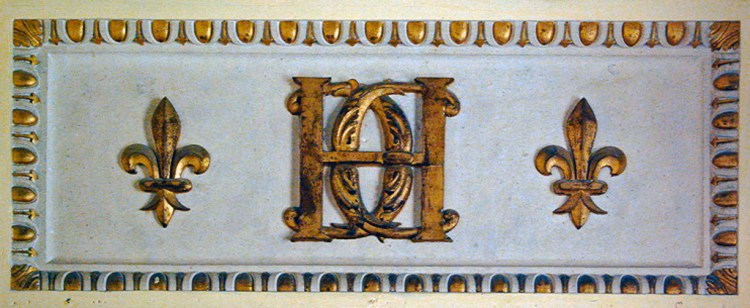
As all great kings do, Henri II created an insignia in order to mark his contributions to France and display his omnipresence over his realm. At first glance, the symbol appears to be two interwoven C’s overlapping to form an H—a notation of the reign of King Henri II and his queen, Catherine. However, Henri II cheekily encrypted a sort of double sens in his mark: it also can be interpreted as two interlaced D’s with a line through the middle forming an H. The King, who openly attested his love to his “favorite,” even went so far as to sign documents and letters under the name “HenriDiane,” seeing himself and his mistress as one being.
Ah, but as soon as Henri dies in 1559, Catherine finally got her wish when she took over as regent on behalf of their 10-year-old son, Francis II. From the Lock-Keeper Blog:
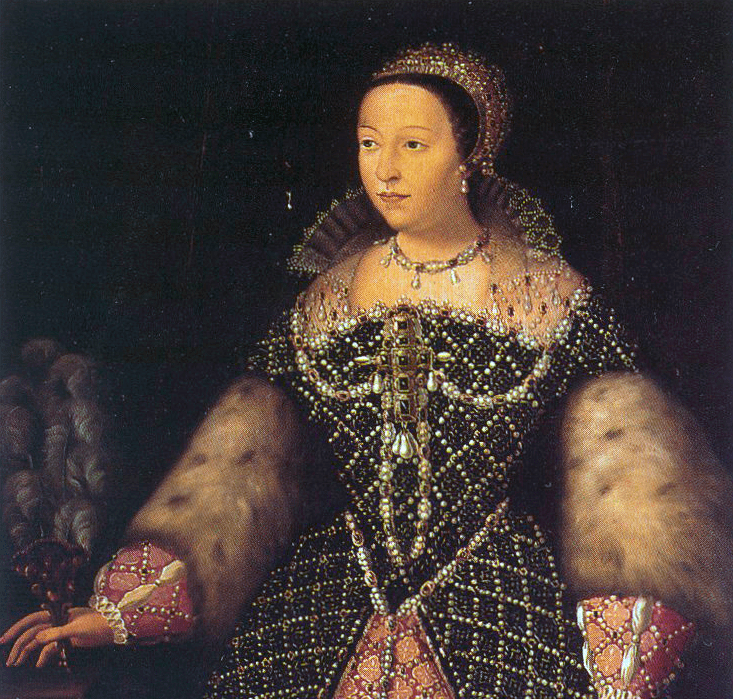
Catherine found herself with an increasing amount of political power when her husband died, and she used it to strike against Diane de Poitiers, who had caused her much jealousy and embarrassment during her marriage. Catherine forced Diane to exchange the Château de Chenonceau for another Loire valley residence, Château de Chaumont, and expelled Diane from court.
From Chenonceau we were off to the Castle of Loches, “a favorite retreat of Charles VII of France who gave it to his mistress, Agnès Sorel, as her residence.” (Charles VII, for those of you keeping score at home, was the grandfather of Charles the Headbanger.)
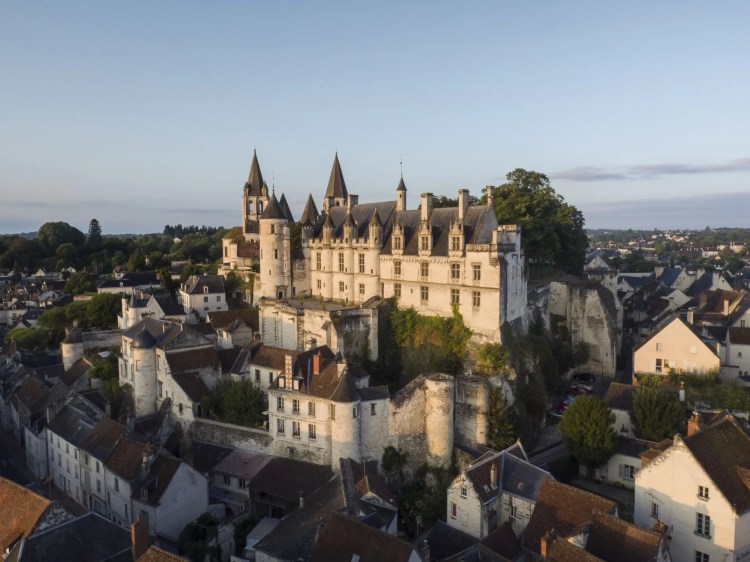
The Château of Loches is located in the Loire Valley in France. It was constructed in the 9th century, 500 meters above the Indre River, and dominates the town of Loches. The château was designed and occupied by Henry II of England and his son, Richard the Lionheart during the 12th century. The castle withstood the assaults by the French king Philip II in their wars for control of France. It was eventually upgraded into a huge military fortress. Later kings enlarged the building in the Renaissance style converting it from a fort to a hunting lodge.
Later still, it was converted into a state prison. Nowadays, though, it looks pretty good.
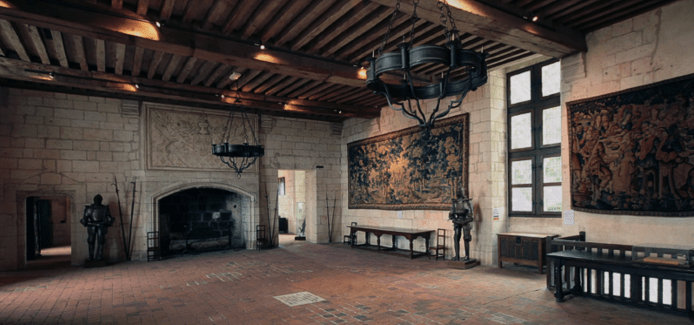
We were in the Loire Valley during an unusually warm October and had all the wrong clothes for it. I remember standing outside Loches sporting a raincoat, a sweater, and a sincere desire for a totally different wardrobe.
No chance of that, though, so we wandered back to Amboise to prepare for our final castle cluster of in-your-face Renaissance châteaux.
First stop: The Château de Villandry, the last of the great Loire Valley châteaux to be built during the Renaissance.
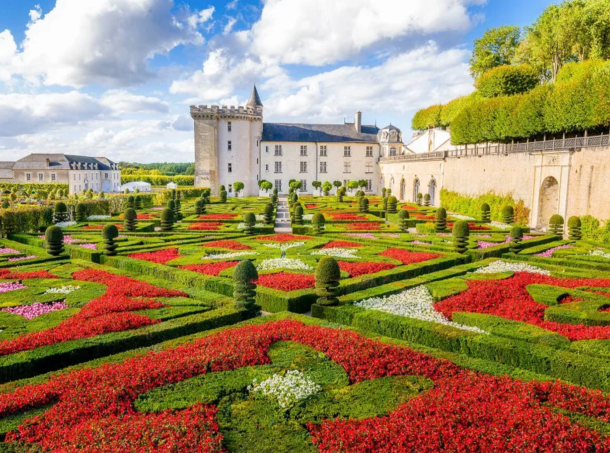
The Château de Villandry is a magnificent structure that has evolved over the centuries amidst spectacular greenery. It was built starting in 1532 under the impetus of Jean Le Breton, finance minister of François I. Based on the experience he had acquired in Chambord, the monarch decided to have erected a sumptuous monument characterized by distinctive sobriety and dignified elegance. As for Le Breton, he decided to privilege a medieval heritage by conserving the massive keep that still proudly overlooks the three 16th-century main buildings with their French Renaissance style. From atop the tower terrace, visitors will enjoy a superb panoramic view, appreciate the explosive colors of the gardens and try to figure out the message drawn on the plants of the “gardens of love”.
The Villandry gardens are totally amazing and amazingly varied, as this tour nicely illustrates.
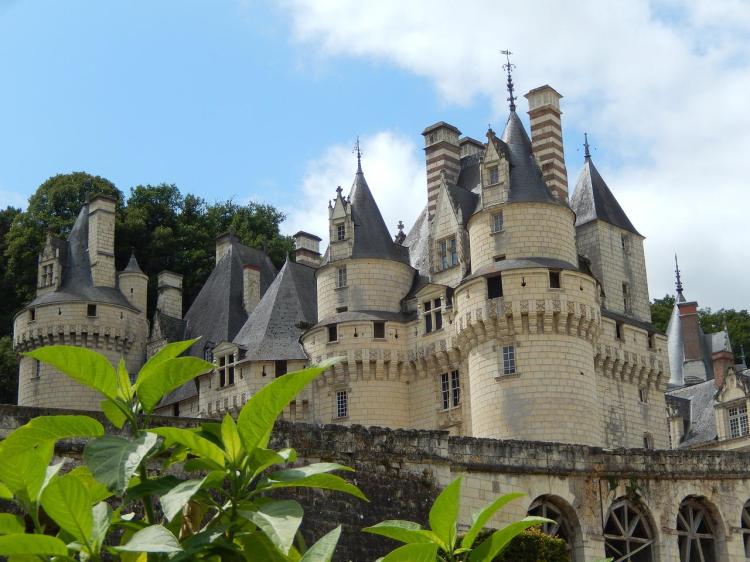
We then motored to Ussé just in time for lunch at a charming café in the shadow of the Sleeping Beauty Castle, described this way in Visit European Castles.

The Chateau d’Ussé is located next to the Chinon forest and overlooks the Indre valley. The castle is designed partly in a mixture of Gothic and Renaissance style. The castle was one of the castles that inspired Charles Perrault’s “Sleeping Beauty” castle. It has been a family home in the last two centuries for te Dukes of Blacas.
The castle offers richly decorated rooms with 16th and 17th century tapestries, paintings of the Great Masters and impressive architectural features. Surrounding the castle are formal French gardens designed by Le Nôtre, who also designed the gardens of Versailles.



The final stop on our château crawl turned out to be our favorite: Château d’Azay-le-Rideau.
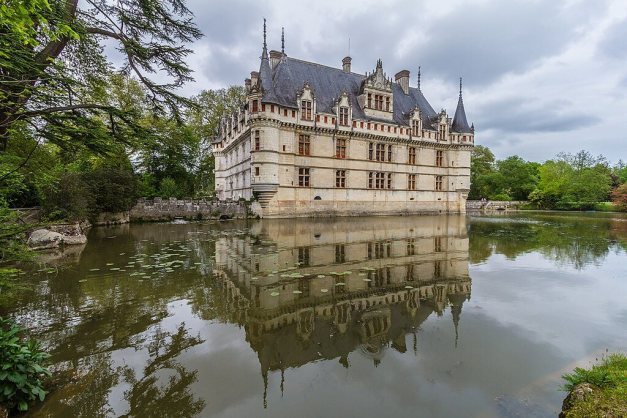
Set on an island in the Indre River stands the Azay-le-Rideau castle. The castle that was built in 1518 by King Francis I is one of the finest early French Renaissance castles in the country. The castle is well known for its water mirror, which is a beautiful sight.
The interiors are influenced by the Italian Renaissance style and many rooms display 16th- and 17th-century Flemish tapestries. Surrounding the castle is an English landscape-style garden.
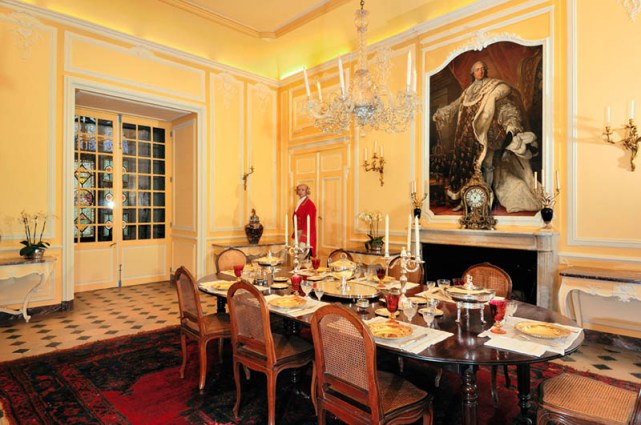
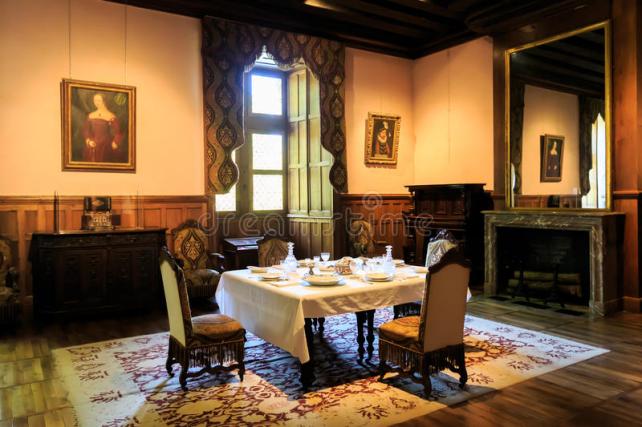
Our living room . . .

Our breakfast room . . .
Our billiards room . . .
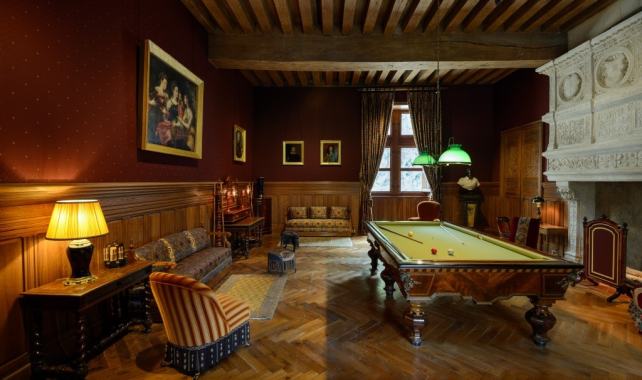
The Missus and I could have been truly happy there.
But in real life, we had to go back to Paris. On the way we stopped by Chartres Cathedral, which is totally amazing, with legendary stained glass windows.
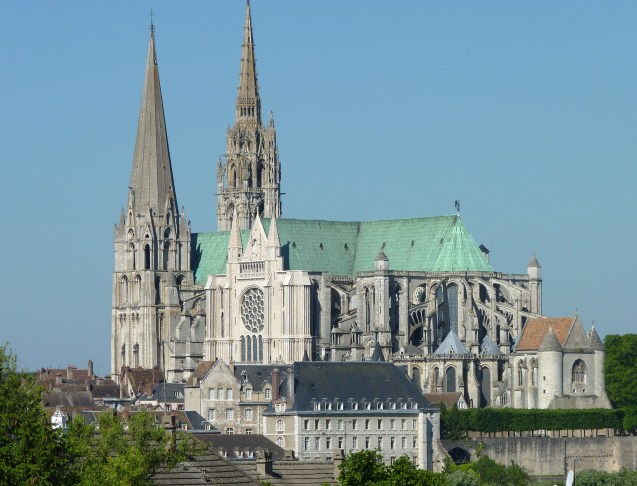
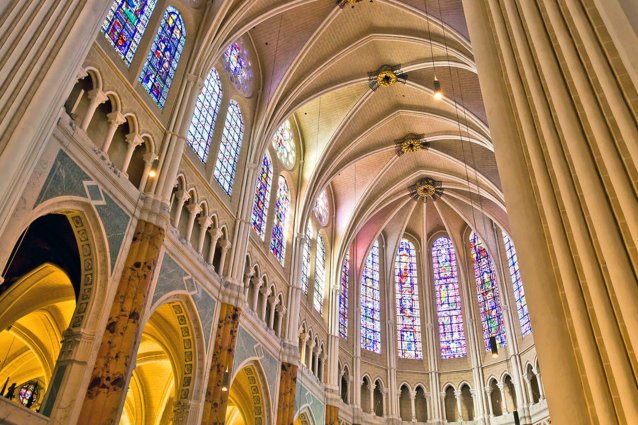
We took what was supposed to be a tour of those windows, but it turned out to be a tour of a single window, and not all that interesting a one either.
Regardless, we then had to sprint back to Paris to return our rental car in time to avoid an extra day’s penalty, as I recounted some years later.
We started in the Loire Valley, stopped off in Chartres to check out the Cathedral, then booked it to Paris, got there right around rush hour, and soon hit the mother of all rotaries at Place de la Concorde.

Immédiatement I decided to go Full Boston by busting into the Darwinian maze of traffic (hey – that’s why you take the collision on a rental car, right?), thereby setting off a cacophony of car horns that was très formidable.
Tout suite I was barreling up the Champs-Élysées toward the Arc de Triomphe (the mother-in-law of all rotaries).

Flush with collision insurance, I adopted the same approach as before, muscling my way into the automotive scrum to the audible displeasure of les habitants.
Quel dommage.
And then – miraculeusement – we were at the car rental place with five minutes to spare.
I never drove in Paris again.
The Missus:
I can’t begin to tell you how proud I was of John for driving like all the other French maniacs in the most absurd of all roundabouts, which clearly did not live up to their designation as “an intersection with a circular configuration that safely and efficiently moves traffic.” I was checking my watch the whole time, because if we were even 5 minutes late returning the car, we would be charged for another day – not an insignificant sum. Did I feel our lives were at risk to save $50? Mais non! To paraphrase the movie “Rain Man”: Of course John is an excellent driver.
 Travels With The Missus
One thought on “A Jolie Château Crawl Through the Loire Valley”