Not long after our Loire Valley Château Crawl, the Missus and I thought we should once again venture beyond Paris into the French countryside. One early trip took us to Aix-en-Provence in the south of France.

After we had settled into the beautiful Hotel Negrocoste, another excellent find by the Hotel Booking Goddess, we wandered through Vieil Aix, a charming warren of antique buildings and narrow side streets dotted with café-lined public squares.

Here’s a nice tour of the Vieille Ville, if you’re so inclined.
We also visited the nearby Atelier de Cézanne. (The Office de Tourisme kindly provides this brief tour.)
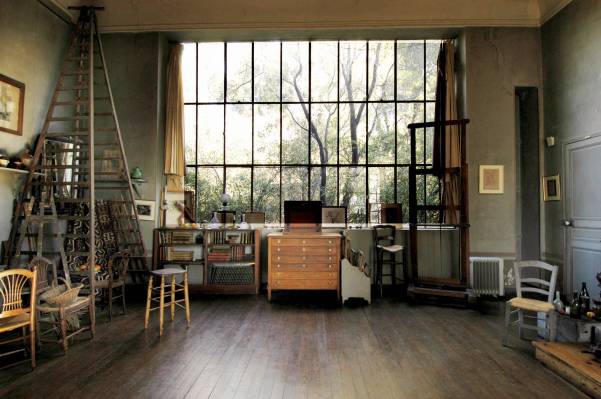
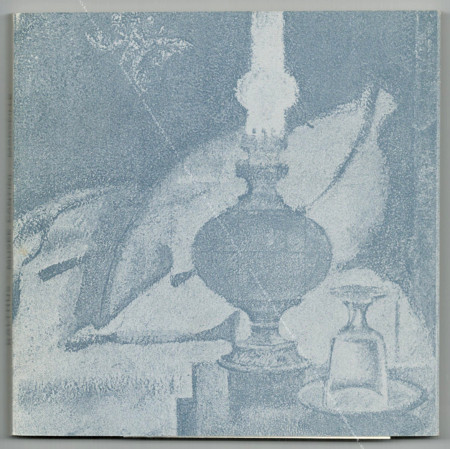
Paul Cézanne (1839-1906) is an impressionist painter who made Provence and the surroundings of Aix his favorite source of inspiration. In 1901, he bought a piece of land on the Lauves hill to establish his studio, close to the Verdon Canal. The ground floor is fitted out for its daily life, while the first floor forms a real workshop, lit by large windows to the south and by a canopy to the north. It is here that he paints his last paintings: «Les Grandes Baigneuses», «Le portrait du jardinier Vallier», or «Vues du jardin». On rainy or cold days, unable to go out to look for a model, he used objects cluttering his workshop as models for his still lifes.
Cézanne might have spent only five years in that atelier, but it was still something special to be there ourselves.
Venturing farther afield, we drove on a rainy day to Avignon, home of the fourteenth-century Roman Catholic papacy-in-exile, as summarized by the Encyclopedia Britannica.
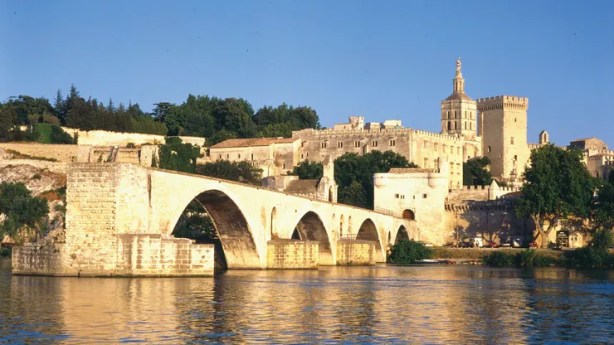
Avignon papacy, Roman Catholic papacy during the period 1309–77, when the popes resided at Avignon, France. Elected pope through the machinations of Philip IV of France, Clement V moved the papal capital to Avignon four years later primarily for political reasons. All seven popes of this period were French, as were most of the cardinals, which aroused English and German animosity. During the Avignon papacy the cardinals began to play a stronger role in church government, church and clergy were reformed, missionary efforts were expanded, and popes tried to settle royal rivalries and establish peace. The heavy French influence damaged the prestige of the papacy, however, and in 1377 Gregory XI returned to Rome.
Undaunted, the French cardinals continued to play dress-up in Avignon for the next four decades, but their big dance was pretty much over.
With that backstory, we had to visit the Palais des Papes.
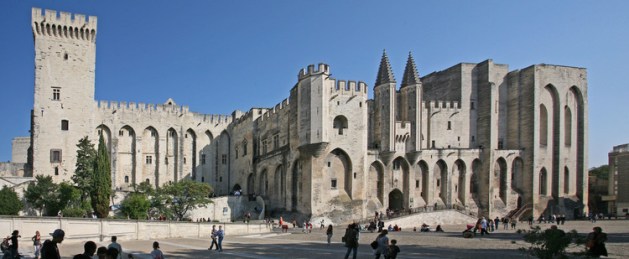
Listed as a World Heritage Site by Unesco, the Popes’ Palace is one of the 10 most visited monuments in France with 650,000 visitors per year. A true symbol of the influence of Western Christianity in the 14th century, this 15,000m2 masterpiece of a monument is the largest medieval fortress and biggest gothic palace of Europe.
Built in less then 20 years starting in 1335, the Popes’ Palace is the amalgamation of two palaces built by two popes: Benedict XII, who built the Old Palace to the east and north, and his successor Clement VI who built the New Palace to the south and west.
In the 14th century, the Popes’ Palace was occupied by 7 popes and 2 popes of the Papal Schism before the return of the papacy to Rome.
Here’s some of the inside scoop . . .
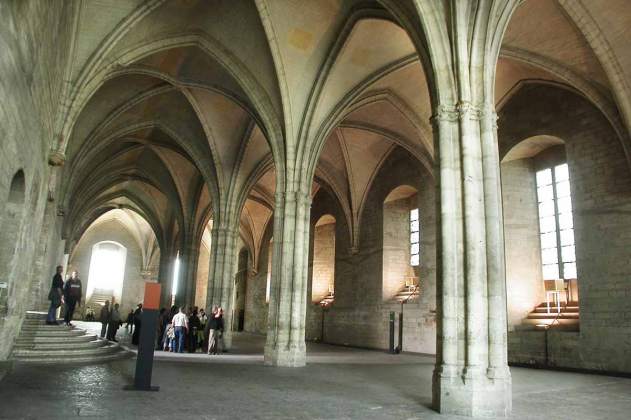
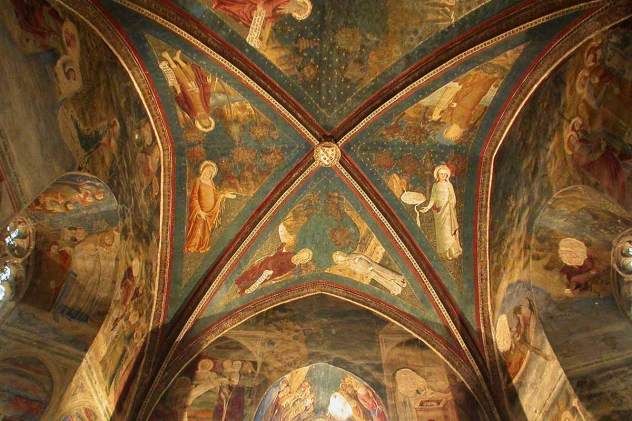
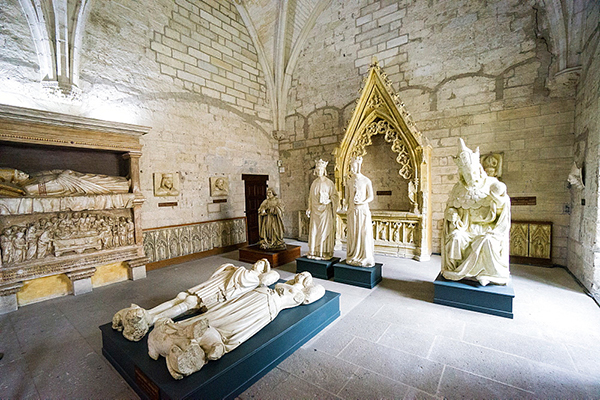
Then again, what we most cared about was walking onto Le Pont d’Avignon and singing, which was the highlight of our afternoon there. (Forget that I knew only the first two lines of the song.)
The lowlight of our afternoon in Avignon was taking a baguette and some brie back to our car in a garage that had just been painted to have a fume-infused pique-nique dans voiture.
Quel fromage!
From Aix-en-Provence we also ventured to Marseille, also on a rainy day. As we sat in a café in the Old Port, the proprietor shared his approach for couples in the rain: “Always have one big umbrella that you can share, so you are closer on a dreary day.”
The Missus and I have had a Marseille Umbrella ever since. Here’s a sunny Marseille walkabout, for those of you keeping score at home.
Among Marseilles’ many cultural attractions, we especially appreciated the Palais Longchamp , which was “built to bring water to the city and is a true architectural achievement.”
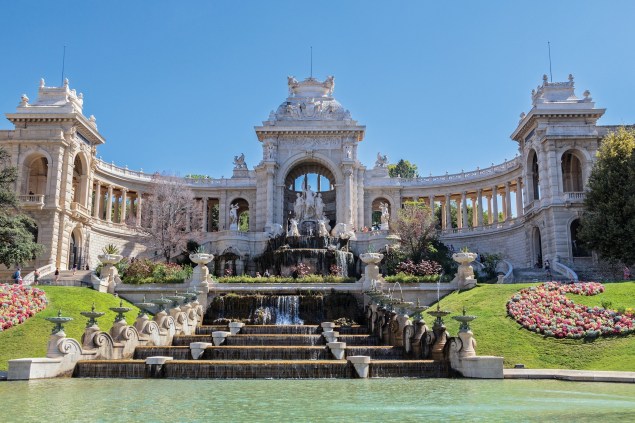
The architecture was certainly impressive, but it was the museums at Palais Longchamp that we most wanted to see.
On the left-wing, the Museum of Fine Arts displays 17th and 18th century paintings, drawings, and sculptures. Founded in 1801, it is the oldest museum in Marseille.
On the right-wing, the Natural History Museum gathers several collections of curiosity displays from the 18th century given by the city and the state. It was rewarded with the title of first-class museum in 1967 together with nine other major museums, thanks to its exhibitions.
Representative samples . . .
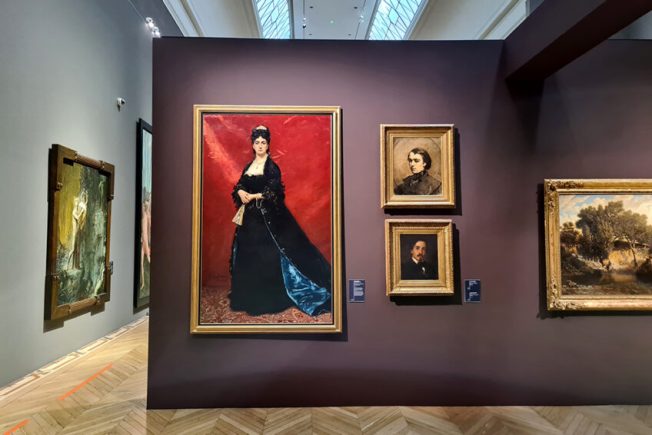
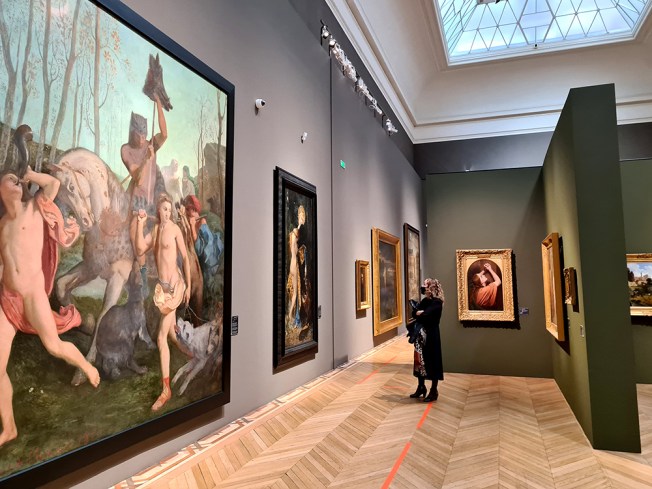

We then vaulted into the 20th century at Musée Cantini, which hosts a collection that includes works by Henri Matisse, Pablo Picasso, Jean Arp, Alberto Giacometti, Balthus, and Francis Bacon.
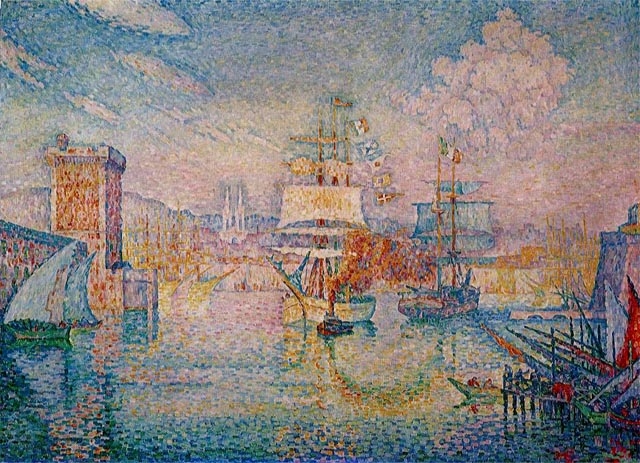
Two views of the Port of Marseille, first from Paul Signac, then from Oskar Kokoschka.

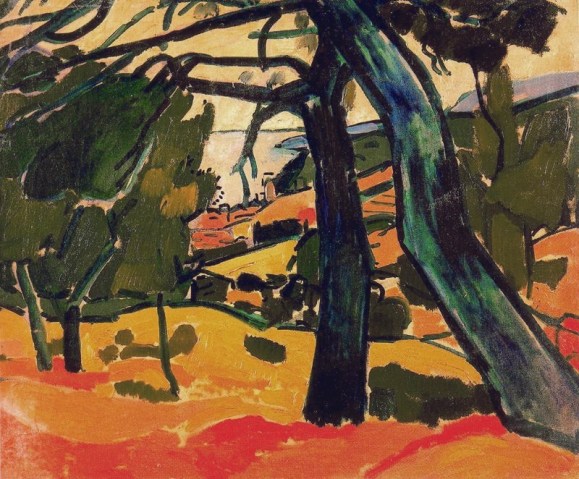
Also part of the Musée Cantini collection – André Derain’s Pinède à Cassis . . .
. . . and Librarie Toebeart by Balthus.
On that trip, Aix marked the spot. It was the French Riviera, however, that kept pulling us back over the next decade.
• • • • • • •
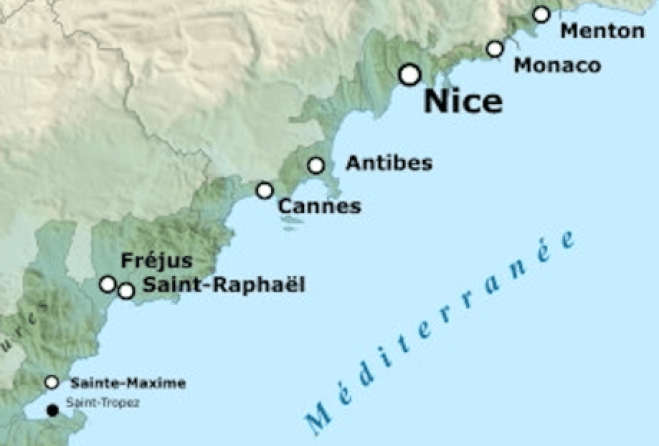
Given the passage of time, the first two trips the Missus and I took to the Côte d’Azur have kind of blended together (the next two I extensively chronicled here and here), but I’ll try to sort out the earlier ones as best I can.
Our first trip began with a stay in Antibes at L’Auberge Provençale, which apparently is no longer in operation according to Fodor’s Travel, but at the time was described this way: “Overlooking the largest square in Antibes’s Old Town, this onetime abbey now has seven rooms complete with exposed beams, canopy beds, and lovely antique furniture.”
All true of the room we stayed in at the time.
From there we ventured out on the town, which is nicely captured in this video.
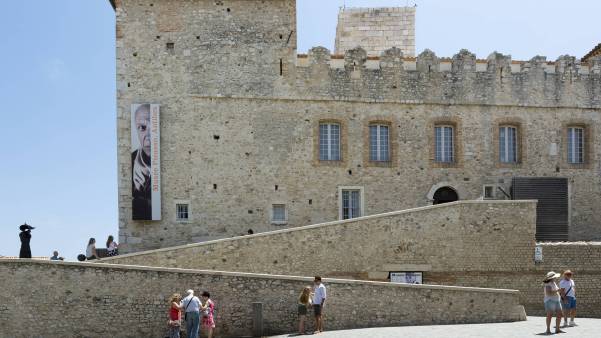
Two highlights of our time in Antibes: First, the Picasso Museum in the old Grimaldi Castle . . .
The birth of the Picasso museum
In 1923, Romuald Dor de la Souchère began his archaeological field work in Antibes, and in 1924, he founded the society “Amis du musée d’Antibes”, whose goal was to establish a History and Archaeology Museum, and worked to make sure that the Past of the region gained some renown.
In 1925, the castle was bought by the city of Antibes and became the Grimaldi Museum, with as its first curator, Romuald Dor de la Souchère himself. It became a historical monument on August 28th, 1928.
In 1946, Dor de la Souchère offered Picasso part of the castle as a studio.
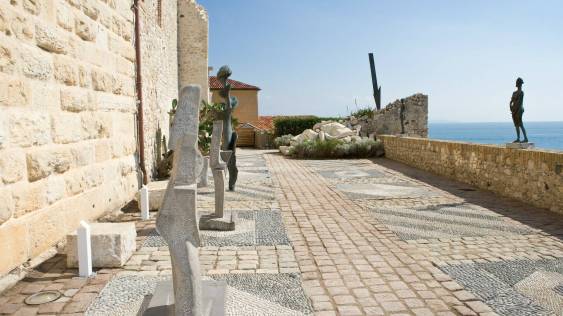
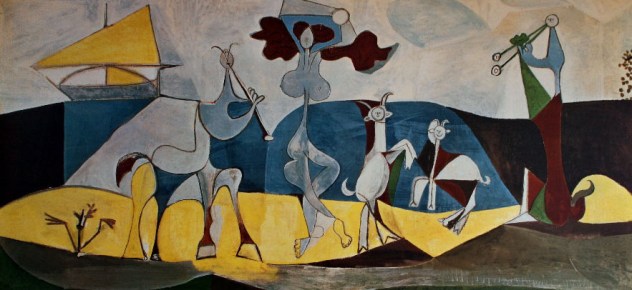
Picasso, very enthusiastic, worked at the castle for two months straight, and made a great many works, drawings and paintings. After his stay, he left to the city no fewer than 23 paintings and 44 drawings. And among them, the famous:La joie de vivre, Satyre, Faune et centaure au trident, Le gobeur d’oursins, La femme aux oursins, Nature morte à la chouette et aux trois oursins, la Chèvre…
On September, 7th, 1948, Picasso gave to the collection 78 ceramics that he had made at the at the Madoura studio in Vallauris.
Eighteen years later, “the Grimaldi Castle officially became the Picasso Museum, the first ever museum dedicated to the artist. And finally, in 1991, Jaqueline Picasso’s gift in kind enabled the enhancement of the Picasso collections.”
Here’s how it looks nowadays.
Our other highlight in Antibes was a spectacular dinner at Oscars, a restaurant we would revisit during a subsequent trip to the Riviera, even though we had to drive an hour to get there.
We also ventured west of Antibes a couple of times, with decidedly mixed results. There was, for instance, our photo finish with the Mistral in St. Tropez, a day so cold the first thing we did upon arrival was find a shop where the Missus could buy the biggest shawl they stocked, which allowed us to wander the narrow streets of the town for a good half hour before heading back to Antibes.
On a much sunnier day, the Missus and I took a ride to Cannes, where we sat along The Croisette (“Temple of idleness, parties and shopping“) and drank the most expensive cups of coffee we’d ever encountered. But at least it was warm.
• • • • • • •
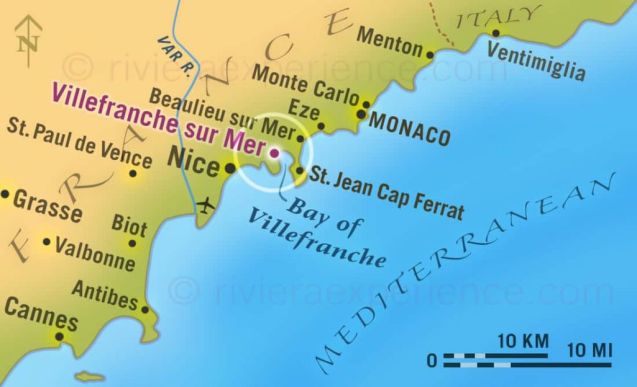
From Antibes we decamped to St. Paul de Vence, where we stayed at a hotel about which I remember two things only: 1) The ferkacte garage spots were so narrow, I mangled the side-view mirror of our rental car (always take the collision, right?), and 2) The owner proclaimed that breakfast at his hotel featured “the best croissants in all of France.”
He was mistaken.
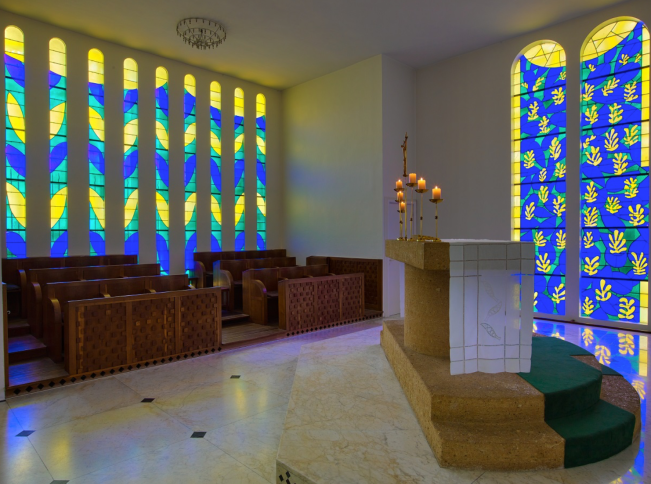
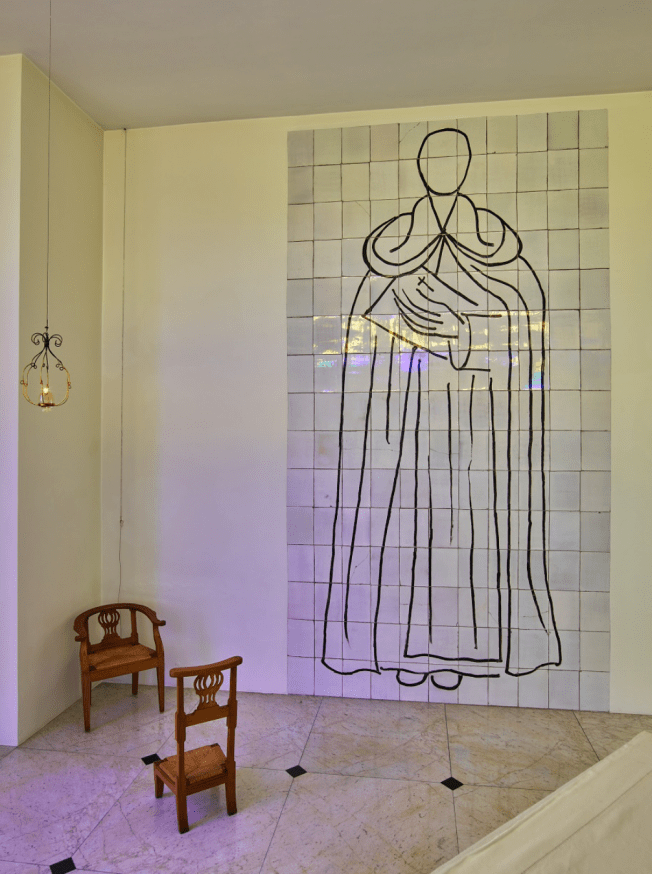
But St. Paul de Vence itself was swell. Even sweller was Henri Matisse’s luminous Chapelle du Rosaire a short distance away.
Nutshell backstory: Dominican nuns ran a nursing home across the street from the Villa Le Rêve, where Matisse moved in 1943 from Nice to escape the threat of German bombardment. The nuns needed a chapel and reached out to Matisse: One of the nuns, Sister Jacques, showed him sketches she had made for a stained-glass window.
On December 4, 1947, Brother Louis-Bertrand Rayssiguier who was passionate about modern art and convinced of its positive impact on religious art came to visit Matisse. He persuaded him not only to decorate but also design the entire chapel which would prove the synthesis of his past experimentations and research.
The results were spectacular (plenty more images here).
While the Missus and I have long loved Matisse, we’ve been much less fond of his contemporary, Auguste Renoir, whose work – with a few exceptions – is far too treacly for our taste.
We liked his house in Cagnes-sur-Mer real well, though.
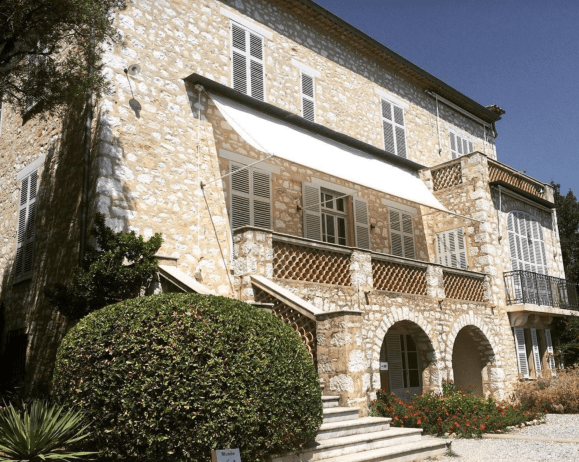
The painter discovered Cagnes-sur-Mer in 1903, on his way to Italy. Falling under the spell of the gardens composed of olive and orange trees, he bought in 1907 “Domaine des Collettes”, a vast property of several hectares. As the small farmhouse on site did not find favor with Aline, his wife, Auguste Renoir had a vast néo-provençal style bourgeois house built to the plans of the architect Jules Febvre. He moved into his new house which had two artist’s studios, in the autumn of 1908. Surrounded by his family, his wife and his three children Claude, Jean and Pierre, he never left the French Riviera. The artist painted and sculpted there for eleven years, until his death in 1919 at the age of 78.
Yeah, painted until his death with a brush strapped to his hand, probably put there by his family, the Missus and I initially figured, to keep the gravy train going for as long as possible.
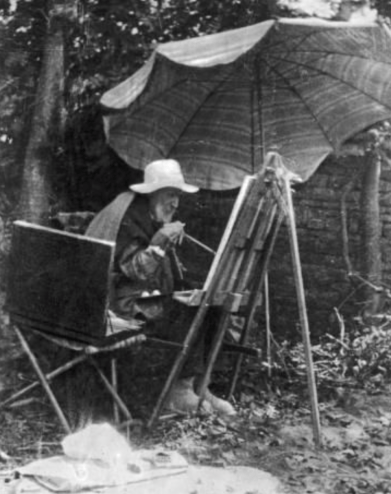
Then again, maybe not, given Renoir’s obvious animation at the age of 74 in this 1915 film. Regardless, we remain unfond of Old Strap-Hand.
We also ventured on that trip to the perfume factories of Grasse, about which the Missus wrote a piece for the Travel section of the Boston Herald. That was when the Herald was still a going concern, before Death By A Thousand Paper Cuts came for the newspaper industry.
Our final stop was Villefranche-sur-Mer, a colorful fishing village that has a storied history as home to, among others, Aldous Huxley, Tina Turner, Keith Richards and his longtime paramour Anita Pallenberg (the Rolling Stones recorded their 1972 album Exile on Main Street at Villa Nellcôte in Villefranche). It’s also been a magnet for moviemakers – To Catch a Thief, An Affair to Remember, The Bourne Identity, and many others have featured scenes from Villefranche.
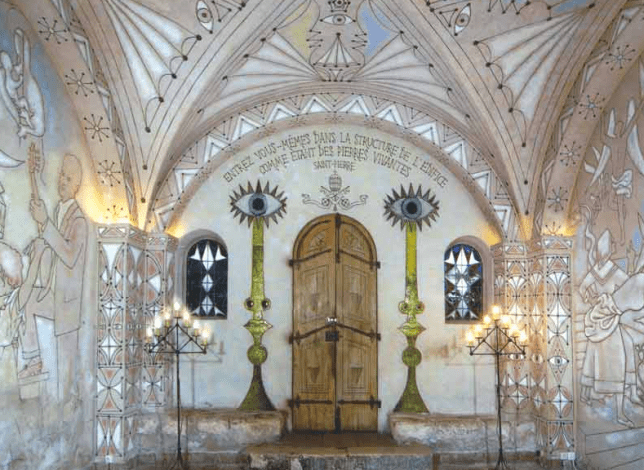
Villefranche is most celebrated, though, as the home of Jean Cocteau’s legendary Chapelle Saint-Pierre.

Built in Romanesque style, it dates from the second half of the 16th century. Inside is a superb decoration, five fresco panels in two parts: one profane and one sacred. Jean Cocteau himself painted the decor on all the interior surfaces as well as the exterior facades. His friend, the famous actor Charlie Chaplin, visited the chapel along with the artist in 1957.
Representative samples (more here if you like – and you definitely should) . . .

It came to our attention that the nearby Welcome Hotel – which has quite a history of its own – also had a Cocteau Room.
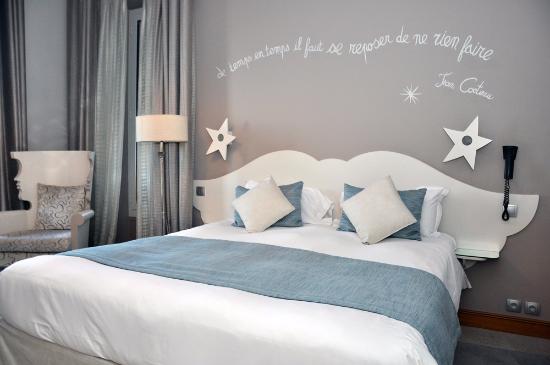
So we stopped in, the Missus chatted up hotel manager Claude, and we got a tour of the Cocteau room, which we would occupy during our next trip to the Riviera. Before we could do that, though, there was more than a little unwelcome drama during our return to the Côte d’Azur.
• • • • • • •
Our second visit to the French Riviera got off to a less than auspicious start. After flying from New York to Nice, we headed for Villefranche-sur-Mer, where we planned to stay for several days before moving on to Paris.
We’d been on the highway out of Nice for several miles when our rental car suddenly went Chernobyl – smoke pouring from under the hood, lights flashing all over the dashboard, the car barely limping along. We were lucky to make it over to the voie de dépannage, where a bon samaritain came to our rescue with enough radiator fluid to get us to the nearest halte routière, where he was also kind enough to call the rental car company and arrange for a replacement vehicle.
To this day he remains, in our minds, the greatest French sauveur since Marquis de Lafayette.
No such acclaim for the rental agent, however, who eventually showed up and said he’d take us to St. Tropez for a new car.
St. Tropez, for those of you keeping score at home, happened to be an hour and a half away and host to the frigid Mistral winds, which a) we’d already experienced on our previous trip, and b) had forced the Missus to buy a super warm shawl that I’m not sure she ever wore again.
So the Missus told the rental agent in no uncertain terms to pick a closer pick-up venue, which turned out to be Antibes, a half hour away.
Eventually we arrived in our non-meltdown vehicle at the Welcome Hotel.
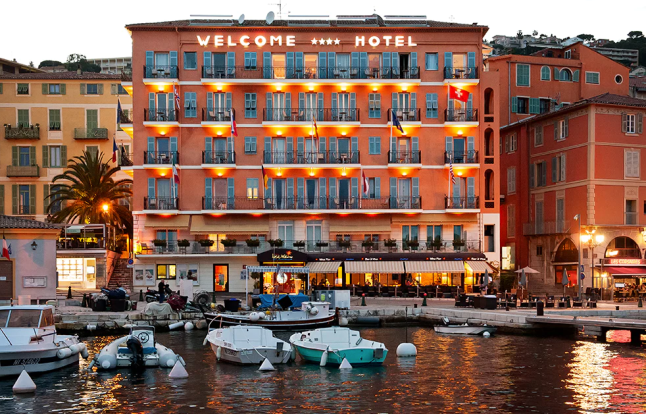
Our old pal Claude not only welcomed us but gave the Missus an extensive interview for another Boston Herald feature. Claude also gave us the Cocteau room, which we could afford for only a couple of nights, but that was fine.
Our first foray was to St. Jean Cap Ferrat to check out the Ephrussi de Rothschild Villa & Gardens, dubbed by me and the Missus Béatrice’s Amazing House of Stuff. It includes beautiful rugs from Versailles, furniture that Marie Antoinette once owned, and wall panels from The Crillon in Paris (before it was a hotel).
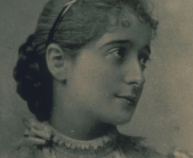 Born in 1864, Béatrice was the daughter of the banker and major art collector Baron Alphonse de Rothschild. At 19 years old, she married Maurice Ephrussi, a Parisian banker originally from Russia who was a friend of her parents and 15 years her senior. The marriage quickly turned to disaster for Béatrice, as she caught a serious illness from Maurice which prevented her from having children.
You can guess what that “serious illness” might have been.
Anyway, after Maurice had racked up 40 million of debt (in today’s dollars), the Rothchilds crowbarred Béatrice out of the marriage. The following year three things also happened: 1) Her father died, 2) She inherited his fortune, and 3) She dropped a bunch of it on the fabulously excessive Villa Ephrussi.
Work began in 1907 and took five years. Béatrice Ephrussi appears to have been a particularly difficult client. She refused projects proposed by a dozen major architects, believing them to be “idiotic”. And so, projects by Claude Girault, the architect of the Petit Palais in Paris, and even Henri-Paul Nénot, winner of the Prix de Rome and most famously architect of the new Sorbonne, were dismissed. Thus, the project came to be placed in the hands of the architect Jacques-Marcel Auburtin, who scrupulously satisfied all of Béatrice’s requirements.
Here’s a stately tour of the final result.
The villa’s gardens were charming in a big-bucks sort of way, especially the fountains that went off every 20 minutes and “danced” to classical music, as illustrated here.
Although Béatrice couldn’t have children, she totally had pets. The wildly eccentric heiress kept a whole menagerie – poodles, monkeys, gazelles, a mongoose – and treated them like the children she never had. She even provided chairs for the dogs and the mongoose.
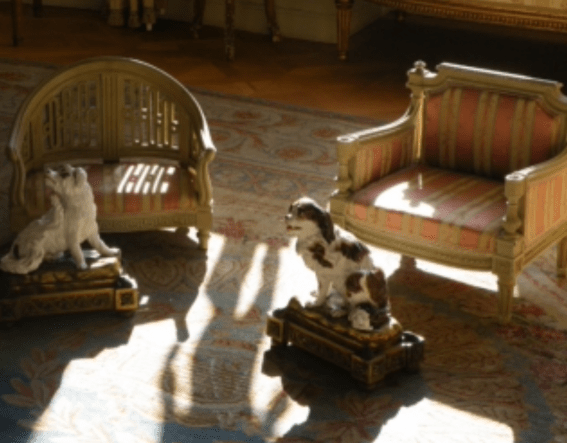
But the best animal act was the wedding Béatrice threw for Diane, her favorite female poodle, and a male poodle called Major.
Here’s how the Boston Daily Globe described it in January of 1897, when Béatrice was in her 30s.
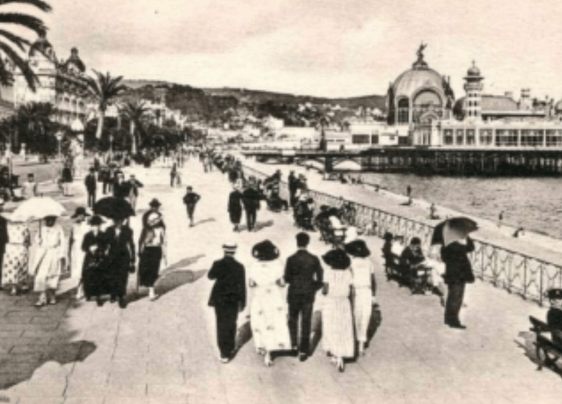
“Hundreds of invitations were sent out, addressed to canine guests and their owners. All the men, of both the two- and four-legged variety, showed up during the day in formal evening dress: tails, wing collars and bow ties. […] At the sound of the wedding march, three little poodles appeared in tails to begin proceedings. Canine “bridesmaids” and “best men” escorted the betrothed couple. At the other end of the room, a good and loyal bulldog waited for them wearing a top hat and a red, white and blue sash. […] The bride had a gold ring set with diamonds slid onto her paw.”
All that pet talk made us long for the real thing, so the Missus and I went to the nearby Zoo Cap Ferrat, which was a total hoot, as you can see in this guided tour.
What that video, however, did not capture:
• The billy goats who eyed us indignantly as we ate our lunch on a nearby bench.
• Hamster Village, which featured a cardboard Main Street with a variety of storefronts the little guys could duck in and out of. Our favorite: Le Gendarmerie.
• The lemur who somehow got loose and wandered about holding out one hand as if looking for tips. We tried to figure out how to alert zoo officials to the jailbreak, but failed utterly. So the lemur marched on.
Sad to say, the zoo itself did not. It was shut down in 2010 to make way for some swanky spa.
Bad tradeoff, enfants de la Patrie. Very bad tradeoff indeed.
The Missus and I also took a couple of vertiginous drives to the medieval towns of Peille and Peillon.
Here’s the former.
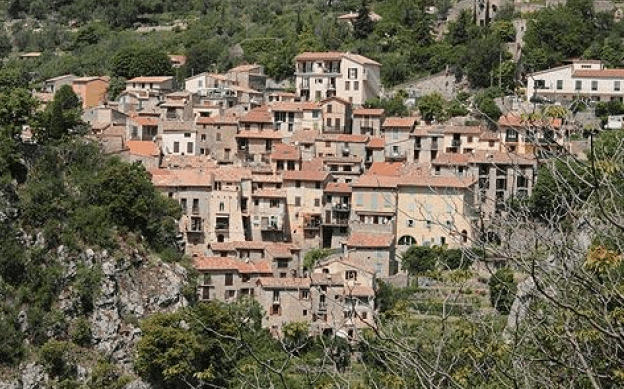
Perched 630m in altitude, PEILLE is a characterful village clinging to the mountain side. Strolling through the village, you will come across cobbled lanes and grand residences dating back to the Middle Ages, gothic fountains and vaulted passages. On elevated ground stands the old parish church, and to the south of the village, the communal olive mill where once stood the Chapel of Mercy. The Chapel of St. Joseph (18th Century), located in the middle of the village was the seat of the white-robed penitents.
Another highlight: The Peille Terroir Museum, “dedicated to the village’s history, ways and customs, and ancient professions. Objects collected from here and there, from local residents’ cellars, wardrobes and attics form the museum’s collection.”
Gotta love objects collected from here and there, right?
Nearby Peillon has rightly been dubbed The Perched Village.
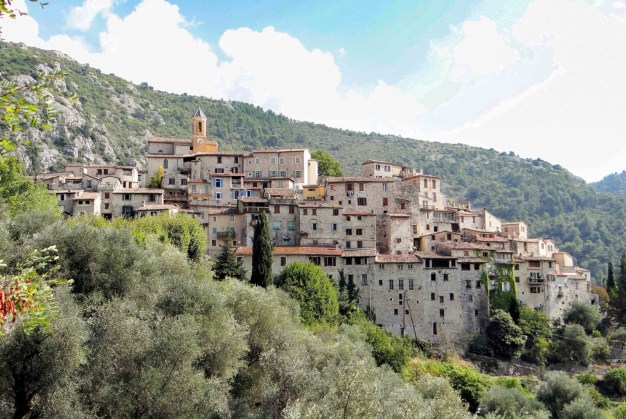
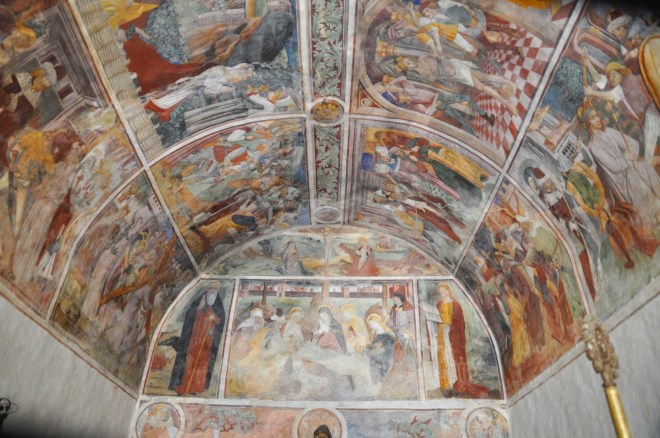
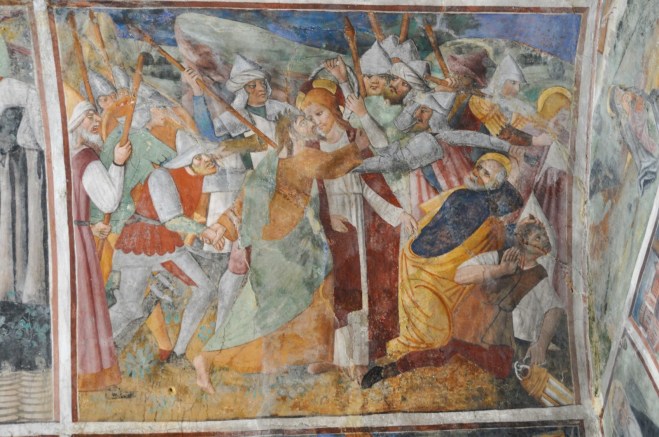
At 10km from Peille, along a narrow twisting road is the village of Peillon dangling on a vertiginous mountain peak, 376m in altitude. All its houses look like they are stuck together, typical of the architecture of fortified mountain villages. At the top of the village, dominating the landscape, is the 16th century parish church of St. Sauveur. The Chapel of the White-robed Penitents (15th and 16th centuries), houses one of the village’s treasures: the remarkable Jean Canavesio frescoes, one the famous painters of the Primitive Nicols School.
(Can’t spit without hitting a white-robed penitent up there, eh?)
Those Canavesio frescoes are indeed remarkable, at this French Moments post illustrates.
Then we said à bientôt to Claude de Welcome and moved on to Paris.
• • • • • • •
Third time on the Riviera (to celebrate our 30th wedding anniversary) was a total charm.
Eventually.
But first we . . .
a) inadvertently booked our Paris flight into Charles de Gaulle Airport and our flight to Nice out of Orly Airport;
b) endured an endless wait at passport control followed by an interminable delay at baggage claim, which led to our missing the bus to Orly for our connecting flight;
c) were told the next bus would arrive in 10 minutes (ha!) and take an hour to reach Orly, thereby assuring that we would miss our connection;
d) stupidly had no cellphone with us to contact the livery driver who was scheduled to pick us up at Nice Côte d’Azur Airport;
e) miraculously made the flight thanks to our bus’s early arrival at Orly and the flight’s late departure;
f) were shuttled to a quiet side street in Villefranche-sur-Mer by our most agreeable driver Frederique.
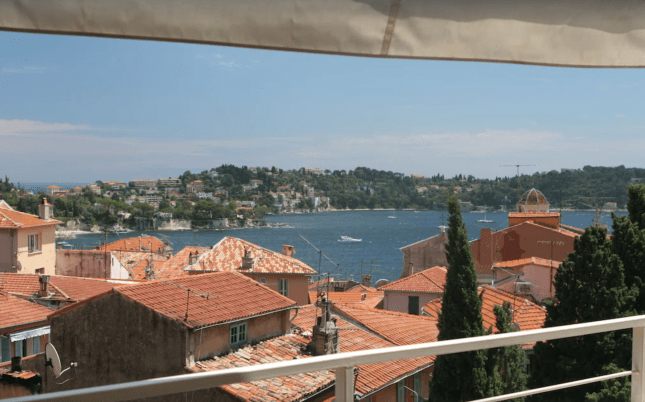
The Missus, in her infinite wisdom, had found this apartment in Villefranche for us to rent.
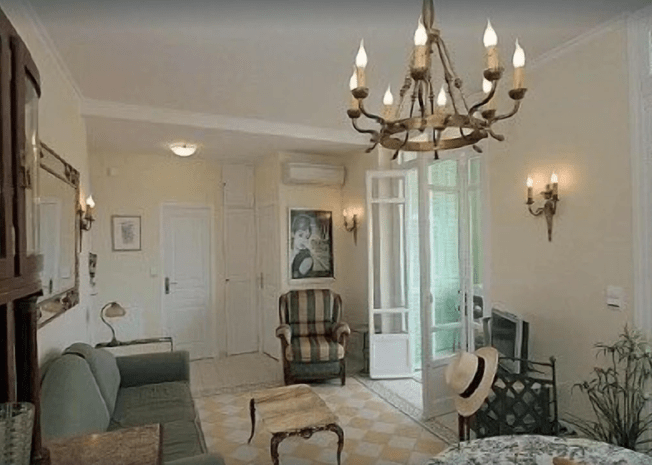
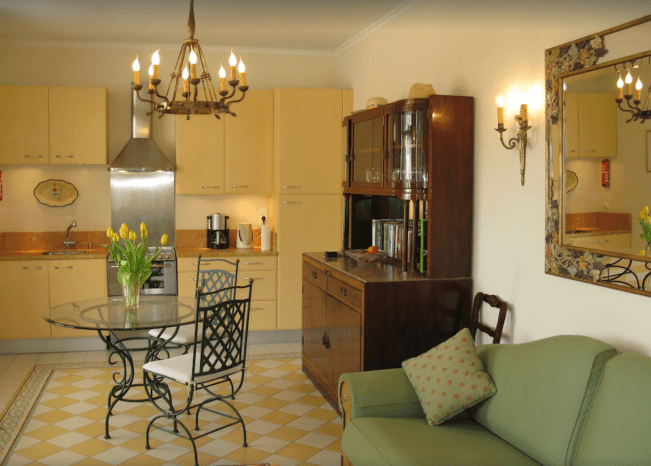
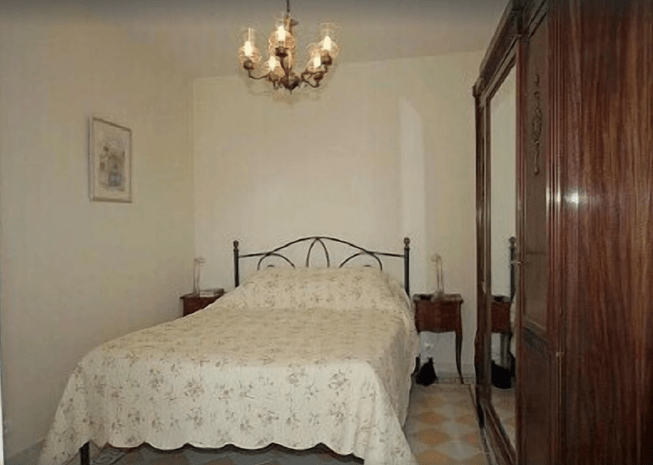
But this was the best.
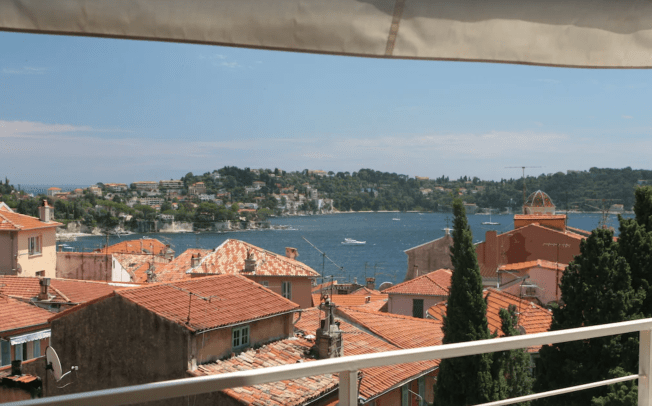
We sat on that terrace every morning watching an acrobatic airshow of birds endlessly wheeling against a brilliant blue sky.
It was beautiful to behold.
Upon our arrival, however, there was one more obstacle to overcome.
I had forgotten to pack a converter plug, and there was no BNP Paribas ATM in town (contrary to what we’d been told in advance) which would have linked to our bank cards.
So we were powerless and euroless.
Until we met Julia at the Villefranche-sur-Mer Office du Tourisme. A lovely blonde woman in a crisp white shirt and gold lamé jeans, she directed us to a hardware store and a BNP ATM in neighboring Beaulieu-sur-Mer, where we bought a converter plug, converted dollars into euros, and stumbled upon a bakery that featured some killer salade niçoise sandwiches.
The Missus subsequently dubbed Julia our heroic Bond Girl (Goldie Lamé?).
After that, it was the two of us who were golden.
• • • • • • •
The Missus had another brilliant idea on that trip: Given the auto de fou that marked our previous foray to the Riviera, she suggested we forget about renting a car and travel around by bus and rail, a decision that had two salutary effects: 1) It saved us a bundle of money, and 2) It allowed me to actually observe the scenery on our travels instead of watching the road while I drove.
Excellent!
We started at Place Garibaldi in Nice (named after Nice homeboy and Italian freedom fighter Joseph Garibaldi), adjacent to the Vieille Ville.
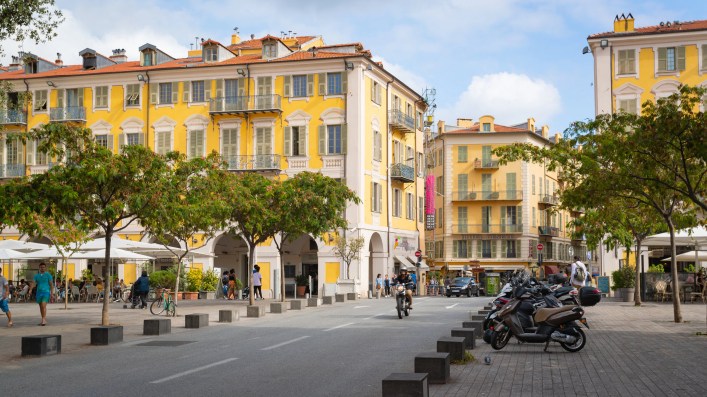
After wandering around the Old Town for a spell – interrupted by a leafy picnic lunch in a charming pocket park – we stumbled upon Palais Lascaris, a mid-17th century manor and modern-day museum that’s a little worse for wear, but hardly a handybaron special.
Especially noteworthy: The museum’s amazing collection of over 500 historic musical instruments, some of which this video highlights.
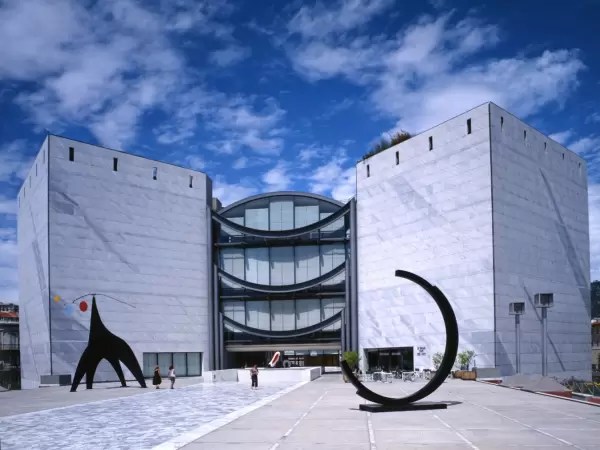
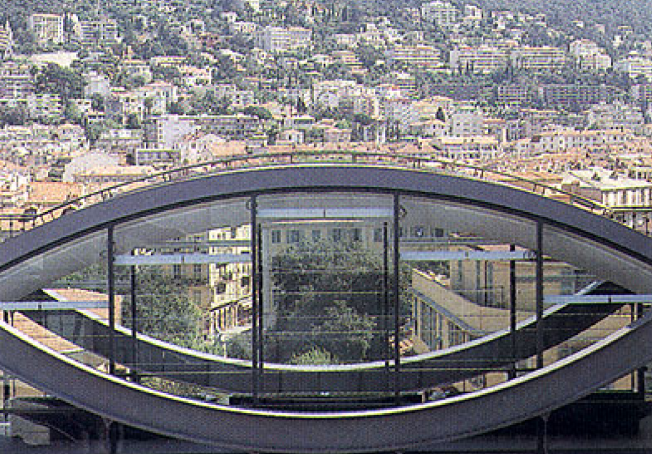
We then visited the Musée D’Art Moderne et D’Art Contemporain, whose stunning architecture caused quite a rumpus when it was built in 1990.
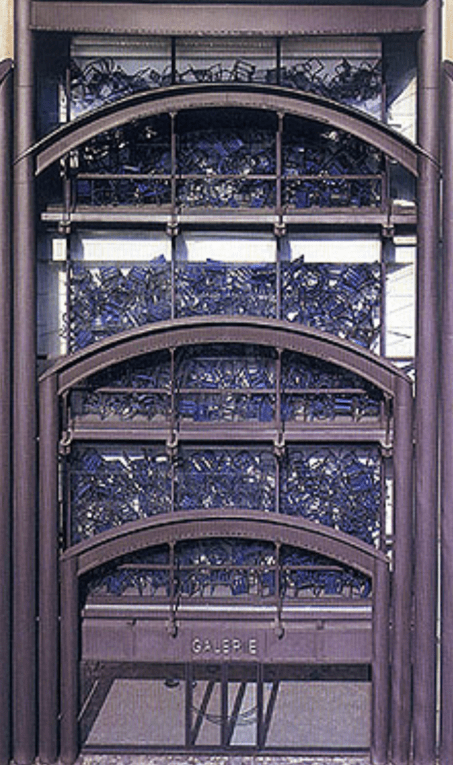
The courtyard facades were equally striking, from Sol LeWitt’s colorful cascade . . .

. . . to Arman’s jumble of blue chairs . . .
. . . to Alain Jacquet’s take on Manet’s Dejuneur sur l’herbe.
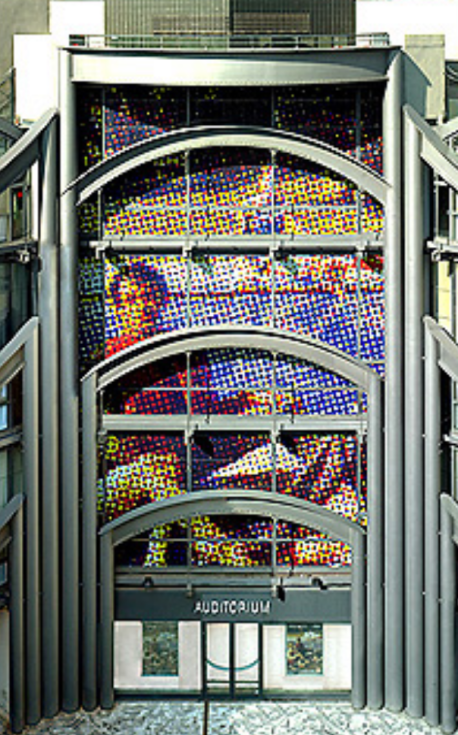
Beyond that, the museum features a riotous collection of modern and contemporary art from Yves Klein and the one-name brigade of the École de Nice (Arman!, César!, Ben!) to works by American artists from Claus Oldenburg to George Segal.
A thoroughly eye-popping experience, from the art to the architecture.
The next morning we took the train to Antibes and wandered about until we found the bus to Biot so we could visit the Musée National Fernand Léger, whose exterior is just flat-out fun – a colorful tile façade with reproductions of Léger’s work.
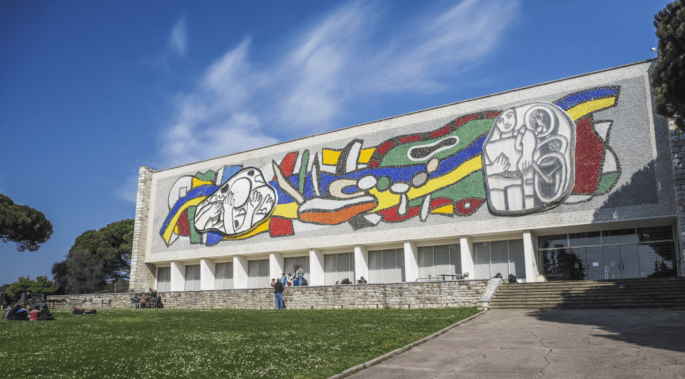
Inside is even better – a collection of Léger’s art that ranges from the 1910s to the 1950s. Léger started as a neo-impressionist (he later burned most of his early work), then turned to cubism, latching onto Cézanne’s proclamation that “Everything in nature takes its form from the sphere, the cone and the cylinder.” Léger saw man, nature, and objects all in the same way – “for their plastic value.”
Contrastes de formes (1913) is a good example.
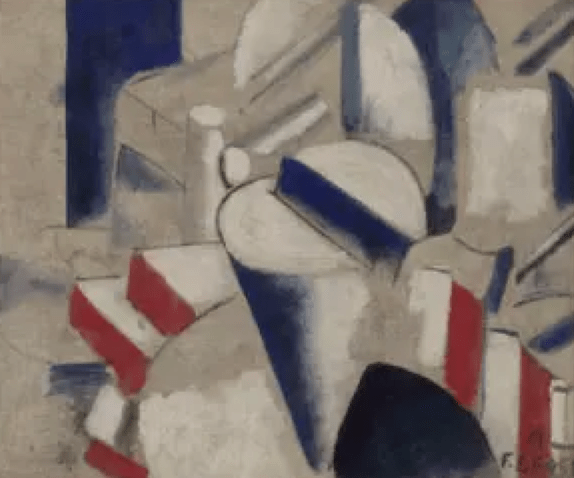
Léger allied himself with fellow cubist Robert Delauney until a color war broke out between them – Delauney favored shades of color that interacted with one another (color simultaneity); Léger chose flat primary colors that contrasted with each other.
Eventually Léger went one step further and evolved from a cubist to a “tubist.” From Azur Alive:
Leger worked extensively with primary colors and geometric shapes. As a painter, Léger greatly influenced the Cubism movement but expanded beyond the artistic style. He developed a personal version of cubism with dynamic cylindrical shapes. The art critic Louis Vauxcelles called (with a touch of sarcasm) this particular style “Tubism”.
Representative sample (“The Lunch,” 1921) . . .
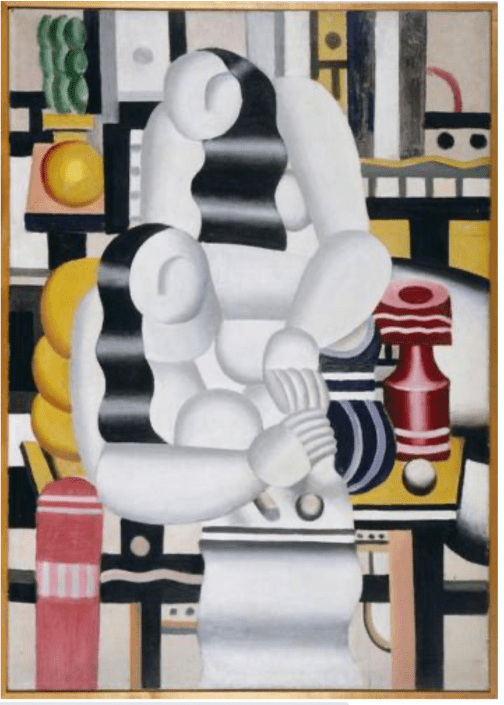
Back in Antibes, our lunch was slightly less artistic, given that it once again confirmed our belief that in the average French restaurant, Americans (or at least these Americans) always come second to everything and everyone else. The Missus and I have long been resigned to that treatment in Paris, the City of Light Service. Apparently the same indifference had spread to Antibes as well.
Whatever. After lunch we revisited the Musée Picasso-Antibes, which featured a collection of work – such as this one – that Picasso created at Château Grimaldi.
The next day the Missus and I returned to the nothing-succeeds-like-excess Rothschild mansion for a second look, then made our way to Beaulieu-sur-Mer and Villa Grecque Kérylos, which is the cosmic opposite of Béatrice’s House of Stuff.

On the Mediterranean coast, between Nice and Monaco, the Greek Villa Kerylos is one of the most extraordinary monuments on the Riviera. Built between 1902 and 1908 in the period the French call the “Belle Epoque”, it is a unique reconstruction of an ancient Greek home. “Kerylos” means Halcyon, often identified as a kingfisher, a poetic mythical bird, considered to be a bird of good omen.
This is a tribute to Greek civilisation by two lovers of Ancient Greece, Théodore Reinach, an archaeologist and patron of the arts and Emmanuel Pontremoli, an inspired architect.
The villa is “a faithful reconstruction of Greek noble houses built on the island of Delos in the 2nd century B.C. . . . the aim was not to produce a pastiche but to create an original work by ‘thinking Greek’.” Which they did great job of – it’s a beautiful reincarnation of a Hellenic home, with the accent on hell if you appreciate any creature comforts introduced after 200 B.C.
Here’s a lovely walk through the villa. Amazing place, but pauvre Mme. Reinach, non?
Back in Nice the next morning, our first stop was the Jardin Maréchal Juin, “deemed one of the most stunningly beautiful flower gardens in Nice.” Indeed, when we arrived, the flowerbeds were being replanted by a dozen gardeners doing what in America would be a two-man job. That’s what happens when 21% of your country’s workers are civil service employees.
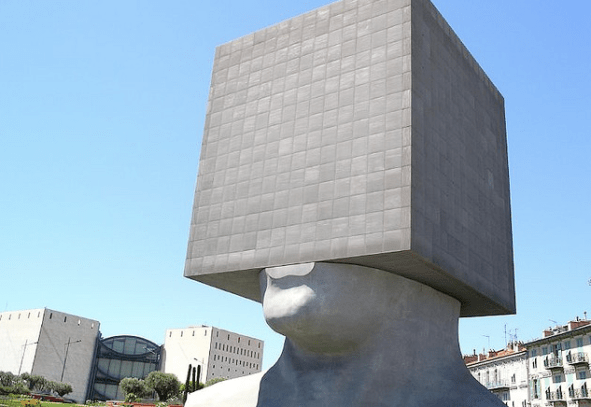
Anyway, we really liked Sacha Sosno’s La Tête Carrée, or the Square Head, which loomed over the flower gardens.
We were less impressed, however, by the Muséum d’Histoire Naturelle de Nice, where one guidebook said we’d find “a collection of 7000 mushrooms” but which actually displayed about seven of them. There were, to be fair, some stuffed animals and a diorama of the museum’s founders with recorded dialogue about mollusks ‘n’ stuff, if you’re into that kind of thing.
Underwhelmed but undaunted, the Missus and I trundled over to the Cimitière du Château, a Catholic/Christian/Jewish graveyard bursting with outsized statues and stately monuments overlooking the city.
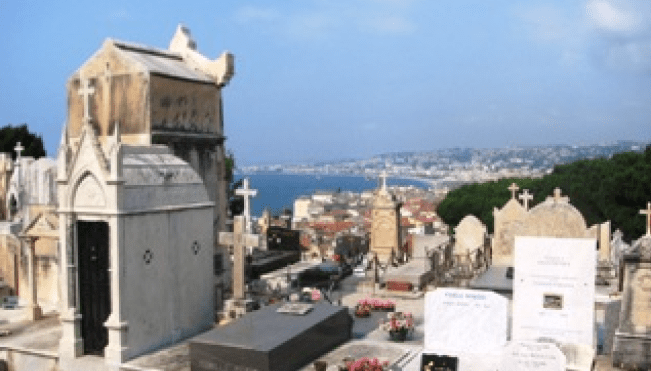
The Château de Nice cemetery is clearly one of the most beautiful cemeteries in France. It recalls nearby Italy and the splendor of the monumental cemeteries of Genoa, Milan and Turin. Covering an area of 14,000 square meters, it offers a panorama of the entire city. Its 2,800 tombs are placed on terraces, their style being quite varied.
We wandered all through the cemetery, which is quite remarkable, searching in vain for the Jewish section. Finally we found it – on the other side of a high wall, with its own separate entrance and a handmade sign.
La Communauté Israelite de Nice
Aux Héros de la Patrie de la Résistance
Aux Martyrs de Persécution
Inside, graves were strewn about haphazardly, lacking the grid pattern that the Catholic/Christian sections featured, so that you almost had to step on the graves to move about. The whole cemetery was unkempt and overgrown – very much like an afterthought. A second, newer level seemingly wanted to compensate for the disarray of the original one: It had uniform headstones, a clear grid, and a large sculpture of a menorah in what would be the middle of the section when it filled up.
Overall, it was a sad reminder of the neglectful (at best) treatment far too many French Jews experienced during the war – and after.
The Missus and I then headed for the Musée des Beaux-Arts via the celebrated Promenade des Anglais, favorite of Matisse and tourists alike. It’s the latter, of course, that turn this stretch of seaside into La Comédie Humaine, with every type of stroller, bicycler, eater, drinker, and sunbather imaginable, including some people who shouldn’t even be in the same room as a Speedo, never mind actually wear one.
Regardless . . .
The following comes from a Lonely Planet post that apparently no longer exists.

In a resplendent 1878 belle époque villa, the Musée des Beaux-Arts displays works by Fragonard, Monet, Sisley and Rodin, as well as an excellent collection of Dufy works.
Fauvist appreciators will relish a roomful of Raoul Dufy’s works. Also impressive are sculptures by Rodin, and some late impressionist pieces by Bonnard, Monet and Sisley. Local lads Jules Chéret (1836-1932), the ‘Father of the Poster’, and Alexis Mossa (1844-1926), who painted truly hideous symbolist works, also feature. The latter is more famous for adding wildly decorated floats to the Nice Carnival than for his watercolours.
Sad to say, virtually none of that was on display when we visited. The second floor was closed, the first floor mostly closed, and what artwork was visible lacked a certain je ne sais quoi.
Actually that’s not accurate. I know exactly what the artwork lacked: Anything at all interesting about it.
The following day the Missus and I went for the trifect-art: Musée Matisse, Musée Chagall, and Musée Masséna.
Located in a suburb of Nice, Musée Matisse inhabits a charming house that’s been renovated to showcase a collection of Matisse’s handiwork donated mostly by the artist himself and his descendants.
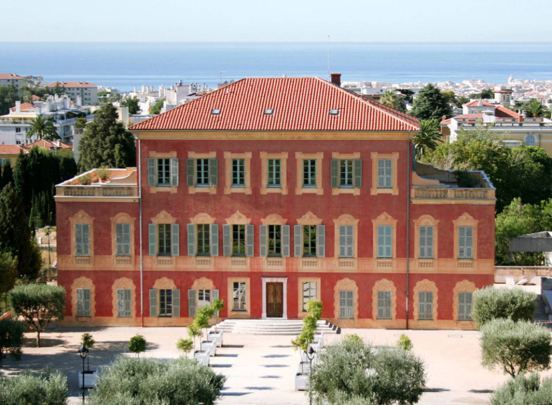
The Matisse Museum is situated on the hill of Cimiez, not far from the Franciscan monastery with its Italianate gardens, the Hotel Regina where Matisse used to reside, and the Gallo-Roman ruins. Since the 5th of January 1963 the Museum has been welcoming vistors to its collection of works left by the artist (and his heirs) to the city of Nice where he lived from 1918 until 1954.
The collection is small but cherce – a nice array of paintings, some sculptures, a smattering of cutouts, and several of Matisse’s personal effects, such as the chair this painting was based on.

Especially interesting are the “remnants” – cut-out shapes that never made it into Matisse’s compositions. The family donated over 400 of them, many of which are on display.
The grounds of the museum are, well, jazzy – dotted with busts of Louis Armstrong and Lionel Hampton, lined with paths named after Miles Davis and Duke Ellington. Who knew the great French artist was an American jazz lover?
Down the hill from the Matisse museum is Musée Nationale Marc Chagall, whose home could not be more different from Matisse’s residence.
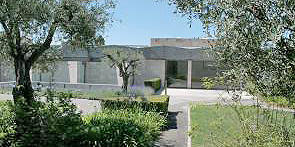
The architect chosen to build the museum was André Hermant (1908-1978), who formerly worked with Auguste Perret and Le Corbusier and was a member of the UAM (French Union of Modern Artists). He projected himself as a defender of an architectural design in which function determined form. The social purpose was also a key consideration in his approach.
The idea of a “home”, a spiritual abode, as sought by Chagall, required a peaceful setting in which the building itself does not make its presence felt.
Not sure the building actually does fail to make its presence felt, but why get technical about it.
Architecture aside, it’s the whole spiritual thing I can’t get past with Chagall – too much biblical stuff and people flying over rooftops. I do like this painting, though.
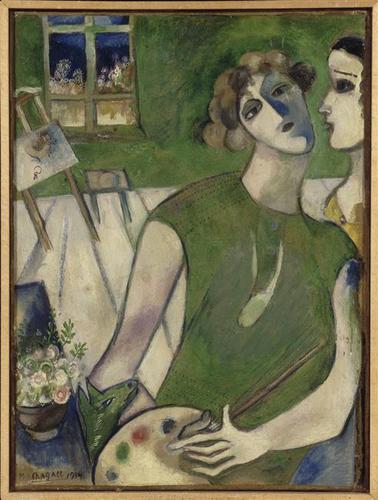
That’s Bella, Chagall’s fiancée at the time and later his much beloved wife. Chagall’s paintings might have been allegorical, but his devotion to Bella was as real as it gets.
Last but far from least, Musée Masséna.
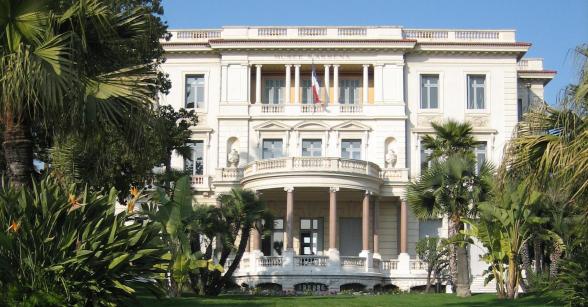
The Masséna Museum, an architectural gem on the Promenade des Anglais, evokes, through its collections, the art and history of the Riviera from Nice’s attachment to France until the end of the Belle Epoque.
All the works evoke this theme through a scenography that combines graphic arts, furniture and objects from this period and more particularly history.
Among other things presented are Napoleon’s death mask made by Doctor Arnolt, Joséphine’s diadem in mother-of-pearl, gold, pearls and colored stones offered by Murat to the Empress and the book written by Prefect Liegeard.
(Stéphen François Emile Liégeard, for those of you keeping score at home, was a French lawyer, writer, and poet who gave the name “Côte d’Azur” to the French Riviera.)
The museum is devoted to showcasing the city’s history, but the building itself is the main attraction. Renovated in 2008, it’s simply spectacular.
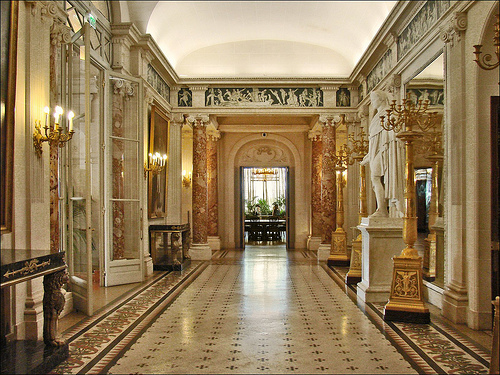


And with that, we said au revoir to Nice, a thoroughly, er, nice town to explore.
On our last day we decided to go to Éze Village, which seems to be a favorite among the tourist set. The Missus and I jumped on a bus, transferred at Gare d’Eze-sur-Mer, and wound up in Éze about 45 minutes later.
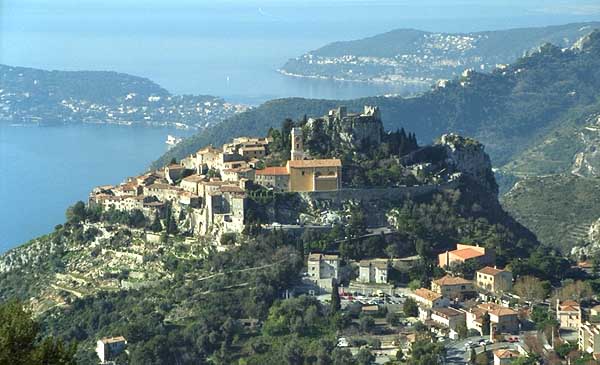
Legendary adman David Ogilvy once said, “people travel to collect clichés.” That’s Éze all over. It’s been called a “medieval hilltop masterpiece,” but we called it something else: a tourist trap. Any charm Éze possesses is largely sucked out of it by an endless series of overpriced shops filled with junk.
Unfortunately, the next bus home wasn’t for an hour, so we wandered around a bit, finally ending up in the chapel overlooking the town. It’s a good-looking church, but the best part of it is the pulpit. Extending from its side – honest to God – is an arm holding a crucifix in its hand.
Me: If only there was a leg hanging off the other side.
The Missus: Arms for the poor?
Best thing in Éze – hands down.
And then . . . it was our last night in Villefranche, which I wrote about afterward.
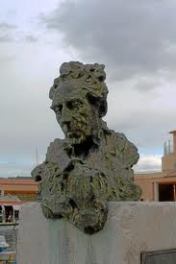 After dinner I walked down to the bay one last time. I stood in a soft rain next to the bust of homeboy Jean Cocteau alongside the chapel he renovated in the 1950s, and looked one last time at the dark Mediterranean and the bright lights burned into the hillsides surrounding it.
The bust has a plaque underneath it, which reads:
Quand je regarde Villefranche je vois ma jeunesse, fassent les hommes q’ elle ne change jamais.
“When I see Villefranche, I see my youth again. Pray Heaven it may never change.”
Amen to that.
When we got home, the Missus and I agreed: Perfect trip. We’d be nuts to ever go back, because it could never be as good. But man, perfect trip
• • • • • • •
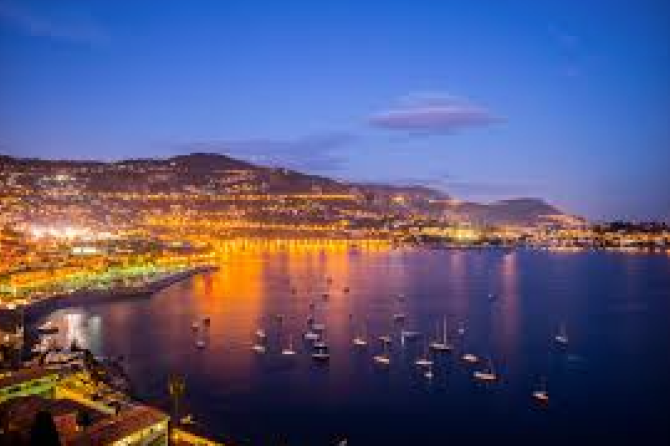
Four months later we looked at one another and said, “I wanna go back to Villefranche.”
And so we did.
And found ourselves back on that same birdwitching terrace, this time without all the travel travails.
Our first day, having mastered the mysterious mechanics of the Billetterie SNCF, the Missus and I took the train to Cagnes-sur-Mer, where we headed to the Office de Tourisme to purchase a couple of Côte d’Azur Cards (nouveau! merveilleuse!), which provided free entry to 160 French Riviera venues. Luckily, they had exactly two left, something we took as a good sign. Then we moseyed down to Square Bourdet to catch the 11:30 bus to Fondation Maeght in Saint-Paul-de-Vence, which arrived at precisely 12:30.
At the Fondation Maeght stop, we proceeded to walk straight uphill for 15 minutes. Halfway to the top, we saw a sign for Hotel Messugues, although I was thinking maybe it was really the Hotel Meshugge.
Finally, leg-weary, we collapsed onto the counter of the admissions booth, where we flashed our nifty Côte d’Azur cards and a very nice young woman said, yes, but if we wanted to take photos inside we needed to pay an extra – at which point we cut her off and said we have no cameras or iPhones and she said she’d never met an American without at least one and smelling salts all around.
Before we headed into the Fondation itself, we swung by Le Café F for a nice lunch of salade Niçoise and saumon fumé.
But then came the Great Euro Standoff.
L’addition was 24 euros, which included the mandatory 15% tip. I produced 25 euros, and waited . . . and waited . . . and asked for my one euro change, which continued not to be forthcoming. And I realized that Monsieur Le Garçon thought he could wait me out – that any American would just leave rather than linger for a single euro.
He was mistaken.
Several minutes later and one euro fatter, I wandered up to The Fondation, wondering whether service compris might be more corrosive to national character than legalized gambling or capital punishment.
Somewhere in the middle, I’d venture.
Anyway, the Missus said that we’d been to the Fondation Maeght on a previous trip, although I didn’t remember it at all. Regardless, we both agreed this time that it’s a bit of a mishmash, although that’s not how it describes itself.
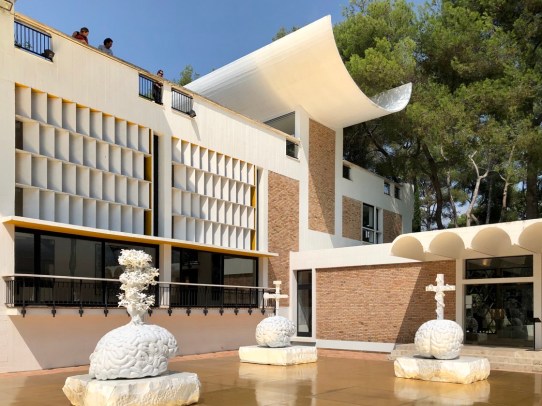
The Marguerite and Aimé Maeght Foundation is one of the major international institutions dedicated to innovation and creation. This private foundation of modern and contemporary art Is located near the town of Saint-Paul de Vence, 25 km from Nice. The Maeght Foundation owns one of the largest collections of paintings, sculptures and graphic works of the twentieth century in Europe.
Mishmash or not, the joint has some knockout sculpture from the likes of Alexander Calder, Alberto Giacometti, and, especially, Joan Miró.
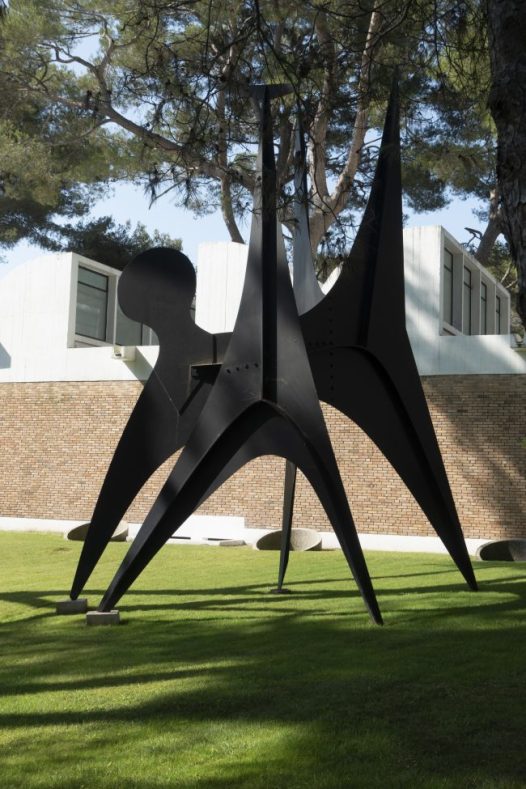
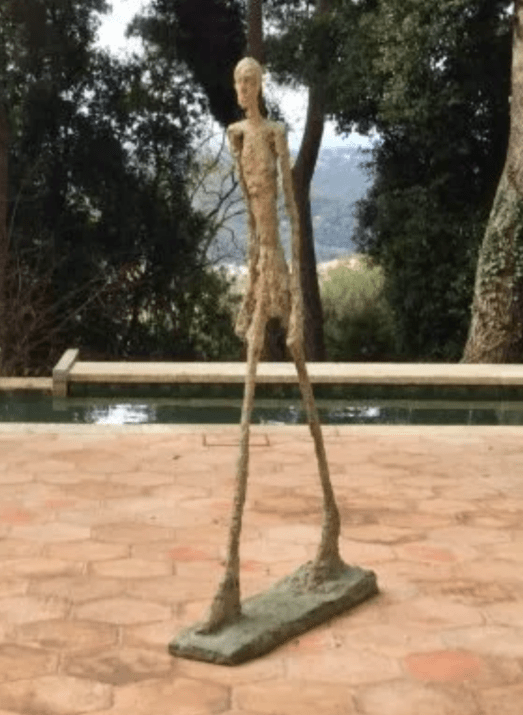
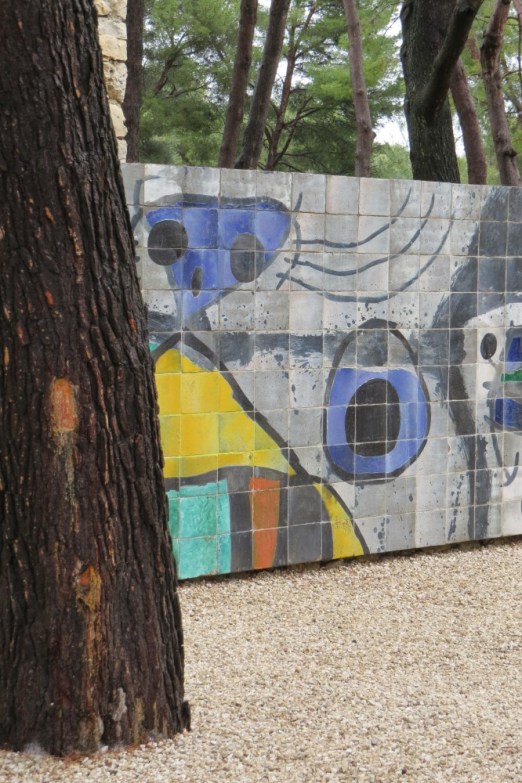
Next stop: Château-Musée Grimaldi. a total mashup of the old, the odd, and the newish, as the Nice Office de Tourisme notes.
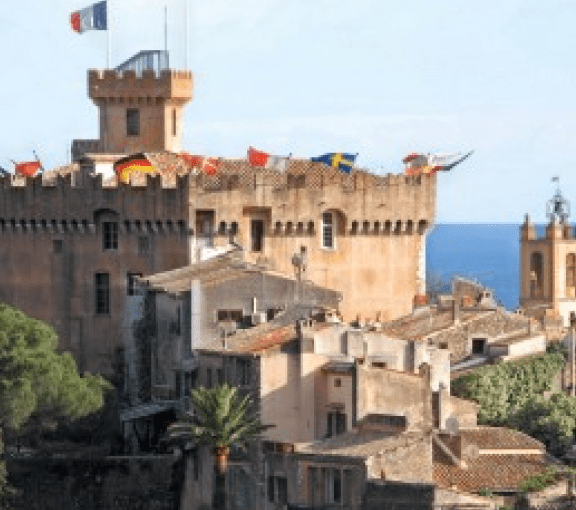
Built in 1309 for Rainier Grimaldi and converted into an Italian-style residence in around 1620, Château Grimaldi was bought by Cagnes Council in 1937 and became the municipal museum in 1946.
Situated at the heart of the medieval village of Haut-de-Cagnes, the château is home to the “Musée de l’olivier”, the Solidor donation (forty portraits of Suzy Solidor painted by famous artists such as Foujita, Lempicka, Laurencin, Picabia, etc.), an outstanding painted baroque ceiling and a number of contemporary art exhibitions.
The Solidor room is a hoot. Here’s just part of it.
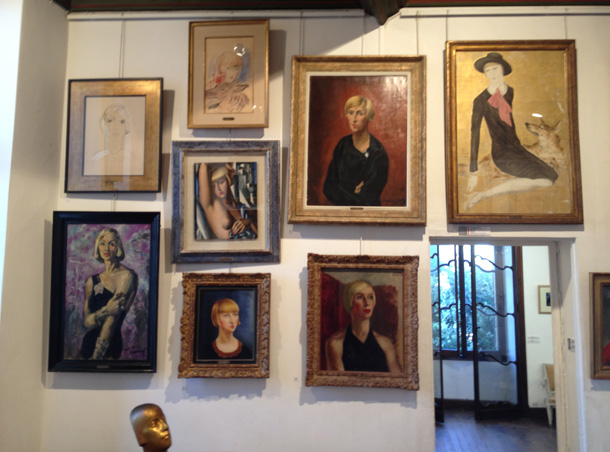
Everything you didn’t know you wanted to know about the cabaret owner/singer Suzy Solidor can be found in this Modern Art Consulting post (along with most of the other portraits of her), if you’re so inclined.
Our next quest was to reach the Jean Cocteau-decorated Villa Santo Sospir in Saint-Jean-Cap-Ferrat. We took the bus to the town’s Nouveau Port and then embarked on 45 minutes of squirreling, largely uphill, to get to the villa. Saint-Jean-Cap-Ferrat is the second-richest community in the world (Monaco is first) and it shows: Every home is gated and named. Walking along Avenue Prince Ranier III de Monaco, I pretty much expected les gendarmes to be summoned at any moment. But no. The locals probably thought we were someone’s housekeeping staff.
The villa itself is spectacular, with a great (if grammatically challenged) backstory.
In 1949, the poet Jean Cocteau during the filming of Enfants Terribles, directed by his famous novel [sic] by a young filmmaker of the time, Jean Pierre Melville, made the acquaintance of Francine Weisweiller. Nicole Stéphane (real name Nicole Rothschild), the leading actress of the film, cousin Alec Weisweiller, presented the poet Francine; there was among them a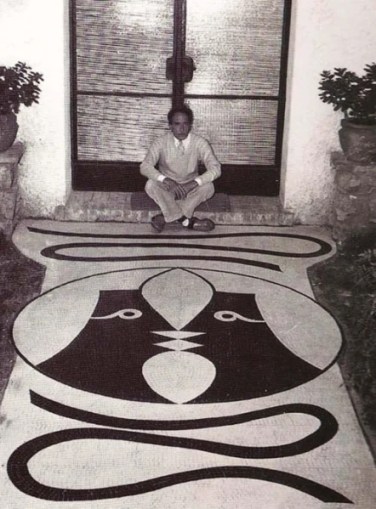 stroke of lightning friendship.
In Spring 1950, after mounting Enfants Terribles, Francine invited Jean Cocteau and his adoptive son Edouard Dermit (interpreter of the role of Paul in the film), to spend a small holiday week at his home in St Jean Cap Ferrat overlooking the bay of Villefranche.
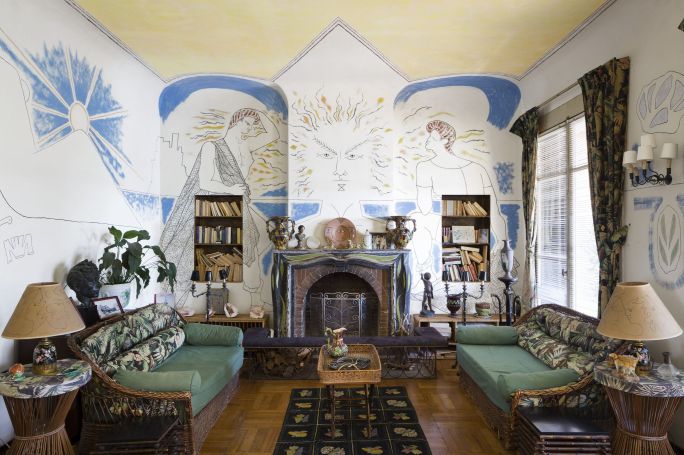
The villa Santo Sospir, built shortly after the war, was bought by Alec and Francine in 1946. Used as a holiday home, the walls of the villa remained empty. A few days after his arrival, Jean Cocteau say: “idleness tired … I myself dry. “. He asked if he could draw Francine charcoal head of Apollo above the living room fireplace. Little by little, he tattooed frescoed the walls of the house. Matisse had said: “When we decorate a wall the other is decorated, he was right.” Cocteau also said: “Picasso opened and closed all doors, left to paint on doors, that’s what I tried to do. But the doors open in the rooms, the rooms have walls and if the doors are painted the walls look empty … “
Cocteau wound up staying for 11 years, as he relates in this 1962 video.
Among the amazing “tattooed frescoes” (all the artwork was done freehand – no sketches) is Le Mythe du Soleil ou Tête d’Apollon.
And here’s La salle à manger Judith et Holopherne.
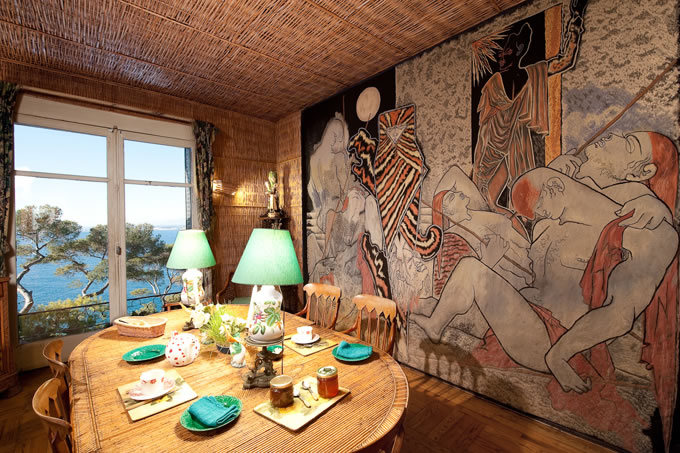
Cocteau even painted some of the furniture.
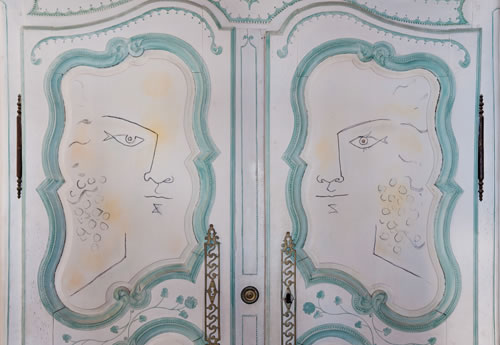
As for the name of the villa, Santo Sospir (or “Saint Sigh”) comes from Saint Jean’s previous name, so designated because when fisherman returned to port there, they would invariably sigh at the town’s beauty.
We totally got that.
The next day we ventured to the Festival de Cannes and immediately left – to visit Musée Bonnard in Le Cannet, the “first museum in the world dedicated to the work of Pierre Bonnard, a leading figure of the art of the nineteenth and twentieth centuries. The museum is naturally at the heart of the city of Le Cannet, which inspired the artist by its landscapes and light of the South. It was during this time that he painted his finest works.”
None of which, unfortunately, were at Musée Bonnard. But it was a pretty place, compact and sparkling new. Here’s a sampling of the quite nice work that was there.

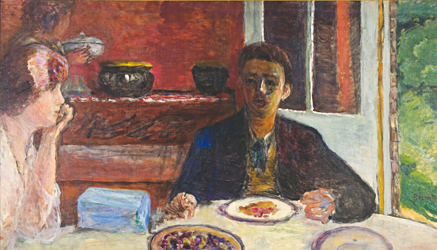
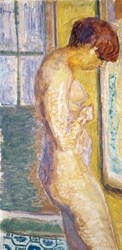
An altogether lovely visit to a place with an interesting, if modest, collection.
Neither of the latter two adjectives applied to the crowds walking around Cannes during its annual film festival, where not just the movies but everyone seemed on offer.
It was one big Keister Parade, an endless tide of tight white jeans, short skirts, even shorter shorts. And everyone on the lookout for celebrities, of which they had seen exactly none so far that day because why in the world would, say, Sean Penn ever go some place we would?
At midday, it was pretty much the unimportant in pursuit of the self-important. The problem was, no one with any juice would be out and about at that hour.
So we wandered up – and up – and up – and . . . finally arrived at the impressive, if grammatically tangled, Musée de la Castre.

LOCATED ON THE HEIGHTS OF SUQUET, THE HISTORIC DISTRICT OF CANNES, IN THE REMAINS OF THE MEDIEVAL CASTLE OF THE LÉRINS MONKS HISTORICAL MONUMENT, THE MUSEUM OF CASTRE DOMINATES THE CROISETTE, THE BAY AND THE LERINS ISLANDS.
The museum presents the prestigious collections belonging to the city of Cannes: primitive arts Himalaya-Tibet, Oceania, Ancient America and Mediterranean antiquities world music instruments (Africa, Asia, Oceania and America) and also landscape paintings 19th century. Its square tower of the twelfth century (109 steps) offers an exceptional 360 ° panorama over Cannes and its region.
Here’s one-quarter of that panorama.

As for the collection, it might well be “prestigious,” but there’s no question it’s odd. You can poke around it here if you like.
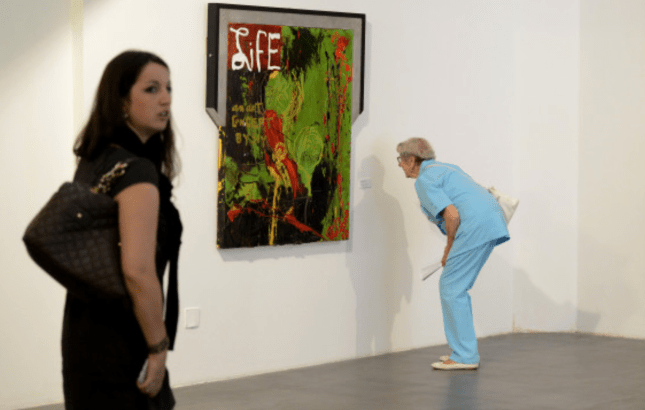
What we preferred to do was head back to Nice for a return visit to the Museum of Modern and Contemporary Art, where we encountered an army of museum personnel and a huge crowd waiting for – this is true – Sylvester Stallone. We had no idea why he’d be showing up there; we just wanted to get into the museum and see artworks by the likes of César, Yves Klein, Niki de Saint Phalle, and Arman.
But . . .
We had stumbled upon a gallery opening that featured the painterly endeavors of the aging American movie star, as Le Huffington Post reported.

CULTURE – Le Musée d’art moderne de Nice accueille jusqu’à fin mai une rétrospective des oeuvres de Sylvester Stallone, plus connu pour ses rôles au cinéma que pour ses talents de peintre. A cette occasion, l’acteur américain est venu présenter sur la Côte d’Azur, ce samedi 16 mai, l’exposition qui lui y est consacrée.
“La peinture touche les sens, la vérité est immédiate”, a expliqué l’acteur-peintre au cours d’une conférence de presse aux côtés du député-maire UMP de la ville Christian Estrosi. “L’écriture peut aussi toucher tous les sens mais je pense que la peinture est la forme la plus authentique, la plus honnête de tous les arts, parce que c’est simple, ça ne pardonne pas”, a ajouté l’interprète de “Rocky” et “Rambo”.
Sylvester Stallone! The Mayor of Nice! A retrospective! Could it get any more French than that?
It could.
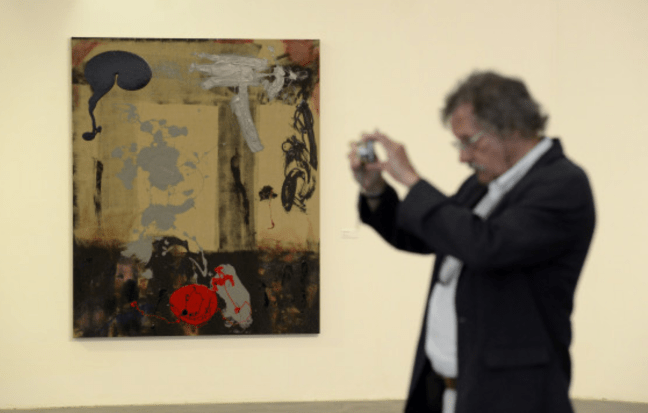
Back in Villefranche, we sat on our terrace and watched the birds wheel and bank and dive like some fly-by homage to Tippi Hedren and listened to Frank and Billie on a local jazz station and saw the horizon turn from light blue to pink to dark blue and heard the incessant coo of the doves down below and then the lights along the hillside began to wink on – there there there there – and, man, it was swell.
A couple of days after that, we embarked upon the Menton Death March.
After getting off the train in La Perle de la France, our first stop was Musée Jean Cocteau Collection Séverin Wunderman, which was at that time hosting Les Univers de Jean Cocteau, whose description was slightly less than informative.
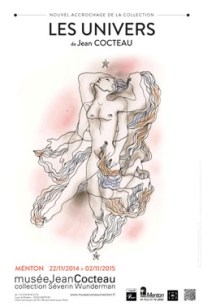 As of November 22, 2014, and until 2 November 2015, the museum will be dedicated to the obsession of the place and backwards and figure twice in the work of the artist.
The proposed route is organized into seven sequences which each represent one of the world of “Prince of Poets”: Perception or the “inner theater” of Jean Cocteau Location / Envers and poetry, Intermediate or figures as the angel Heurtebise that we find in his work, Cupids, with death is a major theme of his artistic work, spirituality and echoing the magic, astrology and parapsychology, and finally Space-time or “degravitation” by which means the detachment Cocteau philosophies that take the man and the earth to the center of the universe. A seventh sequence, the museum’s Bastion nearby, gives studying monsters and myths of artistic work of the poet.
We had no idea what any of that meant, but the building itself is a knockout.
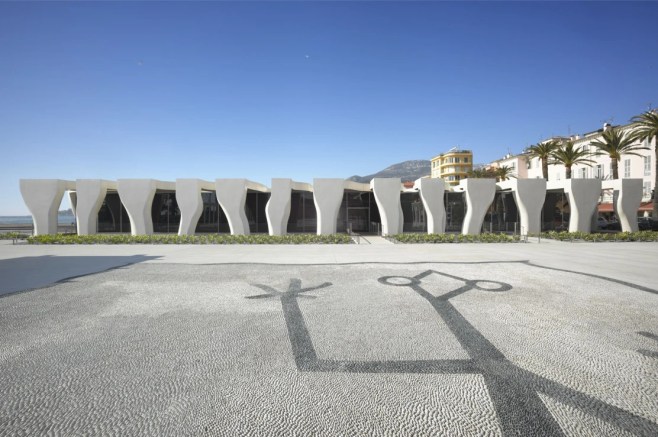
Cocteau was a sort of Jacques-of-all-trades – writer, artist, designer, filmmaker – each of which was represented in the exhibit. (The entire collection was eventually available at Videomuseum – the mother lode of French art.)
From there we marched – wait for it! – straight uphill to Basilique Saint-Michel, which of course was closed, as was the adjacent chapel, which was either the Chapelle des Pénitents Noirs or the Chapelle des Pénitents Blancs, no idea which.
Undaunted (we had visited the church a decade earlier on a previous trip), we traipsed even farther uphill to Cimitière du Vieux Château, which Guy de Maupassant called “the most artistic cemetery in Europe.”
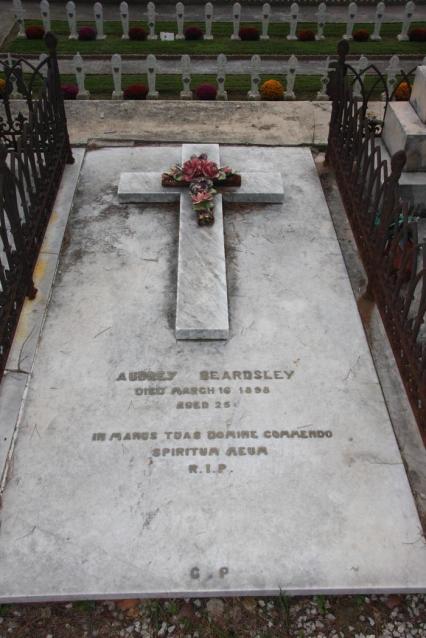
We were looking for the grave of the artist Aubrey Beardsley who, like many consumptives of the time, went to Menton to die. Unfortunately, we had failed to consult Find a Grave beforehand, so we wandered around for half an hour but never did see Beardsley’s tombstone.
Here it is now.
We then trundled back down to Menton centre to the Cocteau-decorated Salle des Mariages at the Hôtel de Ville, a creative endeavor the artist described as a monumental struggle with . . . himself.
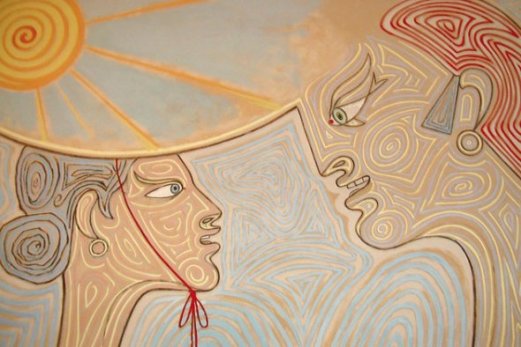
This Mariage Hall was designed and decorated by Jean Cocteau, in 1957 and 1958. Everything you see in this room was signed by the artist: the lamps, the chairs, the panther-skin rugs, the doors, the curtains…
All mariages of Menton residents take place in this hall since a wedding ceremony performed in the town Hall is the only one legally recognised in France . . . “Tired of pen and paper – wrote Cocteau – I undertook a mountain cure on the scaffolding so that through bodily tiredness I would restore my mind. My impulsive acceptance came from my embracing the motto: «à I’impossible je suis tenu» – in face of the impossible I go on.
“The Town Hall struck me as rather unsympathetic. I needed to play tricks with it, to try to adapt the style of the turn of the century on the Riviera, with its villas mostly now gone, painted with sheaths of iris, algae and heads of waving hair. Such was my point of departure, from which I was carried far at the command of that “other self” which dictates what we must do.”
When we got there, of course, it was closed. But here’s a good look at what we didn’t get to see.
At that point the Missus and I headed to Monaco, which we figured would not be closed. First stop: the Palais Princier de Monaco, which some consider a yawn but which we liked, except for the insufferable British guy narrating the audio guide.
Take your own tour here.
We also popped into the cathedral where Grace Kelly is buried in a tomb inscribed Gratia Patricia Principis Ranierii III Uxor.

More impressive was Musée Océanographique de Monaco, founded in 1910 by Prince Albert 1er, who “sank all of his casino profits into a passion for deep-sea exploration.”
For starters, it’s a beautiful building.

Inside, there was plenty to explore: the aquariums, the sharks (especially the video On Sharks and Humanity), and a bunch more videos here.
We also swung by Le Jardin Animalier de Monaco, which we do not recommend, mostly because they hid the hippopotamus somewhere, somehow. That’s just not right.
By then we’d had pretty much all the excitement we could handle, so we headed back to Villefranche. Later, around 10 pm, we heard a lot of booming so we went out on the terrace and – lo! – there was a big fireworks display somewhere in the general vicinity of Cap Ferrat.
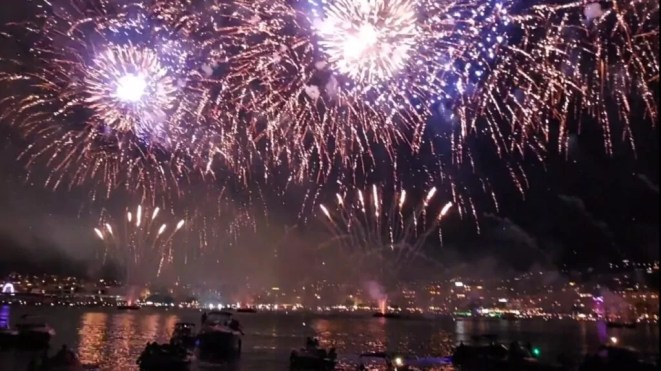
Very sparkly.
Next to last day of the trip, we headed back to Nice, walking through Vieille Ville, strolling along the Promenade des Anglais, doing our best imitation of the classic French flâneur – something made slightly more difficult by the myriad selfie sticks surrounding us.
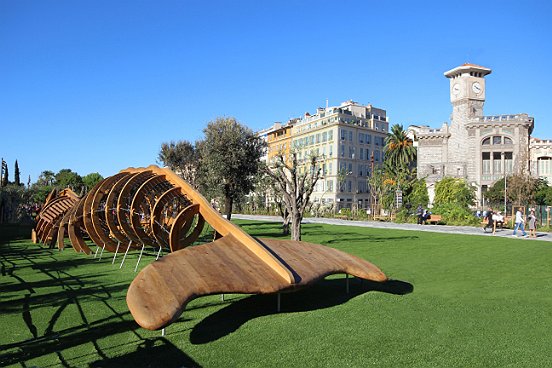
We also walked through the delightful Promenade du Paillon, a new park stretching from Place Masséna to Garibaldi Square. Best part: all the stuff that was there for kids to climb on.
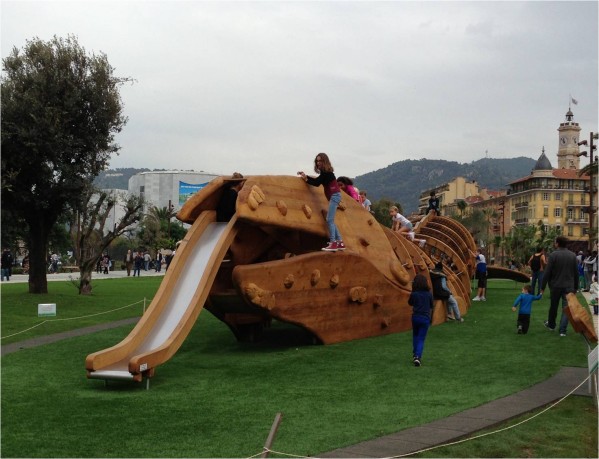
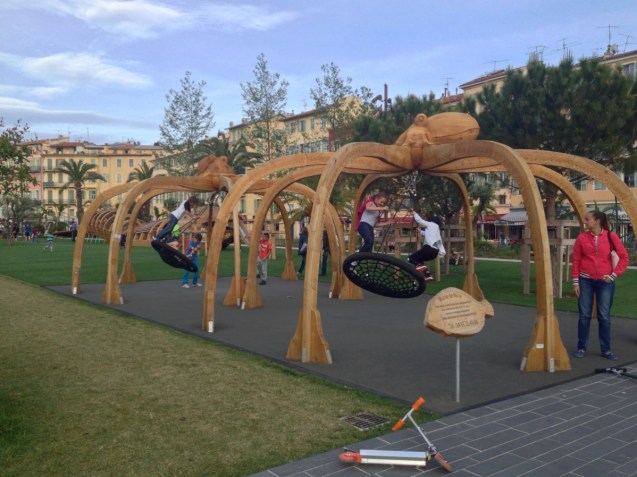
On our last day we headed to Citadelle Saint-Elme, the 16th century fortress that looms over Villefranche and houses the Town Hall, the Volti Museum, Goetz-Boumeester Museums, and the Roux Collection.
Also the Chapelle Saint-Elme, where there was an exhibit dedicated to the artist (and Holocaust victim) Charlotte Salomon.
Charlotte Salomon was a prolific painter who produced over 1,300 gouaches. A luminous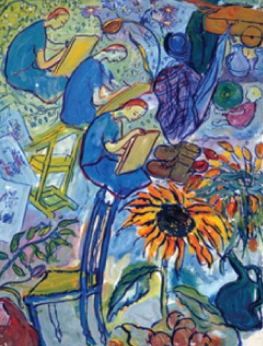 work, like a cry, as the only escape from the darkness of the world.
The author of “Delicacy” [David Foenkinos] has reconstructed the life of this artist in a very beautiful novel “Charlotte” , hailed by critics. In honoring [her], he lifted the mystery about this work that the French will be able to discover in Villefranche after several international exhibitions in Europe and the United States.
The work of Charlotte Salomon is unique, conceived as an opera scenario: gouache each door on the back of musical references (classical, opera or popular) intended to highlight the action suggested by the drawing.
The U.S. exhibit mentioned above appeared at the Jewish Museum in New York in 2001.
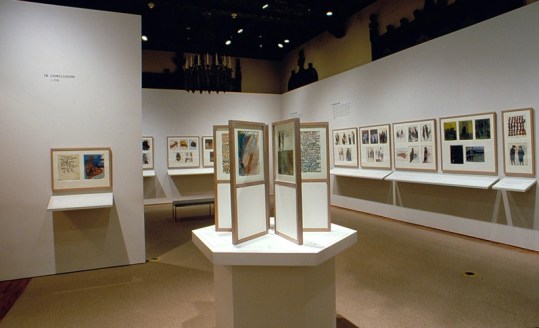
During World War II, while living in exile in France, the young German-Jewish artist Charlotte Salomon (1917–1943) created Life? or Theatre?: A Play With Music, comprising almost eight hundred small gouache paintings. In this work, Salomon combined painting with text and musical cues to tell a compelling and autobiographical coming-of-age story set amid increasing Nazi oppression and a family history of suicide. Although the artist died in Auschwitz—a fact that deeply affects our view of the work—Life? or Theatre? survived and stands as a testament to Salomon’s life and singular artistic vision.
The exhibit in Villefranche was more modest but just as moving.
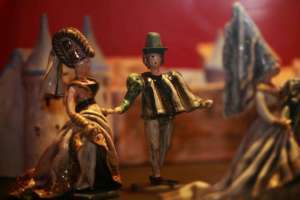
Unfortunately the Goetz-Boumeester Museum, with its hundreds of works by contemporary artists including Picasso, Miró, Picabia, and Hartung, was closed. We did, however, catch the Roux Collection, which “features several hundred figurines which take visitors through the daily lives of men and women in the Middle Ages and Renaissance.”
Comme ça . . .
And last but not least, Fondation Musée Volti.
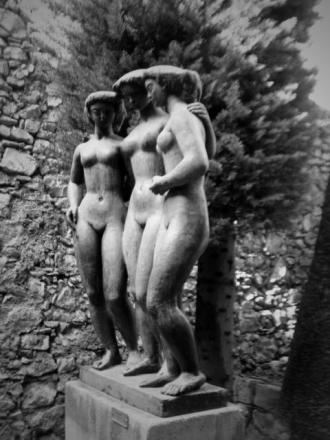
Museum of sculptor Volti combining local architecture and sculptures. Nestled at the bottom of the casemates of the Citadel, a people of bronze women, copper and terracotta, display their voluptuous curves in a green gemstones.
(Don’t you just love Google Translate?)
• • • • • • •
Two years earlier, on the last night of our stay in Villefranche, I walked down to the port, stood alongside the bust of Jean Cocteau, and took what I believed to be my last look at the Mediterranean Sea.
But I got a mulligan.
So I went back down, stood in the same spot, and took what likely will be my last look at the Mediterranean. And said goodbye to the blue-green water, the clinkaclanka tympani of the boat tackle, and the triple strand of lights that adorn the hills stretching from Villefranche to Beaulieu to Cap Ferrat.
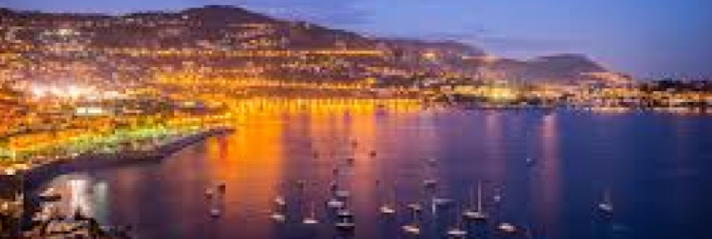
Then I walked up the 100-odd steps to the apartment, and the Missus and I got ready to go home again.
 Travels With The Missus
One thought on “Four Starry Tours of the Côte d’Azur”