Way back in 1777, the redoubtable Samuel Johnson intoned, “When a man is tired of London, he is tired of life; for there is in London all that life can afford.”
No disrespect to the good doctor, but maybe not so much.
By the early 1990s, the Missus and I had made semiannual pilgrimages to the London fabric shows for half a dozen years, at which point the city started feeling a little, well, threadbare to us. Not at all tired of life, though, we swapped out the British trade shows for the French ones.
Here’s how I started an Adweek column when we got home from our première visite to Première Vision.
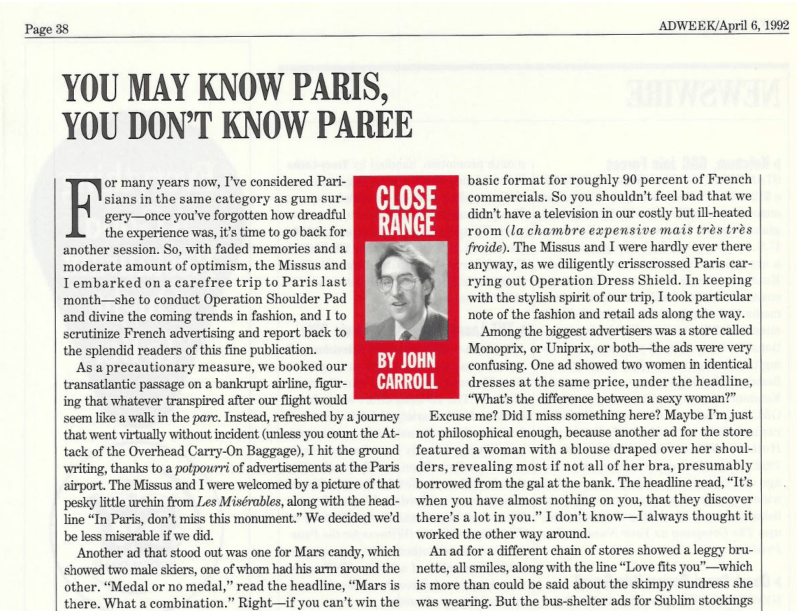
For many years now, I’ve considered Parisians in the same category as gum surgery – once you’ve forgotten how dreadful the experience was, it’s time to go back for another session. So, with faded memories and a moderate amount of optimism, the Missus and I embarked on a carefree trip to Paris last month – she to conduct Operation Shoulder Pad and divine the coming trends in fashion, and I to scrutinize French advertising and report back to the splendid readers of this fine publication.
As it turned out, however, we did far more than that.
That was the trip we fell in love with Paris, thanks to flâneuring around town in the spirit of Gustave Caillebotte . . .

. . . and soaking up lots of great art, starting with the Toulouse Lautrec exhibit at the Grand Palais.
Of aristocratic origins, Toulouse-Lautrec (1864-1901), marked by his physical deformity, overcame his painful condition by exploiting ceaselessly his drawing skills which, demonstrated since his childhood, constituted a family tradition.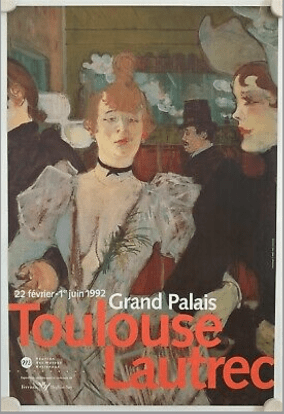
Deeply interested in “ nocturnal paradises ” of all kinds – from opera to cabarets and brothels – he haunted the world of bohemia and the Montmartre demi-monde of which his vision was both human and unrelenting, free from all moral or social judgement. He developed a multi-faceted painted and graphical work which the exhibition aimed at showing through a progress which was at the same time thematic and chronological.
The precision of his stroke, prompt to seize the silhouettes of the great stars of the Paris stages – Jane Avril, Loïe Fuller, Aristide Bruant etc.- and to explore their psychology and his bold layouts not only deeply marked the arts of poster-making and illustration but also the applied arts of the Art Nouveau.
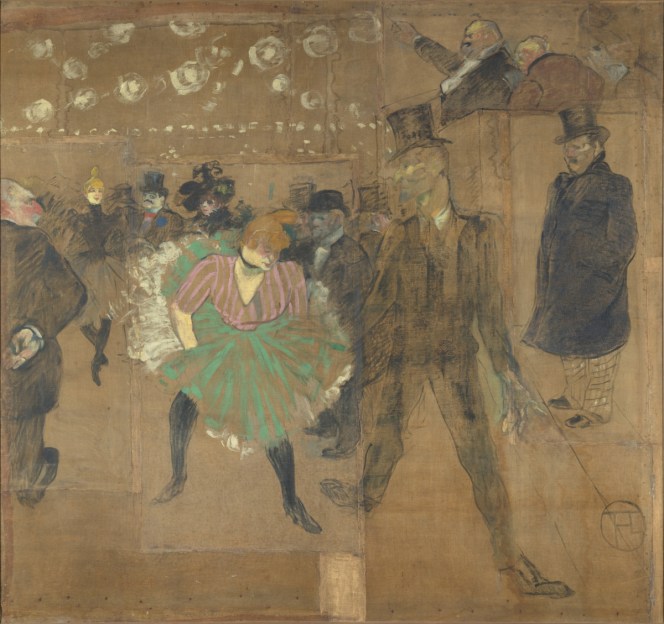
Comme ça . . .
This being our third trip to Paris, we also began to sample some slightly less grand – but no less engaging – museums around the city.
There was, for starters, the Musée Carnavalet, where we immersed ourselves in the history of Paris. Not far from there was the Musée Cognacq-Jay, the collection of 18th-century art amassed by Ernest Cognacq, founder of La Samaritaine department stores, and his wife Marie-Louise Jaÿ.
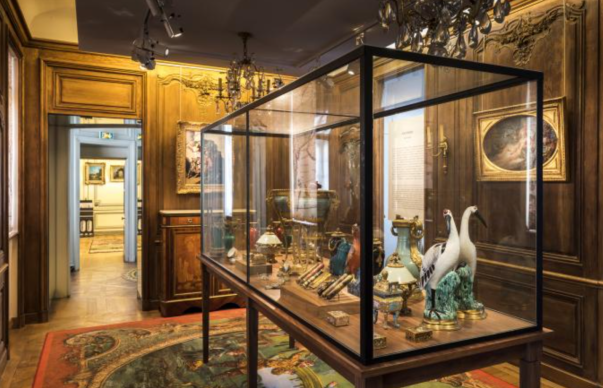
Ernest Cognacq chose not to bequeath his entire collection in his Parisian home, preferring to exhibit a selection of eighteenth-century works in a separate space, drawing inspiration from the Musée Carnavalet and seeking to create a period atmosphere where the wood panelling and other interior design features would be in keeping with the artworks on show. Remaining true to this spirit of retrospective recreation . . . the Musée Cognacq-Jay presents exhibitions which aim to expand visitors’ understanding of French art and society in the eighteenth century, but also of the fascination which the Age of Enlightenment continues to evoke in our own day and age.
We totally loved the Cognacq-Jay and returned there several times during subsequent trips, thanks entirely to the invaluable Carte Musée, which for a flat – and remarkably reasonable – fee, “gives free access to more than fifty museums and monuments in Paris and the Paris region.” So with the Cognacq-Jay, and many other museums, we could duck in and just revisit our favorite rooms and artworks totally guilt (and gilt)-free.
The one that got to us most, though, was the haunting Musée Nissim de Camondo.
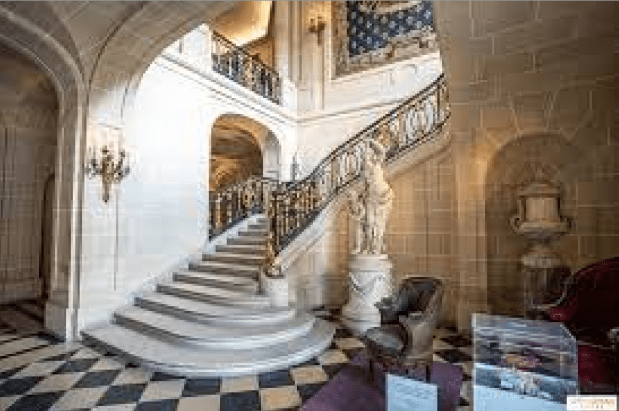
Moïse de Camondo, a reputed Parisian banker during the Belle Époque, was a passionate collector of French furniture and art objects from the eighteenth century, and he amassed a collection of unusual quality. In 1911, he hired architect René Sergent to build a private mansion next to Parc Monceau that would be worthy of this collection and suitable for his family. The design was modeled after that of the Petit Trianon in Versailles, but behind the handsome décor of wood-paneled apartments were hidden the accoutrements of modern life, including kitchens, offices and bathrooms. The home, which is fully preserved in its original condition, offers an opportunity to discover the taste of a great collector and to get a glimpse of the everyday life of an aristocratic home.
Here’s the haunting part.
Moïse de Camondo meant to give his mansion and collection to his son Nissim. But World 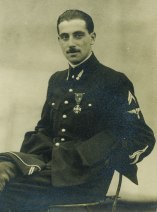 War I broke out, and Nissim was killed in an air battle in 1917. After this tragic loss, he decided to bequeath his property to the “Arts Décoratifs”, in memory of his son. The museum opened the year after Moïse de Camondo died, in 1935. During World War II, his daughter, Béatrice, his son-of-law Léon Reinach and their children, Fanny and Bertrand, died in the nazi camps. The Camondo family died out.
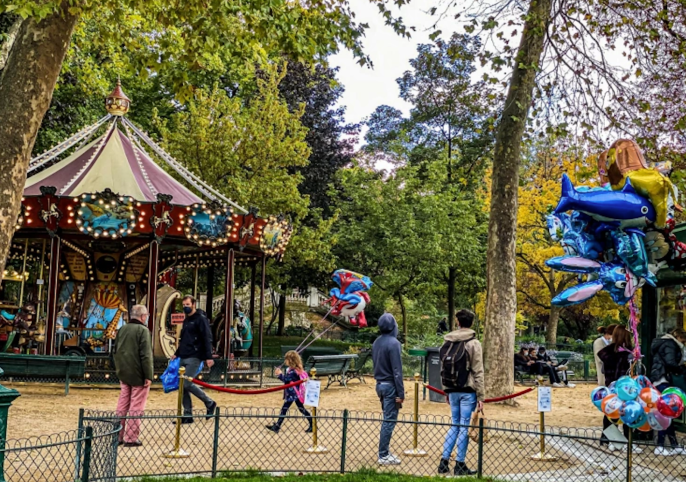
Afterward, the Missus and I sat in the lovely Parc Monceau and watched les petits run and jump and play.
The Missus:
Another wonderful small museum is Maison Victor Hugo. The author most famous for his novels The Hunchback of Notre Dame (1829) and Les Miserables (1862) – popularized anew through the monster hit musicals they inspired – gets his own appropriately dramatic treatment. You’ll be wowed by the stunning period decor depicting Hugo’s 16-year rental of the grand apartment from 1832 to 1848, combined with fascinating exhibitions on how his novels were imaginatively publicized and morphed into renown.
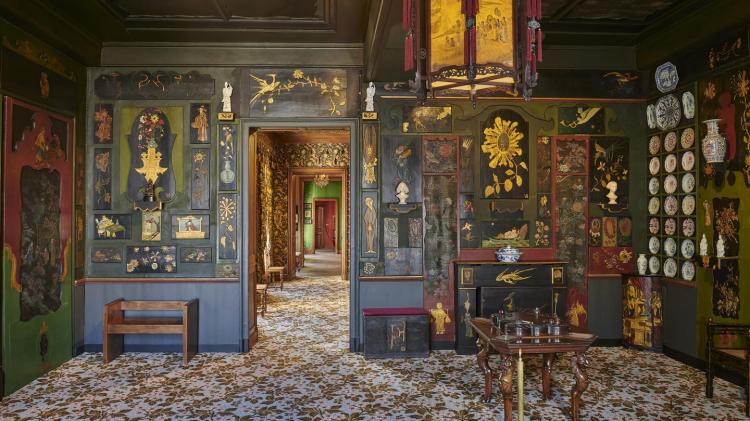

Another benefit the museum offers is a (free!) visit inside one of the magnificent Place Des Voges residences, among the most historic, luxurious and costly in Paris.

As described by the French Monuments website: “The picturesque Place des Vosges is located in the Marais district in Paris, at the junction of the 3rd and 4th arrondissements. This excellent example of Louis XIII-style architecture is the oldest planned square in Paris and its charm comes from the regularity of the façades. Often considered one of Europe’s most beautiful squares, the Place des Vosges, formally named “Place Royale”, is a perfectly symmetrical square (140 m X 140 m) bordered by 36 buildings.”
The park-like layout with lush trees and foliage, comfortable benches and children’s play areas consistently draws crowds of Parisians and tourists of all ages and incomes. Not into picnics on the lawn? A wide range of cafes – from snacks to Michelin-starred dining – surround the Place under the beautiful covered arcades, alternating with ritzy art galleries and antique stores. Window-shopping is encouraged.

Also in the Marais was a now closed doll museum called Musée de la Poupée, alas memorable to us for all the wrong reasons. No less than Gwyneth Paltrow’s “Goop” recommended a visit thusly:
WHY WE LOVE IT
Tucked away down a garden-lined alley, this private museum’s collection encompasses two centuries of doll-making — making it both nirvana for doll-loving little ones, and a little creepy and cool, too. Besides the museum, there’s an in-house doll-hospital, and of course, a shop.
Now I would have emphasized “a little creepy” over nirvana for little ones, as there were far too many demonic-faced antique dolls in the enormous 450-plus collection, often with nightmare-inducing eye movements. Chucky would have met his match.


While most of the visitors seemed intrigued and quietly respectful when we were there, John and I unfortunately couldn’t stop cracking jokes. As the displays became odder, we became more unruly. Just as I mused that the doll hospital must have a psych ward, John said something I found so hysterically funny that I became convulsed with uncontrollable laughter. It was the kind they show on blooper reels from the “Carol Burnett Show” where the harder actors try not to laugh, the more they can’t help it.
Watching me doubled over made John laugh louder, so as we continually tried to calm down, just looking at each other made us both break up again. Turning to the doll displays made it even worse. This went on way too long, and just as it appeared the museum’s manager might call the police to have us removed, we fled out the back door in embarrassment. This of course did not stop us from laughing. Needless to say, it was not our finest hour – but we sure did have fun.
From that trip on – for many trips to come – we saw Paris in an entirely new light.
• • • • • • •
Back home, I filed this piece for Adweek (where I’d graduated from the New England edition to the national mothership).
Favorite passage:
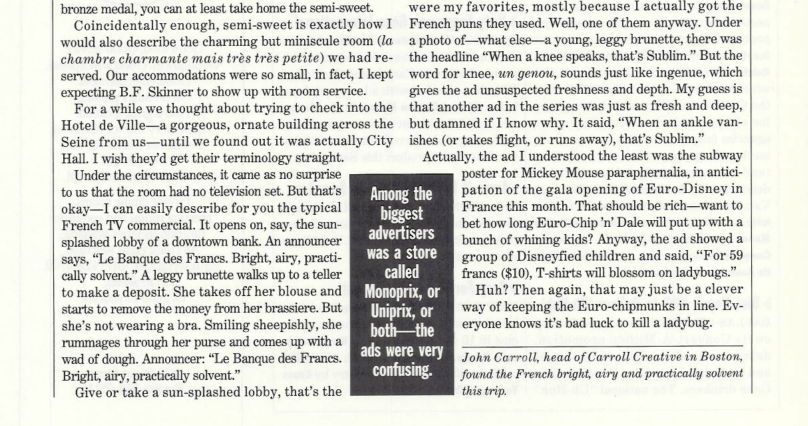
I can easily describe for you the typical French TV commercial. It opens on, say, the sun-splashed lobby of a downtown bank. An announcer says, “Le Banque des Francs. Bright, airy, practically solvent.” A leggy brunette walks up to a teller to make a deposit. She takes off her blouse and starts to remove the money from her brassiere. But she’s not wearing a bra. Smiling sheepishly, she rummages through her purse and comes up with a wad of dough. Announcer: “Le Banque des Francs. Bright, airy, practically solvent.”
Bright, airy, practically solvent – just like me and the Missus on that trip.
• • • • • • •
P.S. Several years after that trip, the Missus and I discovered another small gem of a Paris collection: Musée des Années Trente.
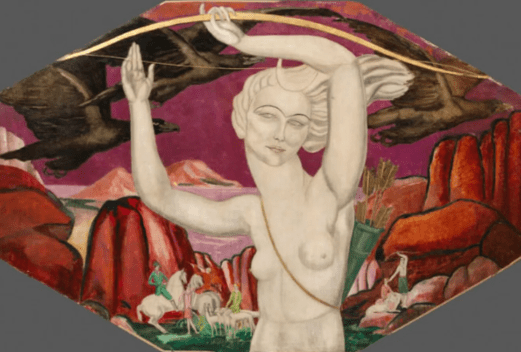
Some 800 sculptures, 2,000 paintings, as well as decorative objects, furniture, ceramics and also models of town houses and buildings of the 1930s are grouped together over 3,000 m². These collections highlight the characteristics of the aesthetic world of the 1930s: a return to realism and classicism. Works rarely shown, by Bernard Boutet de Monvel, Alfred Courmes, Maurice Denis, Georges Desvallières, Amédée La Patelière, Eugène Poughéon, Henry de Waroquier, Joseph Bernard and Paul Landowski.
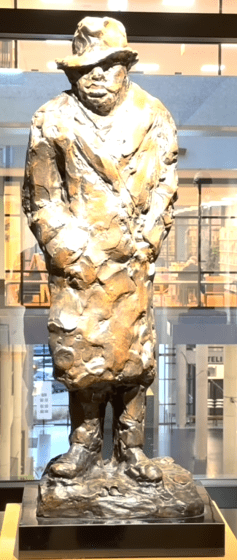
The museum opened in 1994 with a modest array of paintings, sculptures, and furniture, but it’s expanded greatly since then, as this recent video illustrates in detail. At the 15-minute mark there’s a short section dedicated to Arbit Blatas, a Lithuanian who arrived in Paris in 1925, settled in Montmartre, and proceeded to capture – in paint and in bronze – the artists living around him.
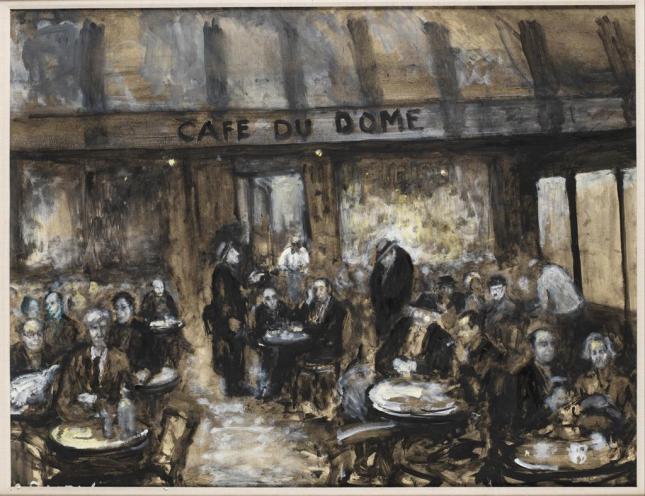
It was his sculptures that especially caught our fancy, especially Chaim Soutine . . .
. . . and Maurice Utrillo.
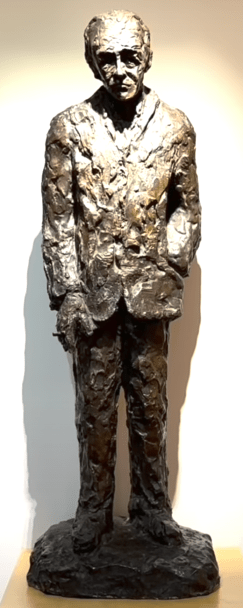
As it turned out, Musée des Années Trente was not the last place the Missus and I would see those two Blatas Boys.
But that’s a tale for another time.
 Travels With The Missus
One thought on “Go to Paris for the Fashion, Stay for the Artworks”