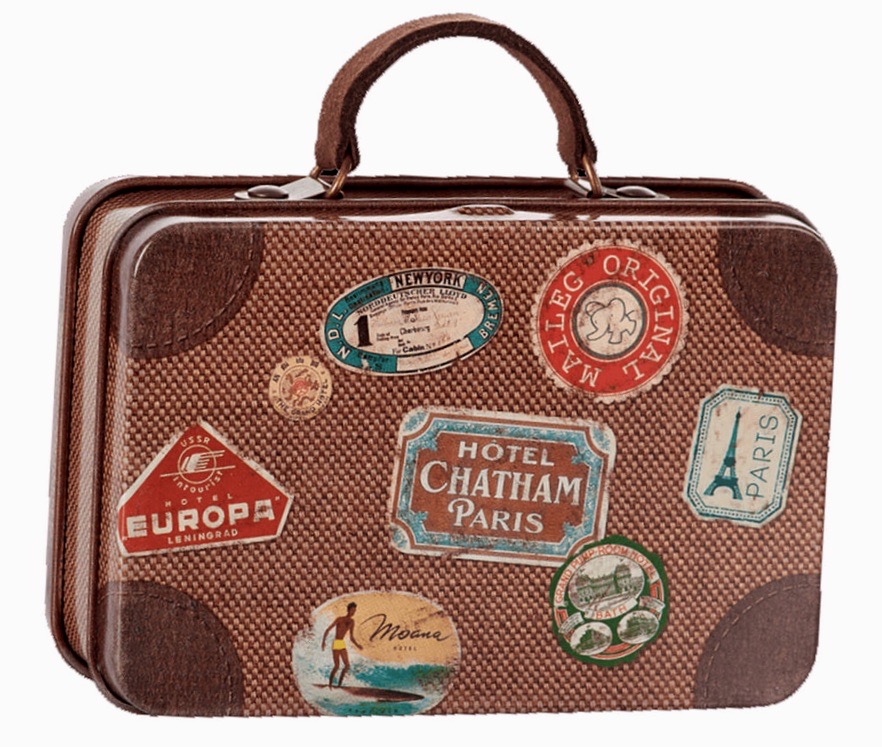
The lede of my October 1989 Adweek column told the tale of our first trip to Ireland.
The Missus, who is a veritable Balanchine of birthday presents, happened to notice that as of this year, I had put 40 big ones on the oldometer. “Johnny,” she said – she calls me Johnny – “it’s time we took you back to your roots.”
Right away, I thought we were going back to 89th & 3rd in Manhattan, to see how much the neighborhood had improved since my family moved away. But, as it turned out, we were happily bound for glorious Ireland, that Emerald Isle where the natives are relentlessly friendly and the roads even narrower.
Unfortunately, we flew over on the Aer Lingus L-1011 From Hell, which is to say the flight originated from New York. I have never encountered a more unruly group of people in my life, and I’m not just talking about the stewardesses. Not only that, the plane was rented – rented – the crew charged you for every drink, and dinner absolutely qualified as a UFO.
The biggest joke, though, is what Aer Lingus uses as a slogan: “Helping ideas take flight.” Hell, they can barely gets their planes to take flight. They shouldn’t push it.
But, through the grace of God (who also happens to be a major landlord in Ireland), we arrived safely and just in time to embark on our carefree vacation.
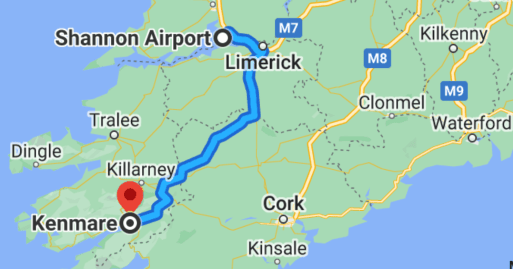
At Shannon Airport we rented a stick-shift Opel (whose reverse gear took me ten curse-filled minutes to find) and headed off to Kenmare (163.1 km, 2 hr 15 min).
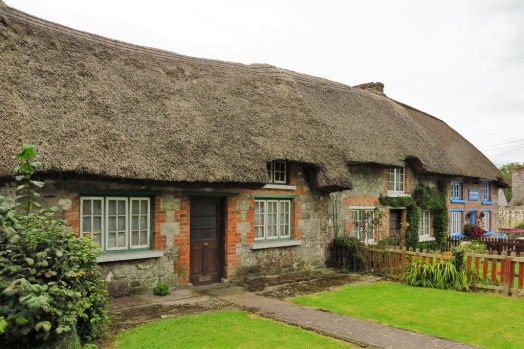
Early in our journey, while I was still getting used to wrong-side-of-the-car, wrong-side-of-the-road driving, we passed through Adare, a tidy little town filled with thatched-roof houses.
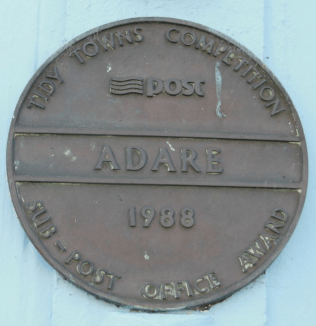
Better yet, Adare was an Official Tidy Town, designated as such the previous year for the second time since 1976.
The Missus and I notched a Tidy Town Twofer of our own when we stopped at Barbara’s Cafe (now The Village Kitchen) in Sneem (Tidy Town 1987) to sample Barbara’s renowned scones. They were swell, as was the town itself.
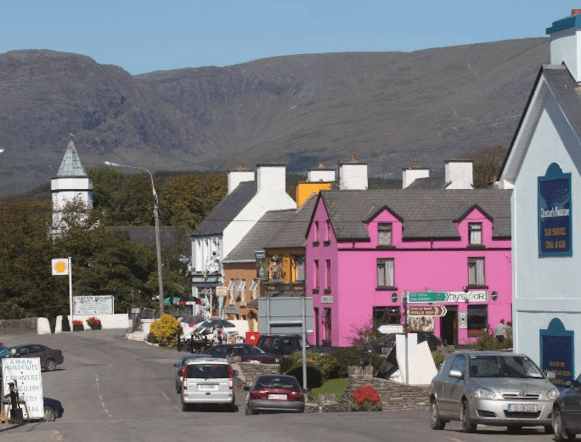
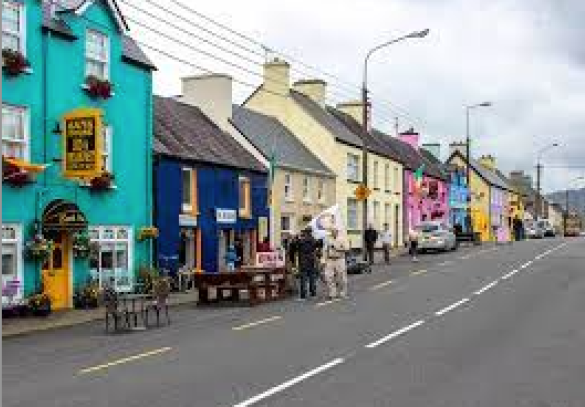
Thus refreshed with scones and scenery, we purchased a couple of Sneem coffee mugs and went on our merry way.
The Missus:
I had insisted we stop in Sneem for no other reason than it sounded so Dr. Seussical. It certainly reminded me of a children’s book with charming, clashing colored buildings one after another. Even our handmade coffee mugs at Barbara’s Cafe were whimsical – oddly shaped with pinched middles, wide mouths and Sneem scripted on the side. Happily they were also for sale. We still have them.
Once we arrived in Kenmare, we checked into the Park Hotel.
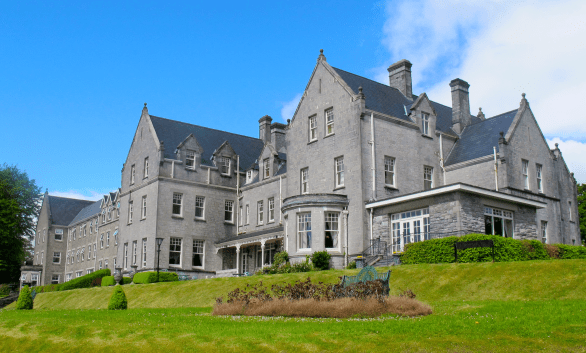
Long regarded as one of the world’s most revered and inspirational luxury hotels, Park Hotel Kenmare is set among established gardens which slope down to Kenmare Bay.
Heritage and luxury are combined in this historic hotel which dates to 1897.
During all this time the hotel has been a haven for discerning visitors seeking the ultimate escape in one of the most special places in Ireland.
The Missus:
About that “haven for discerning visitors” – apparently John and I were not up to snuff. I had booked the trip for October because my travel agent said it was just off season in Ireland so it would be less crowded, less expensive and the weather would still be good (most of the time anyway). The deal with Aer Lingus included roundtrip airfare (the fact that they rented an old, about-to-be-decommissioned plane for our trip oddly didn’t appear anywhere in the brochure), with vouchers for 10 nights in any Ireland hotel listed. You could also book those hotels in advance, which guaranteed a room upon arrival. Great!
The Park had the most stars of any of the hotels offered – with a small additional charge – so we booked it for the first two nights. It was as grand as the photos and we excitedly went in to register. Looking around the lobby, we decidedly stood out, and not in a Park Hotel way. While our hip, casual attire in understated neutrals had always gone over well in cities like Paris, it was distinctly at odds with all the British upper crust guests milling about, with men wearing navy blazers, slacks and ties and women in frumpy skirts with sweater sets or conservative dresses. Reminder – we were in the rural Irish countryside. That was strike one.
When I pulled out my voucher book, the look on the clerk’s face was clearly strike two. We were now officially riff and raff, assigned what I’m sure was the smallest room in the manor house. It still had lovely antique furnishings, but no pretty view of the surrounding grounds.
Deciding to make the best of it, we went to the lobby and asked for croquet mallets and balls to enjoy the lovely outdoors. Strike three. While croquet was clearly advertised in the hotel’s brochure, apparently cocktail hour was not an appropriate time. As it was still daylight, we politely insisted, and the sporting equipment was eventually forked over under duress.
It turned out the croquet wickets were set up on the lawn with the most beautiful views of the surrounding hills and water, with a glorious sunset on the horizon. Excellent. But that also made it the location of the patio where drinks were being served to the fusty Brits.
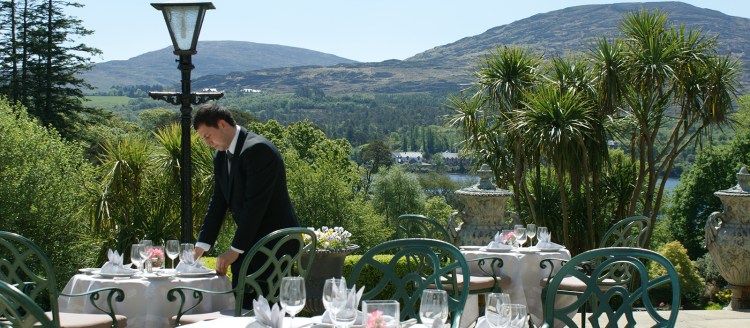
We were both mucking up their view and making too much noise. Chalk up one for the Americans.
The hotel’s website currently lists activities such as Morning Yoga and Candlelight Meditation, which I’m pretty sure were not available in 1989.
But Lawn Croquet certainly was.
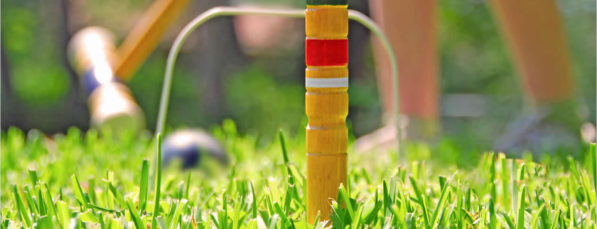
Grab your mallets and head down to our lush lawns for a splendid game of croquet with your family and friends. All the appropriate equipment is available (mallets, balls, hoops) from reception upon request. Definitely a recommended activity for a fine summers day.
That inevitably led to the First Annual County Kerry Invitational Croquet Championship, which – for those of you keeping score at home – the Missus won handily and celebrated lustily, much to the annoyance of the blue-blazer-and-gold-buttons set sipping pricey cocktails on the hotel’s outdoor terrace.
Beyond that, I remember not a single thing we did or saw around Kenmare, although the area purportedly features numerous attractions.
Whatever, we were soon on our way to the West Cork town of Bantry (44.6 km, 50 min).
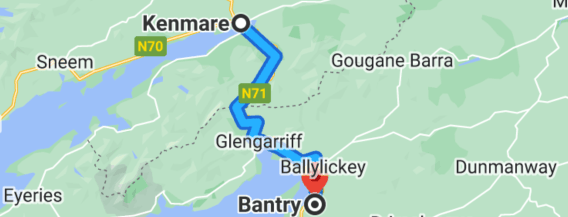
Upon our arrival, we checked into Ballylickey House.
On the boundary of Cork and Kerry, at the head of beautiful Bantry Bay and amidst the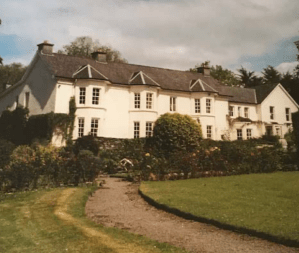 sheltered lawns and flower gardens, stands Ballylickey House. Bordered by the sea, the Ouvane river and mountains, and within easy reach of the world-famous Ring of Kerry and Killarney, Ballylickey House and the south west coastline are considered an idyllic and highly attractive holiday destination.
Ballylickey House was built some three hundred years ago by Lord Kenmare, as a shooting lodge. For the past four generations, it has been home to the Graves family, who have, through the years, enhanced and extended the property.
Once we had settled into our idyllic and highly attractive room, we decided to repair to the pub across the road for dinner.
“Maybe we should drive there,” the Missus said helpfully.
The Missus:
I wasn’t being lazy. I pointed out that there were no streetlights, nor lights on the long driveway up to the hotel and I was worried about walking back when it got dark.
“We’ve been in the car all day,” I replied manfully. “Let’s just walk.”
After we had dined on a fine sampling of local fare, we headed back to the hotel.
Except . . .
Not only were there no street lights in Bantry, there was no light at all. (See Adweek graphic below for details.)
“No problem,” I said, as we a) stumbled across the pitch-black road; b) failed to locate the hotel’s driveway; c) climbed over a fence and fought our way through a tangle of shrubbery; d) narrowly avoided a close encounter with a very loud dog; and e) collapsed at the hotel’s front door.
The Missus, bless her heart, only looked daggers at me, although no jury in the world would have convicted her if she’d used the real thing. I’m a lucky guy.
Other than that unfortunate incident, I have no recollection of anything we did in Bantry either, although Ballylickey House’s website lists loads of local attractions – from deep sea fishing and kayaking to Glengarriff Wood’s Nature Trail and the Ring of Kerry – none of which the Missus and I considered remotely attractive.
Especially the Ring of Kerry. We purposely avoided its notorious tourist traps – talkin’ about you, Waterford and Wexford – and headed north to Cashel in County Tipperary (178 km, 2 hr 4 min).
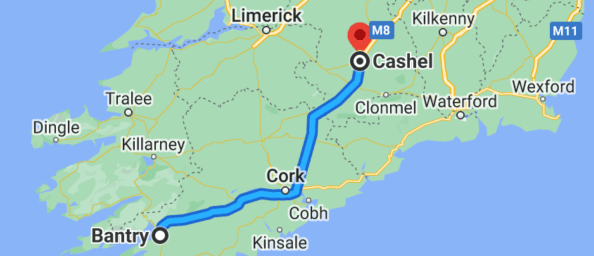
Driving on country roads in Ireland was a challenge on several fronts. Not only did we have to deal with the whole wrong-side mishegoss, we were mostly driving on two-lane roads, an inordinate number of which had been newly graveled right before we arrived.
So being stuck behind, say, one of the ubiquitous farm tractors motoring about the countryside was an adventure in 1) having your windshield peppered with a hail of gravel, and 2) calculating just when you might safely pass that tractor in the face of oncoming traffic.
In terms of roadway obstacles, though, it turned out that slow-going tractors had nothing on intractable cattle.
At one point we were forced to bring our Opel to a screeching halt so as to avoid crashing into a massive cow that stood blithely athwart both lanes of the road.
My immediate reaction was to treat the blasé bovine like a Jersey driver blocking the box in midtown Manhattan. That is to say, I leaned on the horn, which the cow found not at all mooving.
The Missus proposed a different approach. “You should go make it move,” she said encouragingly. Of course, I had about as much chance of doing that as making the NBA. So we waited, and the cow eventually moseyed on, allowing us to do the same.
Back on track toward Cashel, we encountered our third Tidy Town – Kinsale (1986) – which was more smelly than tidy while we were there. (For those of you keeping score at home, here’s the full list – through 2019 – of Tidy Town winners.)
While we were in the neighborhood, we stopped by the legendary Blarney Castle.
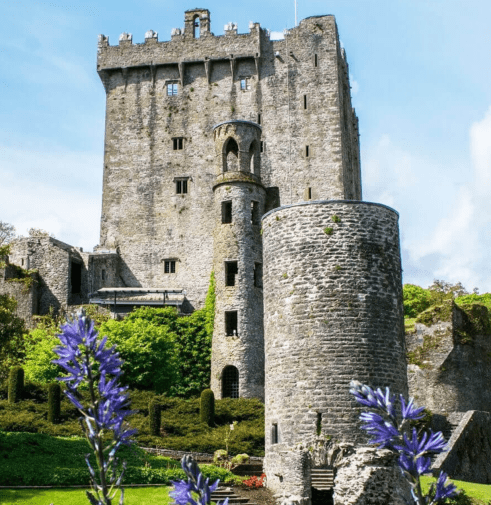
Built nearly six hundred years ago by one of Ireland’s greatest chieftains, Cormac MacCarthy, and has been attracting attention ever since. Over the last few hundred years, millions have flocked to Blarney making it a world landmark and one of Ireland’s greatest treasures.
Now that might have something to do with the Blarney Stone, the legendary Stone of Eloquence, found at the top of our tower. Kiss it and you’ll never again be…
The Blarney Castle website fails to finish that sentence, for reasons unsaid.
Regardlerss, here’s what I wrote when the Missus and I got home.
Laugh all you want, but kissing the Blarney Stone isn’t just a matter of sauntering up and puckering up. You’ve got to hang upside down at the top of a castle to do it, a test of manhood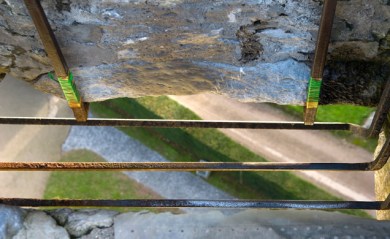 I’m proud to say I passed with flying colors, if not possessions.
As we descended the steps of Blarney Castle, I was telling the Missus what a gas it was to kiss the Stone and have the gift of gab bestowed on me. “Coals to Newcastle,” she muttered.
I just kept talking, though, and didn’t pay her any mind.
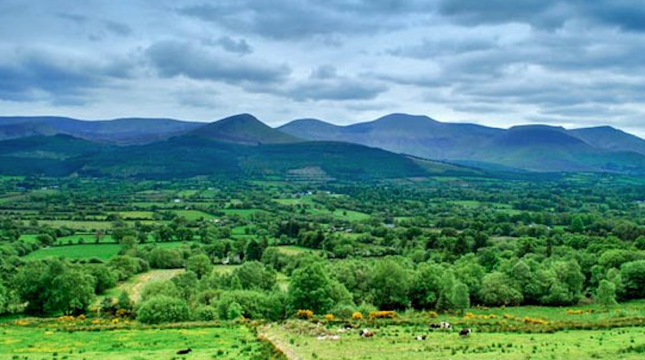
Eventually the Missus and I made our way to Glen of Aherlow, where we took in Ireland’s legendary 40 shades of green.
Next stop: check-in at the Cashel Palace, which back in ’89 was simply a hotel but now apparently is much more than that.
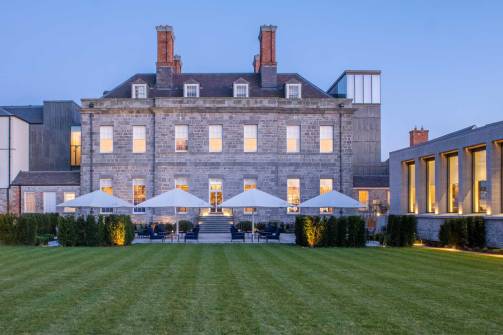
A Palladian manor, in the heart of Ireland, Cashel Palace is a luxury hideaway, meticulously restored and exquisitely reimagined. Spectacularly located by the Rock of Cashel in picturesque Co. Tipperary, the hotel is enveloped in nature and overlooked by ancient history.
The hotel’s website duly notes that it was “once home to the Archbishops of Cashel,” but fails to mention a different historical connection, one that Frommer’s Zac Thompson helpfully chronicled.
Built in 1732, the Palladian manor that once served as an archbishop’s country estate is just a rock’s throw from the Rock of Cashel, a remarkable collection of medieval and Celtic ruins crowning a limestone outcrop in cow-dotted fields.
The Rock is visible from the palace gardens, where, in the 1740s, the archbishop’s land agent, Richard Guinness, grew hops in order to make ale. His son, Arthur, would eventually use an inheritance from the archbishop to launch a beer empire in Dublin. So you could say the palace is where the Guinness idea first got brewing.
Cheers!
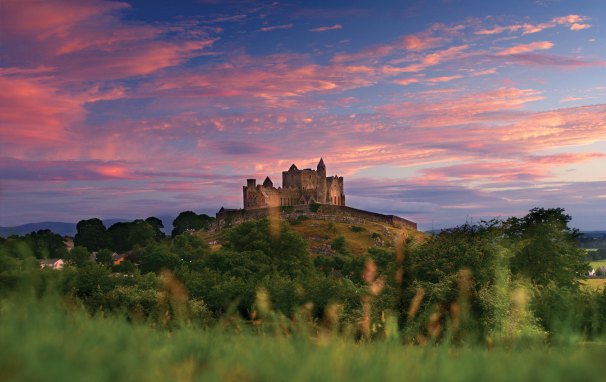
Anyway, here’s how the Rock of Cashel looked from our hotel room, a wonderful converted attic space with wood-beamed eaves and a very large picture window.
And here’s how it looks close up.
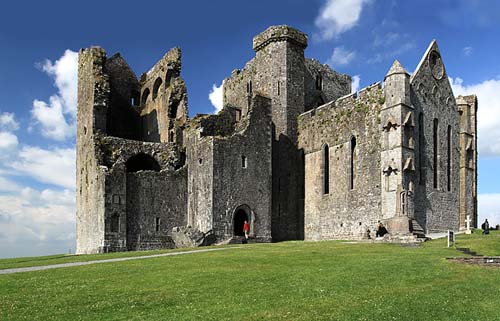
Either way, it was spectacular.
And then we were off to Dublin (161.1 km, 1 hr 48 min).
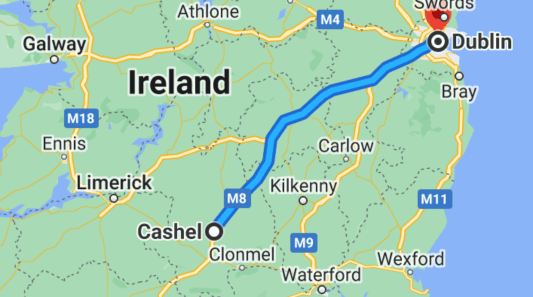
Along the way we stopped for lunch in Kilkenny, a totally lovely town where we ate in a pub that provided Irish newspapers on long wooden sticks. (Hey – what sticks in the memory sticks, yeah?)
The Missus:
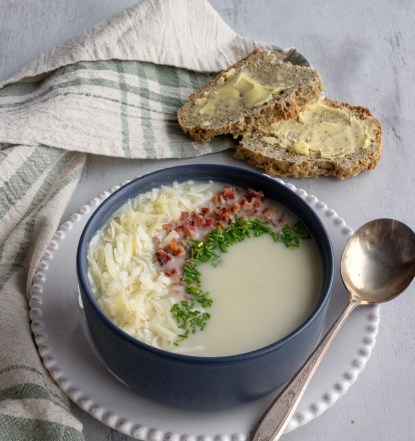
Two things I’ll always remember about Kilkenny. First, at the aforementioned pub, one of the local papers had an article on the Irish having so many heart attacks because of the excessive cooking and eating of rich foods, especially cream-laden soups and butter-drenched breads. Guess what we were having for lunch? Well, it was delicious.
Second, and the reason we stopped there: Kilkenny is a wonderfully preserved Medieval town with glorious architecture and a fabulous castle. Actually, Kilkenny was given the status of a city by Royal Charter in 1609 by King James I of England. The locals are proud of their heritage and delighted to share their history with you.
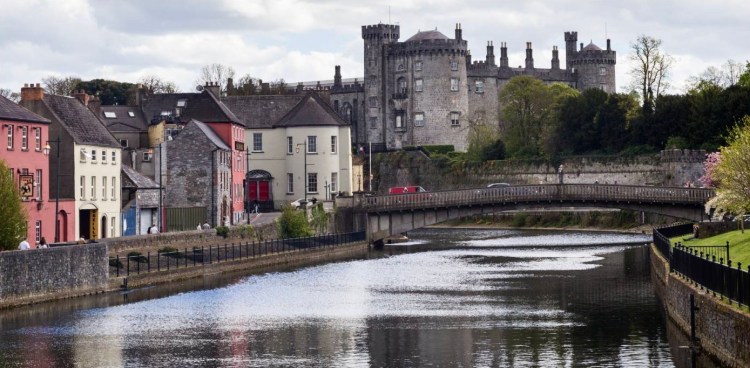
Dublin, on the other hand, was less, well, welcoming. For starters there were the drivers, who navigated the streets with the same abandon – no turn signals, no yielding, straight on red – as Boston drivers, except on the opposite side of the road.
There also seemed to be two soldiers with assault rifles at every intersection, making it feel like Anything Can Happen Day the entire time we were there. Regardless, here’s what Dublin looked like around the time we visited.
We stayed at a nice hotel near St. Stephen’s Green (I don’t remember which one, but here are some candidates) I do remember that we visited Trinity College to view The Book of Kells. The scholarly group Smarthistory produced this conversation about the storied manuscript housed at the oldest university in Ireland.
The craftsmanship and intricate detail of the work is truly amazing.
There are at least 23 other Top-Rated Attractions and Things to Do in Dublin, but for the life of me, I can’t remember a single one we visited.
Given our track record, though, I gotta believe we window-shopped on Grafton Street and also swung by the National Gallery of Ireland, whose collections include “the Yeats Museum, seven rooms devoted to Irish art, Italian Painters, the Shaw Room, and Baroque Room.”
Here’s the NGI’s online collection and here are some virtual tours, including this one of the overall Gallery.
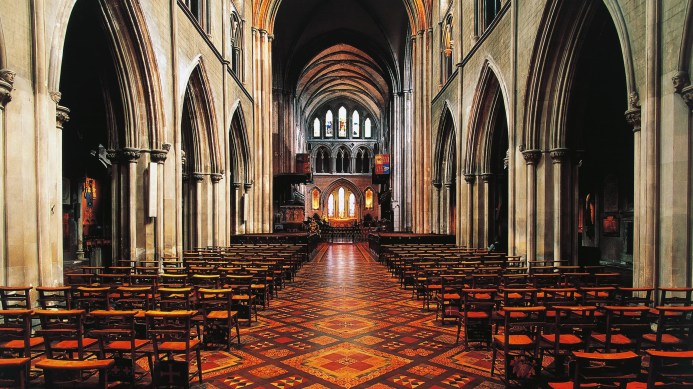
I also gotta believe we would have visited Dublin’s St. Patrick’s Cathedral, although I can’t swear to it.
Either way, here it is.
What I do vividly recall was our day trip to Malahide, which had just been designated Ireland’s 1990 Tidy Town – bringing our personal Tidy Town total to what might be an American Tourist Record of four.
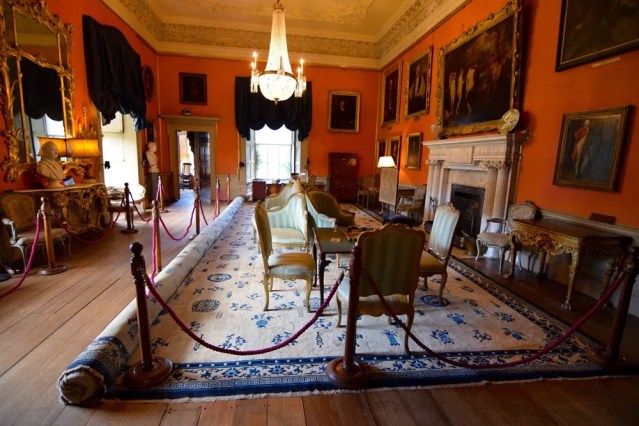
It also brought us to Malahide Castle.
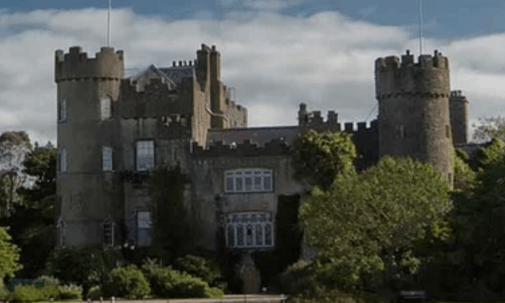
Malahide Castle, set on 250 acres of parkland in the pretty seaside town of Malahide, was both a fortress and a private home for nearly 800 years and is an interesting mix of architectural styles. The Talbot family lived here from 1185 to 1973, when the last Lord Talbot died. The estate was then sold and became a tourist attraction in the 1980s.
Representative mix of architectural styles.
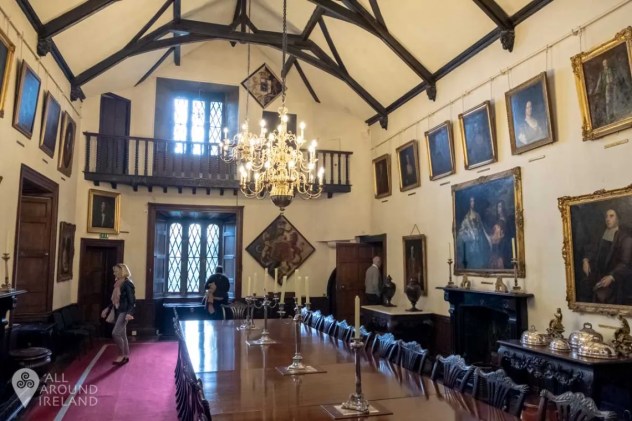
Totally loved Malahide, even though it happened to be National Bring a Biddy to a Castle Day.
The Missus:
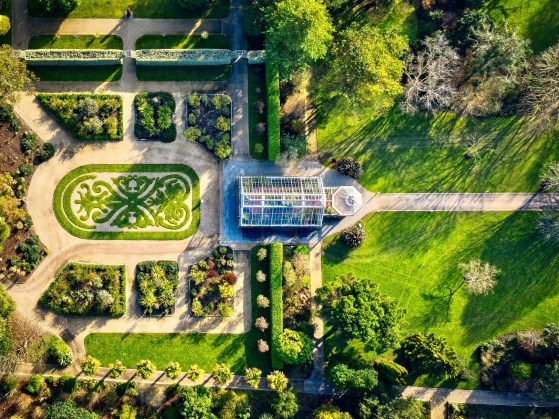
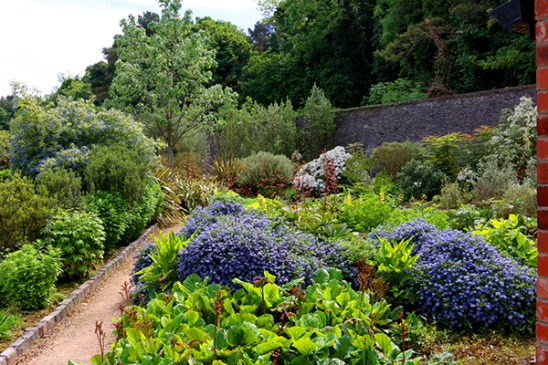
As the planner, I can guarantee we did all the things mentioned above, as my top picks to visit throughout Europe always include art museums, fabulous churches, glorious castles, and shopping – both window and inside. (I am a fashion consultant after all.) One thing I learned from a well-traveled friend – when in England and Ireland, you must leave time to tour the “grounds” at all historic sites, as they are often as striking as the well-preserved buildings. Below, a few photos of the sumptuous gardens at Malahide.
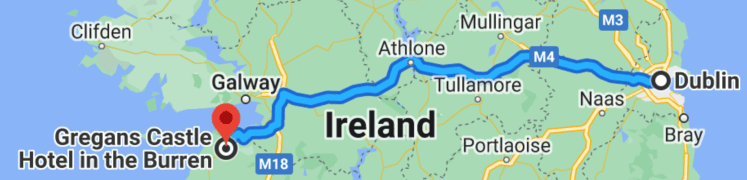
And then we headed off to Gregans Castle (236.3 km, 2 hr 45 min).
Concerned that we might encounter a radio desert on our cross-Ireland drive, we purchased a couple of cassette tapes to play in the Opel along the way. One was a Beatles tape lost to history; the other was The World of Sam Cooke, a compilation of tunes from his sadly foreshortened career as a recording artist. Released just that year, it featured a wonderful mix of songs and musical styles.
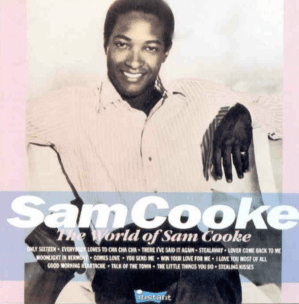
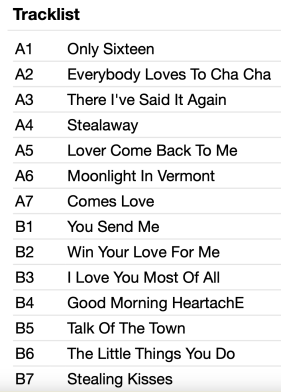
Here’s one of our favorites, originally recorded by Cooke in 1959.
Since it’s a long drive, here’s another great track.
The world of Sam Cooke would have been so much richer had he managed to live longer. What a shame.
Eventually, we arrived at Gregans Castle in Ballyvaughan, possibly our favorite place in all of Ireland.
For one thing, the rooms were beautiful.
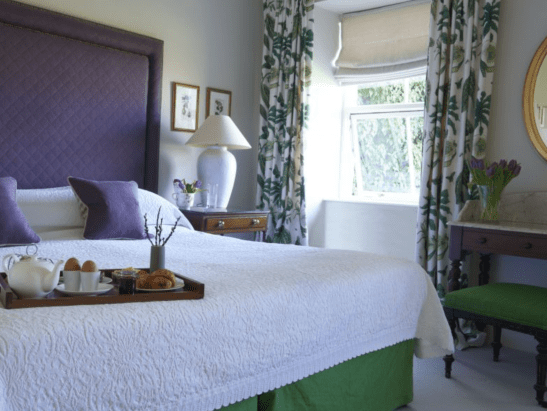
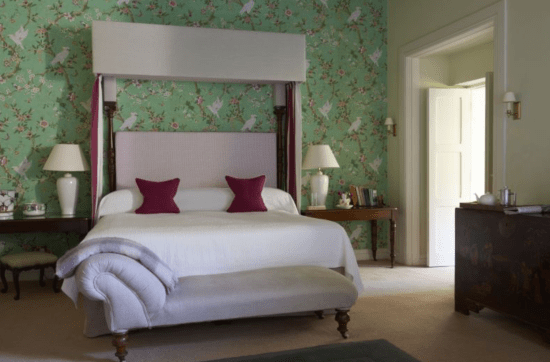
For another, the food was superb – quite possibly the best dining experience we’ve ever had, before or since.
Less satisfying, however, was our visit to the nearby Cliffs of Moher.
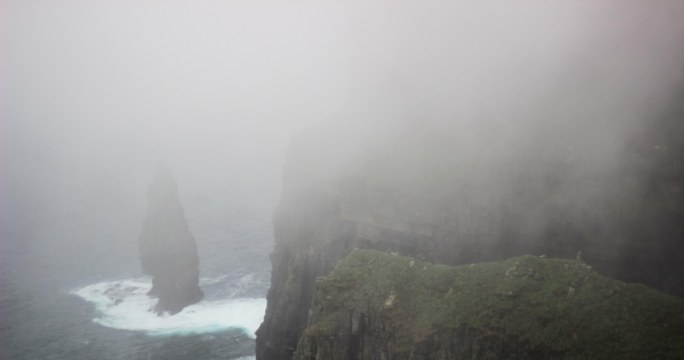
It was the Missus who dubbed them “The Cliffs of Moher or Less,” for those of you keeping score at home.
We had some very nice soup at the optimistically named Cliffs View Café alongside some other cliffhungers, then headed back to Gregans to console ourselves with one more fabulous dinner.
The Missus:
I concur 100% about Gregans Castle – one of the loveliest places we have ever stayed and dined. And about the Cliffs of Moher: the photo above gives a far better view of the natural wonder than we actually saw that day, which was absolutely nothing. The fog was so thick – the Brits call it a “real pea-souper” – I could barely see John standing next to me. And finding your car in the parking lot after lunch was like a scavenger hunt. The funniest thing was, we weren’t alone. We had loads of company in the cafe, everyone eating quietly and looking despondent. Why any of us bothered to visit on such an impossible day is beyond me. I guess it was on all of our itineraries and hope springs eternal. Sadly, not that day, but John and I did get to see the cliffs on our second visit to the Emerald Isle, and they are indeed spectacular!
The next morning it was back to Shannon Airport and Erin Go Bye.
• • • • • • •
Upon our return home, I published this recap in Adweek.
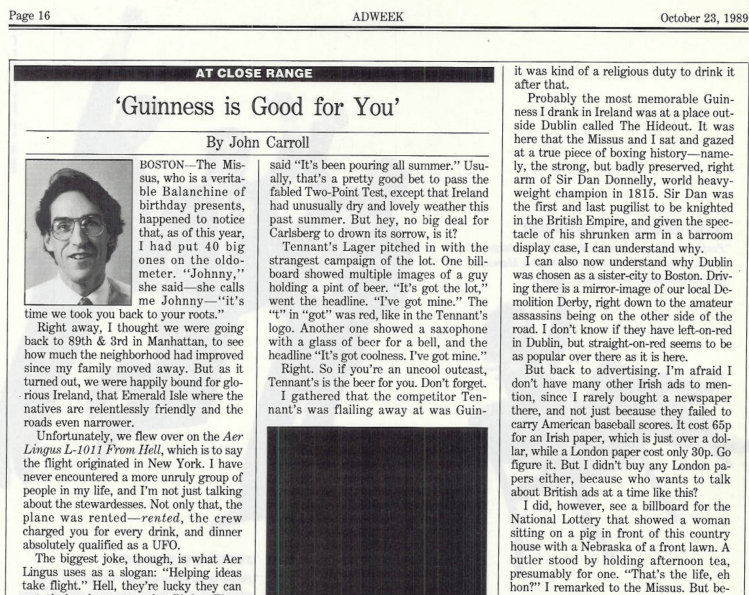
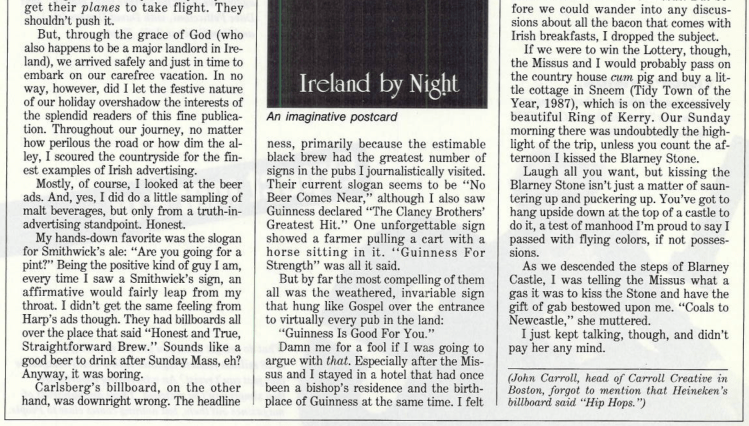
Favorite passage:
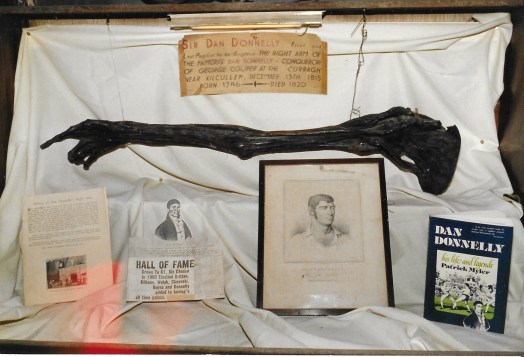
Probably the most memorable Guinness I drank in Ireland was at a place outside Dublin called The Hideout. It was here that the Missus and I sat and gazed at a true piece of boxing history – namely, the strong, but badly preserved, right arm of Sir Dan Donnelly, world heavyweight champion in 1815. Sir Dan was the first and last pugilist to be knighted in the British Empire, and given the spectacle of his shrunken arm in a barroom display case, I can understand why.
There was, however, much more to that story, as I chronicled some two decades later.
About 20 years ago [George] Kimball wrote a Boston Herald piece that opened with very detailed driving directions to The Hideout, a bar outside Dublin that prominently displayed the formerly strong right arm of Sir Dan Donnelly, the only Irish heavyweight champion in boxing history.
As the Missus and I were about to embark on a trip to Ireland, I xeroxed the Herald story and stashed it in my suitcase . . .
“Say,” I remarked to the Missus [on our way to Dublin], “maybe we could stop by the Hideout and see Sir Dan Donnelly’s formerly strong right arm hanging above the bar.”
“Maybe we could,” she replied dryly, which of course meant she’d rather have her own right arm cut off.
“Great,” I concluded, which of course meant I was willing to stand the gaff when it all went wrong.
That was our system.
So I pulled Kimball’s column out of my pocket and we soon cruised into the parking lot of The Hideout.
“I’ll wait out here,” said the Missus, until she noticed the sign on the Hideout’s wall that said Not Responsible for People or Property Left in Cars.
“Okay, I’ll come in,” she added.
Behind the bar hung the formerly strong right arm of Sir Dan Donnelly attached to a piece of cardboard with some hand-printed text about his Olympian status in Irish boxing history.
[Below is the current gussied-up shrine to the strongman.]
After I’d raised a pint to the legendary champion, I told the publican that I was from Boston and had come there because of a piece in the Herald which I had a copy of right here and proceeded to hand to him.
“Oh, yeah,” he said. “Someone just faxed that to me yesterday.”
Womp-womp.

