-
Go to Paris for the Fashion, Stay for the Artworks
Way back in 1777, the redoubtable Samuel Johnson intoned, “When a man is tired of London, he is tired of life; for there is in London all that life can afford.”
No disrespect to the good doctor, but maybe not so much.
By the early 1990s, the Missus and I had made semiannual pilgrimages to the London fabric shows for half a dozen years, at which point the city started feeling a little, well, threadbare to us. Not at all tired of life, though, we swapped out the British trade shows for the French ones.
Here’s how I started an Adweek column when we got home from our première visite to Première Vision.
For many years now, I’ve considered Parisians in the same category as gum surgery – once you’ve forgotten how dreadful the experience was, it’s time to go back for another session. So, with faded memories and a moderate amount of optimism, the Missus and I embarked on a carefree trip to Paris last month – she to conduct Operation Shoulder Pad and divine the coming trends in fashion, and I to scrutinize French advertising and report back to the splendid readers of this fine publication.
As it turned out, however, we did far more than that.
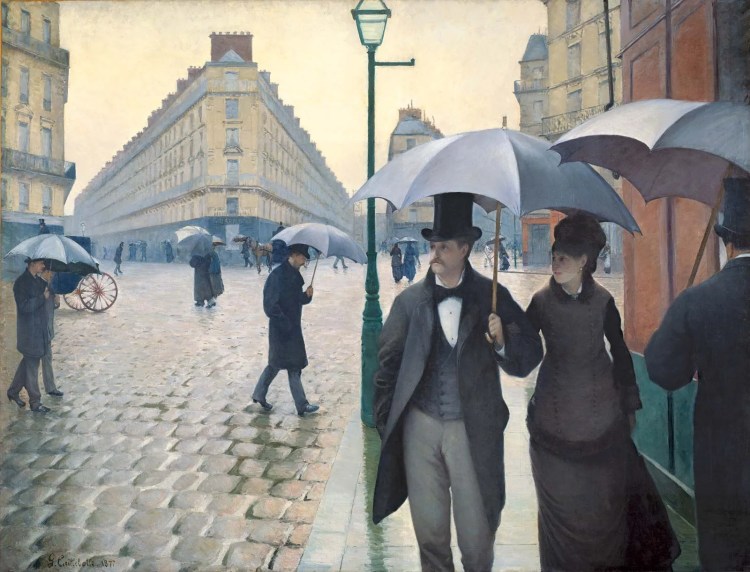
That was the trip we fell in love with Paris, thanks to flâneuring around town in the spirit of Gustave Caillebotte . . .
. . . and soaking up lots of great art, starting with the Toulouse Lautrec exhibit at the Grand Palais.
Of aristocratic origins, Toulouse-Lautrec (1864-1901), marked by his physical deformity, overcame his painful condition by exploiting ceaselessly his drawing skills which, demonstrated since his childhood, constituted a family tradition.
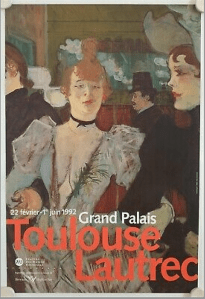
Deeply interested in “ nocturnal paradises ” of all kinds – from opera to cabarets and brothels – he haunted the world of bohemia and the Montmartre demi-monde of which his vision was both human and unrelenting, free from all moral or social judgement. He developed a multi-faceted painted and graphical work which the exhibition aimed at showing through a progress which was at the same time thematic and chronological.
The precision of his stroke, prompt to seize the silhouettes of the great stars of the Paris stages – Jane Avril, Loïe Fuller, Aristide Bruant etc.- and to explore their psychology and his bold layouts not only deeply marked the arts of poster-making and illustration but also the applied arts of the Art Nouveau.
Comme ça . . .

This being our third trip to Paris, we also began to sample some slightly less grand – but no less engaging – museums around the city.
There was, for starters, the Musée Carnavalet, where we immersed ourselves in the history of Paris. Not far from there was the Musée Cognacq-Jay, the collection of 18th-century art amassed by Ernest Cognacq, founder of La Samaritaine department stores, and his wife Marie-Louise Jaÿ.

Ernest Cognacq chose not to bequeath his entire collection in his Parisian home, preferring to exhibit a selection of eighteenth-century works in a separate space, drawing inspiration from the Musée Carnavalet and seeking to create a period atmosphere where the wood panelling and other interior design features would be in keeping with the artworks on show. Remaining true to this spirit of retrospective recreation . . . the Musée Cognacq-Jay presents exhibitions which aim to expand visitors’ understanding of French art and society in the eighteenth century, but also of the fascination which the Age of Enlightenment continues to evoke in our own day and age.
We totally loved the Cognacq-Jay and returned there several times during subsequent trips, thanks entirely to the invaluable Carte Musée, which for a flat – and remarkably reasonable – fee, “gives free access to more than fifty museums and monuments in Paris and the Paris region.” So with the Cognacq-Jay, and many other museums, we could duck in and just revisit our favorite rooms and artworks totally guilt (and gilt)-free.
The one that got to us most, though, was the haunting Musée Nissim de Camondo.
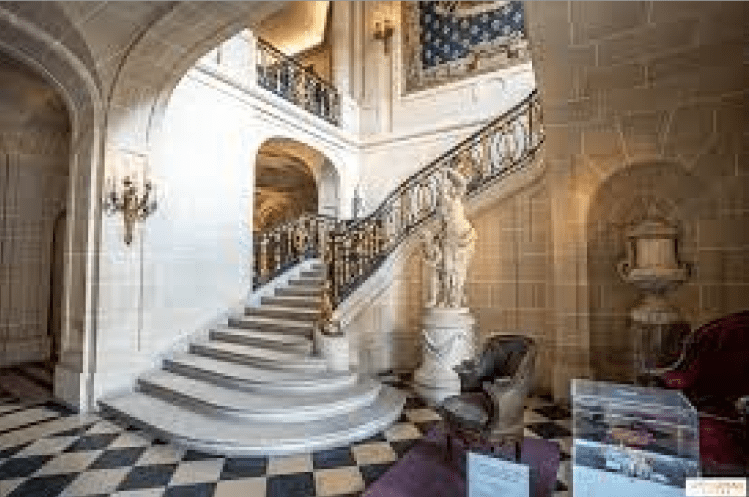
Moïse de Camondo, a reputed Parisian banker during the Belle Époque, was a passionate collector of French furniture and art objects from the eighteenth century, and he amassed a collection of unusual quality. In 1911, he hired architect René Sergent to build a private mansion next to Parc Monceau that would be worthy of this collection and suitable for his family. The design was modeled after that of the Petit Trianon in Versailles, but behind the handsome décor of wood-paneled apartments were hidden the accoutrements of modern life, including kitchens, offices and bathrooms. The home, which is fully preserved in its original condition, offers an opportunity to discover the taste of a great collector and to get a glimpse of the everyday life of an aristocratic home.
Here’s the haunting part.
Moïse de Camondo meant to give his mansion and collection to his son Nissim. But World
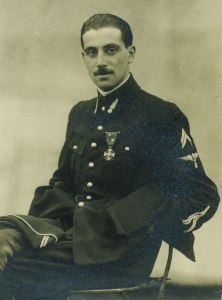 War I broke out, and Nissim was killed in an air battle in 1917. After this tragic loss, he decided to bequeath his property to the “Arts Décoratifs”, in memory of his son. The museum opened the year after Moïse de Camondo died, in 1935. During World War II, his daughter, Béatrice, his son-of-law Léon Reinach and their children, Fanny and Bertrand, died in the nazi camps. The Camondo family died out.
Afterward, the Missus and I sat in the lovely Parc Monceau and watched les petits run and jump and play.

The Missus:
Another wonderful small museum is Maison Victor Hugo. The author most famous for his novels The Hunchback of Notre Dame (1829) and Les Miserables (1862) – popularized anew through the monster hit musicals they inspired – gets his own appropriately dramatic treatment. You’ll be wowed by the stunning period decor depicting Hugo’s 16-year rental of the grand apartment from 1832 to 1848, combined with fascinating exhibitions on how his novels were imaginatively publicized and morphed into renown.
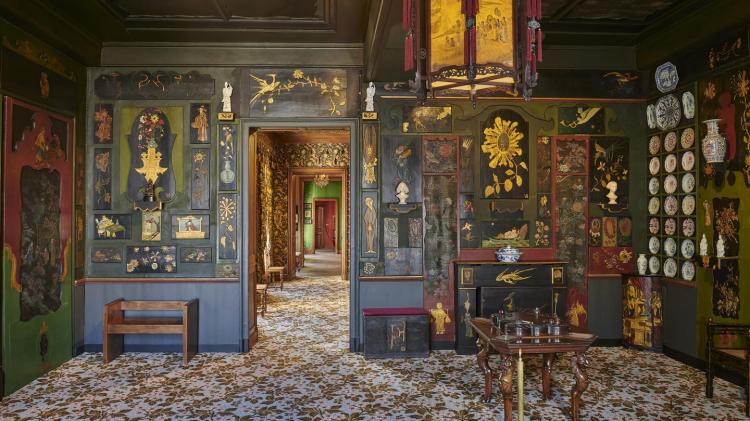

Another benefit the museum offers is a (free!) visit inside one of the magnificent Place Des Voges residences, among the most historic, luxurious and costly in Paris.

As described by the French Monuments website: “The picturesque Place des Vosges is located in the Marais district in Paris, at the junction of the 3rd and 4th arrondissements. This excellent example of Louis XIII-style architecture is the oldest planned square in Paris and its charm comes from the regularity of the façades. Often considered one of Europe’s most beautiful squares, the Place des Vosges, formally named “Place Royale”, is a perfectly symmetrical square (140 m X 140 m) bordered by 36 buildings.”
The park-like layout with lush trees and foliage, comfortable benches and children’s play areas consistently draws crowds of Parisians and tourists of all ages and incomes. Not into picnics on the lawn? A wide range of cafes – from snacks to Michelin-starred dining – surround the Place under the beautiful covered arcades, alternating with ritzy art galleries and antique stores. Window-shopping is encouraged.

Also in the Marais was a now closed doll museum called Musée de la Poupée, alas memorable to us for all the wrong reasons. No less than Gwyneth Paltrow’s “Goop” recommended a visit thusly:
WHY WE LOVE IT
Tucked away down a garden-lined alley, this private museum’s collection encompasses two centuries of doll-making — making it both nirvana for doll-loving little ones, and a little creepy and cool, too. Besides the museum, there’s an in-house doll-hospital, and of course, a shop.
Now I would have emphasized “a little creepy” over nirvana for little ones, as there were far too many demonic-faced antique dolls in the enormous 450-plus collection, often with nightmare-inducing eye movements. Chucky would have met his match.


While most of the visitors seemed intrigued and quietly respectful when we were there, John and I unfortunately couldn’t stop cracking jokes. As the displays became odder, we became more unruly. Just as I mused that the doll hospital must have a psych ward, John said something I found so hysterically funny that I became convulsed with uncontrollable laughter. It was the kind they show on blooper reels from the “Carol Burnett Show” where the harder actors try not to laugh, the more they can’t help it.
Watching me doubled over made John laugh louder, so as we continually tried to calm down, just looking at each other made us both break up again. Turning to the doll displays made it even worse. This went on way too long, and just as it appeared the museum’s manager might call the police to have us removed, we fled out the back door in embarrassment. This of course did not stop us from laughing. Needless to say, it was not our finest hour – but we sure did have fun.
From that trip on – for many trips to come – we saw Paris in an entirely new light.
• • • • • • •
Back home, I filed this piece for Adweek (where I’d graduated from the New England edition to the national mothership).

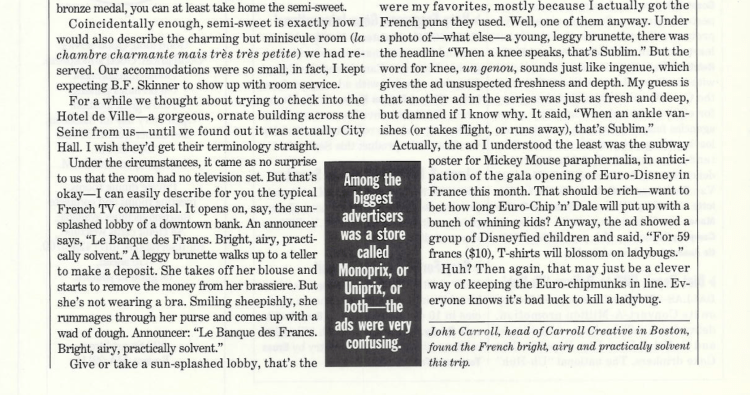
Favorite passage:
I can easily describe for you the typical French TV commercial. It opens on, say, the sun-splashed lobby of a downtown bank. An announcer says, “Le Banque des Francs. Bright, airy, practically solvent.” A leggy brunette walks up to a teller to make a deposit. She takes off her blouse and starts to remove the money from her brassiere. But she’s not wearing a bra. Smiling sheepishly, she rummages through her purse and comes up with a wad of dough. Announcer: “Le Banque des Francs. Bright, airy, practically solvent.”
Bright, airy, practically solvent – just like me and the Missus on that trip.
• • • • • • •
P.S. Several years after that trip, the Missus and I discovered another small gem of a Paris collection: Musée des Années Trente.
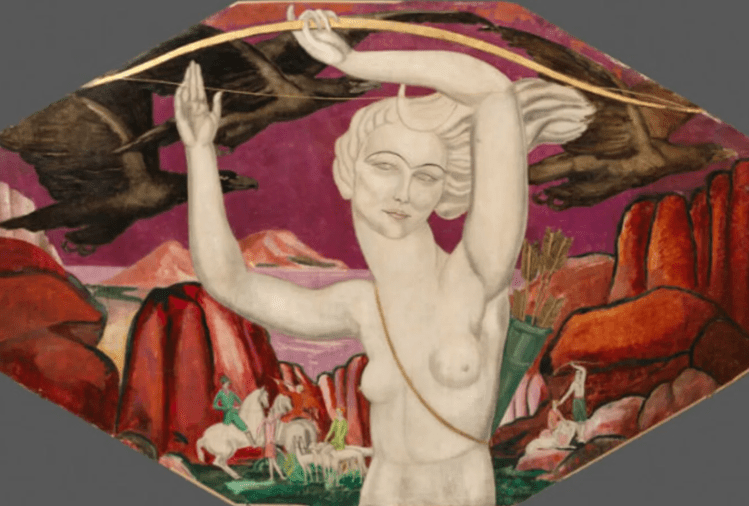
Some 800 sculptures, 2,000 paintings, as well as decorative objects, furniture, ceramics and also models of town houses and buildings of the 1930s are grouped together over 3,000 m². These collections highlight the characteristics of the aesthetic world of the 1930s: a return to realism and classicism. Works rarely shown, by Bernard Boutet de Monvel, Alfred Courmes, Maurice Denis, Georges Desvallières, Amédée La Patelière, Eugène Poughéon, Henry de Waroquier, Joseph Bernard and Paul Landowski.
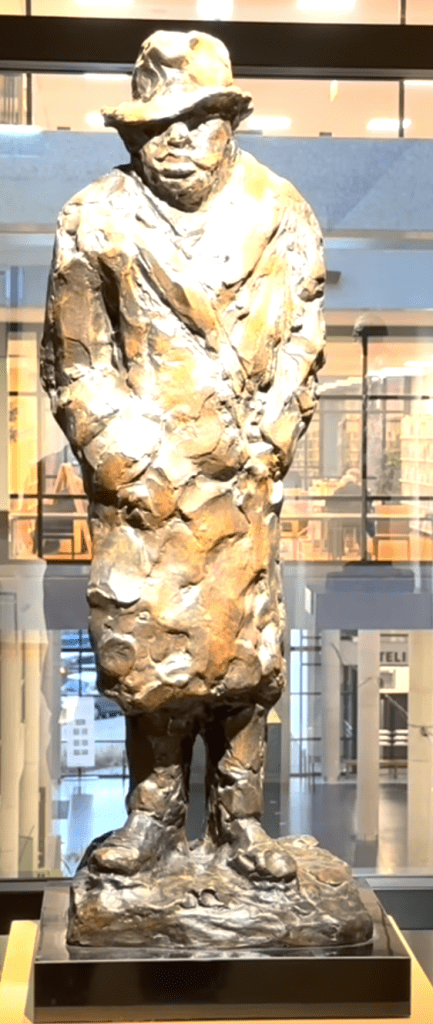
The museum opened in 1994 with a modest array of paintings, sculptures, and furniture, but it’s expanded greatly since then, as this recent video illustrates in detail. At the 15-minute mark there’s a short section dedicated to Arbit Blatas, a Lithuanian who arrived in Paris in 1925, settled in Montmartre, and proceeded to capture – in paint and in bronze – the artists living around him.

It was his sculptures that especially caught our fancy, especially Chaim Soutine . . .
. . . and Maurice Utrillo.
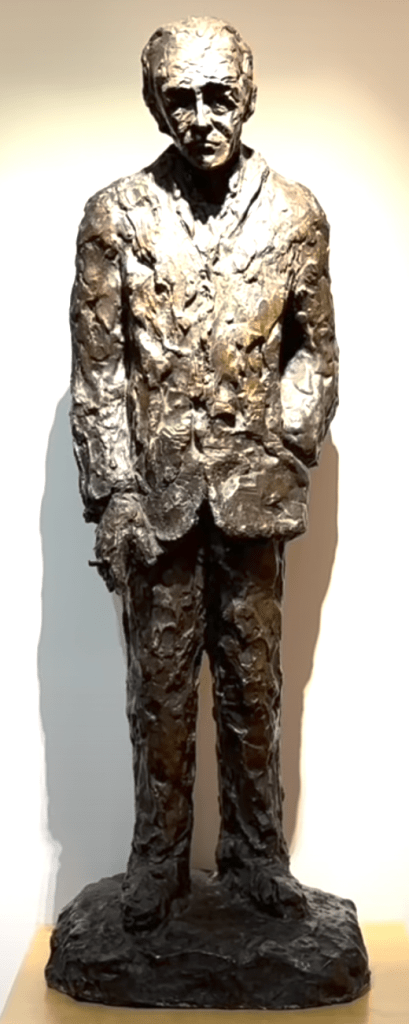
As it turned out, Musée des Années Trente was not the last place the Missus and I would see those two Blatas Boys.
But that’s a tale for another time.
-
Go to London for the Fashion, Stay for the Riots
The Missus, as you splendid readers have no doubt realized by now, has a variety of superpowers, not least among them an uncanny ability to win any number of sports-related Invitational Championships across multiple continents.
Beyond that, I’ve long been amazed by the endlessly creative birthday parties the Missus has thrown for me during the past 40 years, nicely encapsulated in this festive gathering.

Brilliant!
(Do yourself a favor and zoom in on the Squirrel Gazette & Rodent. It’s a corker.)
Her most impressive superpower, however, has always been an otherworldly ability to predict American fashion trends well in advance of their appearance in the marketplace, which during a long stretch of her illustrious career allowed the Missus to advise pretty much every shoe manufacturer in New England – Stride Rite, Keds, Lowell Shoe, Bass, Timberland, Reebok, your kicks go here – about what colors and styles they should feature 18 months from then, which was the normal production cycle in the U.S. footwear industry.
The Missus:
John is clearly a biased commentator of my gifts, which quite embarrasses me here. But I do want to add that the 18-month shoe production cycle was many decades ago, prior to today’s tech inventions and wildly, sped-up timetable.
Part of her secret sauce in that process was an ecumenical media diet that ranged from the New York Times and the Wall Street Journal, to Women’s Wear Daily and every magazine under the sun, to urban street fashions and current and upcoming major museum exhibits.
And then there were the twice-yearly European fabric shows.
Colors that were promoted in Europe for upcoming fashion seasons would routinely migrate to the U.S. a year or so later. The trick was to determine which ones would go mass market and which would not.
The Missus, no surprise, turned out to be the Sigmund Freud of psycolorgy.
Consequently, starting in the late 1980s we ventured to London every six months so the Missus could take in the city’s semi-annual fabric expos. (I tagged along in my capacity as Chairman of the Board of Fashion Services, Inc – a strictly ceremonial position that consisted almost entirely of carrying luggage through international airports.)
The Missus would go to the fabric shows and I would – I dunno, wander around London, I guess. Or more likely sleep in.
But when her textile touring was over, the Missus and I would go to the theater as often as we could. Here’s what London’s West End theatre district looked like back then, via Kinolibrary.
And so it came to pass that the Missus and I were at a matinee performance of (I’m pretty sure) “Man of the Hour” (totally sure the production featured a swimming pool at the front of the stage) on the last Saturday in March of 1990 when all hell – a.k.a. the Poll Tax Riots – broke loose. The London edition featured thousands of protestors rampaging through the West End, smashing windows, looting shops, and setting cars on fire.
Here’s just a taste from an ITN Newsflash.
And here’s what I wrote a few weeks later.
From all the evidence, everyone in Britain who isn’t Margaret Thatcher has gotten pretty lathered up about the poll tax. Here’s an example to help you understand why: Our friends John and Nina Pucci, who manage a lov-e-ly pub in the West End, used to pay £500 a year in property tax on their flat in Chelsea. Now, because the poll tax is figured on the number of adults in the household, their tab is closer to £2,000. Much like Queen Victoria, they are not amused.
Of course, there are other reasons people are ripped about the new tax. One that springs immediately to mind is that Margaret Thatcher now pays £1,500 less in taxes than she did before.
Light up another Jaguar, Nigel. We don’t have to be home till dawn.
Thankfully, in the following days we attended theatrical productions that were more dramatic and less traumatic, most notably the musical Miss Saigon, with Jonathan Pryce in the lead.
The original soundtrack is here. And here’s the Overture, just to get you started.
Honestly, it was worth the Pryce of admission for the helicopter scene alone.
And then it was chop-chop back to Boston.
• • • • • • •
Upon our return to the State Formerly Known as Taxachusetts, I filed this piece for Adweek.

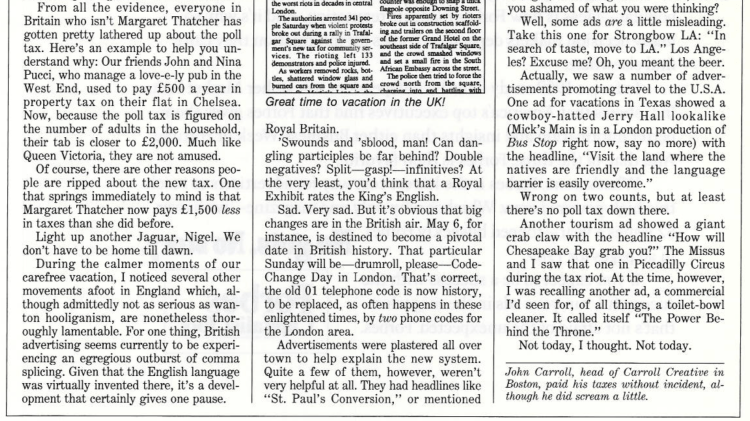
Favorite passage:
About the only encouraging sign I saw was the brass plate on the door of the Bow Bells pub in the East End. It said “Free Beer Tomorrow.” Unfortunately, I couldn’t get back the next day.
Never did afterward, either.
-
Upon First Viewing the Cliffs of Moher (Or Less)
The lede of my October 1989 Adweek column told the tale of our first trip to Ireland.
The Missus, who is a veritable Balanchine of birthday presents, happened to notice that as of this year, I had put 40 big ones on the oldometer. “Johnny,” she said – she calls me Johnny – “it’s time we took you back to your roots.”
Right away, I thought we were going back to 89th & 3rd in Manhattan, to see how much the neighborhood had improved since my family moved away. But, as it turned out, we were happily bound for glorious Ireland, that Emerald Isle where the natives are relentlessly friendly and the roads even narrower.
Unfortunately, we flew over on the Aer Lingus L-1011 From Hell, which is to say the flight originated from New York. I have never encountered a more unruly group of people in my life, and I’m not just talking about the stewardesses. Not only that, the plane was rented – rented – the crew charged you for every drink, and dinner absolutely qualified as a UFO.
The biggest joke, though, is what Aer Lingus uses as a slogan: “Helping ideas take flight.” Hell, they can barely gets their planes to take flight. They shouldn’t push it.
But, through the grace of God (who also happens to be a major landlord in Ireland), we arrived safely and just in time to embark on our carefree vacation.
At Shannon Airport we rented a stick-shift Opel (whose reverse gear took me ten curse-filled minutes to find) and headed off to Kenmare (163.1 km, 2 hr 15 min).

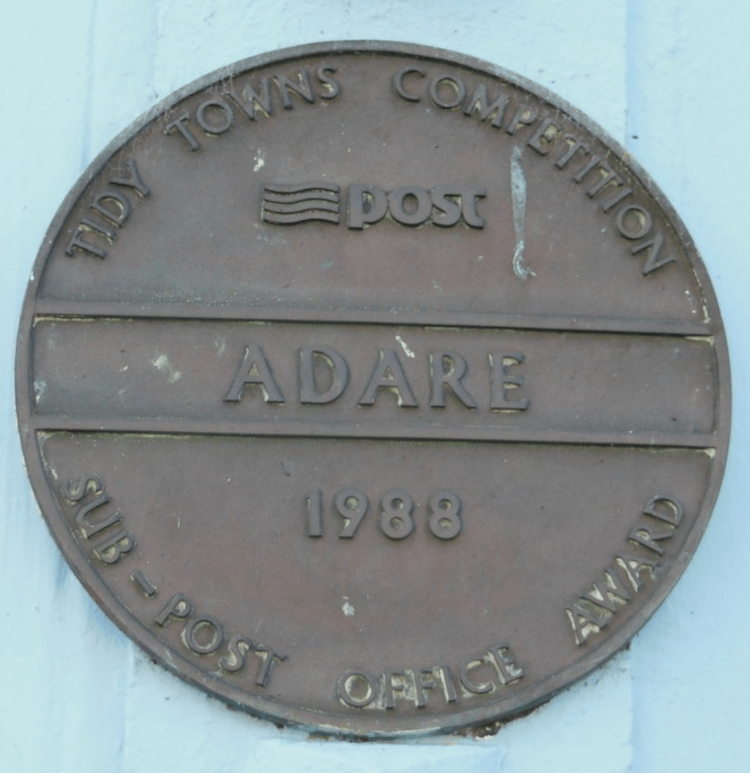
Early in our journey, while I was still getting used to wrong-side-of-the-car, wrong-side-of-the-road driving, we passed through Adare, a tidy little town filled with thatched-roof houses.
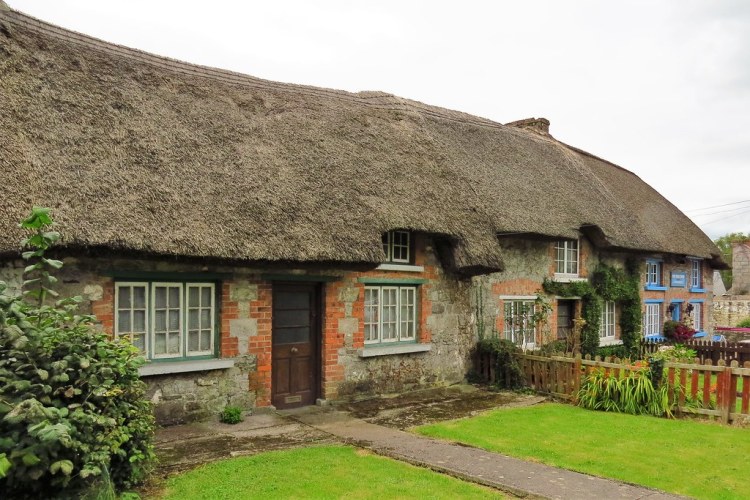
Better yet, Adare was an Official Tidy Town, designated as such the previous year for the second time since 1976.
The Missus and I notched a Tidy Town Twofer of our own when we stopped at Barbara’s Cafe (now The Village Kitchen) in Sneem (Tidy Town 1987) to sample Barbara’s renowned scones. They were swell, as was the town itself.
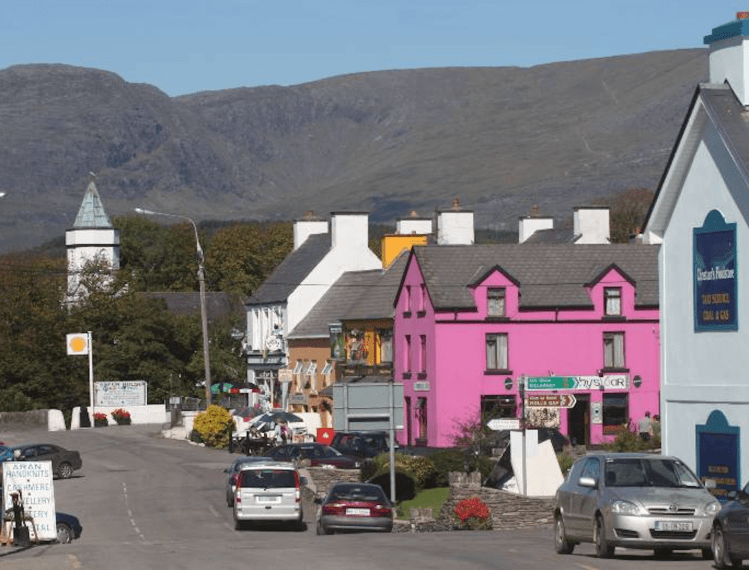

Thus refreshed with scones and scenery, we purchased a couple of Sneem coffee mugs and went on our merry way.
The Missus:
I had insisted we stop in Sneem for no other reason than it sounded so Dr. Seussical. It certainly reminded me of a children’s book with charming, clashing colored buildings one after another. Even our handmade coffee mugs at Barbara’s Cafe were whimsical – oddly shaped with pinched middles, wide mouths and Sneem scripted on the side. Happily they were also for sale. We still have them.
Once we arrived in Kenmare, we checked into the Park Hotel.

Long regarded as one of the world’s most revered and inspirational luxury hotels, Park Hotel Kenmare is set among established gardens which slope down to Kenmare Bay.
Heritage and luxury are combined in this historic hotel which dates to 1897.
During all this time the hotel has been a haven for discerning visitors seeking the ultimate escape in one of the most special places in Ireland.
The Missus:
About that “haven for discerning visitors” – apparently John and I were not up to snuff. I had booked the trip for October because my travel agent said it was just off season in Ireland so it would be less crowded, less expensive and the weather would still be good (most of the time anyway). The deal with Aer Lingus included roundtrip airfare (the fact that they rented an old, about-to-be-decommissioned plane for our trip oddly didn’t appear anywhere in the brochure), with vouchers for 10 nights in any Ireland hotel listed. You could also book those hotels in advance, which guaranteed a room upon arrival. Great!
The Park had the most stars of any of the hotels offered – with a small additional charge – so we booked it for the first two nights. It was as grand as the photos and we excitedly went in to register. Looking around the lobby, we decidedly stood out, and not in a Park Hotel way. While our hip, casual attire in understated neutrals had always gone over well in cities like Paris, it was distinctly at odds with all the British upper crust guests milling about, with men wearing navy blazers, slacks and ties and women in frumpy skirts with sweater sets or conservative dresses. Reminder – we were in the rural Irish countryside. That was strike one.
When I pulled out my voucher book, the look on the clerk’s face was clearly strike two. We were now officially riff and raff, assigned what I’m sure was the smallest room in the manor house. It still had lovely antique furnishings, but no pretty view of the surrounding grounds.
Deciding to make the best of it, we went to the lobby and asked for croquet mallets and balls to enjoy the lovely outdoors. Strike three. While croquet was clearly advertised in the hotel’s brochure, apparently cocktail hour was not an appropriate time. As it was still daylight, we politely insisted, and the sporting equipment was eventually forked over under duress.
It turned out the croquet wickets were set up on the lawn with the most beautiful views of the surrounding hills and water, with a glorious sunset on the horizon. Excellent. But that also made it the location of the patio where drinks were being served to the fusty Brits.

We were both mucking up their view and making too much noise. Chalk up one for the Americans.
The hotel’s website currently lists activities such as Morning Yoga and Candlelight Meditation, which I’m pretty sure were not available in 1989.
But Lawn Croquet certainly was.

Grab your mallets and head down to our lush lawns for a splendid game of croquet with your family and friends. All the appropriate equipment is available (mallets, balls, hoops) from reception upon request. Definitely a recommended activity for a fine summers day.
That inevitably led to the First Annual County Kerry Invitational Croquet Championship, which – for those of you keeping score at home – the Missus won handily and celebrated lustily, much to the annoyance of the blue-blazer-and-gold-buttons set sipping pricey cocktails on the hotel’s outdoor terrace.
Beyond that, I remember not a single thing we did or saw around Kenmare, although the area purportedly features numerous attractions.
Whatever, we were soon on our way to the West Cork town of Bantry (44.6 km, 50 min).

Upon our arrival, we checked into Ballylickey House.
On the boundary of Cork and Kerry, at the head of beautiful Bantry Bay and amidst the
 sheltered lawns and flower gardens, stands Ballylickey House. Bordered by the sea, the Ouvane river and mountains, and within easy reach of the world-famous Ring of Kerry and Killarney, Ballylickey House and the south west coastline are considered an idyllic and highly attractive holiday destination.
 Ballylickey House was built some three hundred years ago by Lord Kenmare, as a shooting lodge. For the past four generations, it has been home to the Graves family, who have, through the years, enhanced and extended the property.
Once we had settled into our idyllic and highly attractive room, we decided to repair to the pub across the road for dinner.
“Maybe we should drive there,” the Missus said helpfully.
The Missus:
I wasn’t being lazy. I pointed out that there were no streetlights, nor lights on the long driveway up to the hotel and I was worried about walking back when it got dark.
“We’ve been in the car all day,” I replied manfully. “Let’s just walk.”
After we had dined on a fine sampling of local fare, we headed back to the hotel.
Except . . .
Not only were there no street lights in Bantry, there was no light at all. (See Adweek graphic below for details.)
“No problem,” I said, as we a) stumbled across the pitch-black road; b) failed to locate the hotel’s driveway; c) climbed over a fence and fought our way through a tangle of shrubbery; d) narrowly avoided a close encounter with a very loud dog; and e) collapsed at the hotel’s front door.
The Missus, bless her heart, only looked daggers at me, although no jury in the world would have convicted her if she’d used the real thing. I’m a lucky guy.
Other than that unfortunate incident, I have no recollection of anything we did in Bantry either, although Ballylickey House’s website lists loads of local attractions – from deep sea fishing and kayaking to Glengarriff Wood’s Nature Trail and the Ring of Kerry – none of which the Missus and I considered remotely attractive.
Especially the Ring of Kerry. We purposely avoided its notorious tourist traps – talkin’ about you, Waterford and Wexford – and headed north to Cashel in County Tipperary (178 km, 2 hr 4 min).

Driving on country roads in Ireland was a challenge on several fronts. Not only did we have to deal with the whole wrong-side mishegoss, we were mostly driving on two-lane roads, an inordinate number of which had been newly graveled right before we arrived.
So being stuck behind, say, one of the ubiquitous farm tractors motoring about the countryside was an adventure in 1) having your windshield peppered with a hail of gravel, and 2) calculating just when you might safely pass that tractor in the face of oncoming traffic.
In terms of roadway obstacles, though, it turned out that slow-going tractors had nothing on intractable cattle.
At one point we were forced to bring our Opel to a screeching halt so as to avoid crashing into a massive cow that stood blithely athwart both lanes of the road.
My immediate reaction was to treat the blasé bovine like a Jersey driver blocking the box in midtown Manhattan. That is to say, I leaned on the horn, which the cow found not at all mooving.
The Missus proposed a different approach. “You should go make it move,” she said encouragingly. Of course, I had about as much chance of doing that as making the NBA. So we waited, and the cow eventually moseyed on, allowing us to do the same.
Back on track toward Cashel, we encountered our third Tidy Town – Kinsale (1986) – which was more smelly than tidy while we were there. (For those of you keeping score at home, here’s the full list – through 2019 – of Tidy Town winners.)
While we were in the neighborhood, we stopped by the legendary Blarney Castle.

Built nearly six hundred years ago by one of Ireland’s greatest chieftains, Cormac MacCarthy, and has been attracting attention ever since. Over the last few hundred years, millions have flocked to Blarney making it a world landmark and one of Ireland’s greatest treasures.
Now that might have something to do with the Blarney Stone, the legendary Stone of Eloquence, found at the top of our tower. Kiss it and you’ll never again be…
The Blarney Castle website fails to finish that sentence, for reasons unsaid.
Regardlerss, here’s what I wrote when the Missus and I got home.
Laugh all you want, but kissing the Blarney Stone isn’t just a matter of sauntering up and puckering up. You’ve got to hang upside down at the top of a castle to do it, a test of manhood
 I’m proud to say I passed with flying colors, if not possessions.
As we descended the steps of Blarney Castle, I was telling the Missus what a gas it was to kiss the Stone and have the gift of gab bestowed on me. “Coals to Newcastle,” she muttered.
I just kept talking, though, and didn’t pay her any mind.
Eventually the Missus and I made our way to Glen of Aherlow, where we took in Ireland’s legendary 40 shades of green.

Next stop: check-in at the Cashel Palace, which back in ’89 was simply a hotel but now apparently is much more than that.

A Palladian manor, in the heart of Ireland, Cashel Palace is a luxury hideaway, meticulously restored and exquisitely reimagined. Spectacularly located by the Rock of Cashel in picturesque Co. Tipperary, the hotel is enveloped in nature and overlooked by ancient history.
The hotel’s website duly notes that it was “once home to the Archbishops of Cashel,” but fails to mention a different historical connection, one that Frommer’s Zac Thompson helpfully chronicled.
Built in 1732, the Palladian manor that once served as an archbishop’s country estate is just a rock’s throw from the Rock of Cashel, a remarkable collection of medieval and Celtic ruins crowning a limestone outcrop in cow-dotted fields.
The Rock is visible from the palace gardens, where, in the 1740s, the archbishop’s land agent, Richard Guinness, grew hops in order to make ale. His son, Arthur, would eventually use an inheritance from the archbishop to launch a beer empire in Dublin. So you could say the palace is where the Guinness idea first got brewing.
Cheers!
Anyway, here’s how the Rock of Cashel looked from our hotel room, a wonderful converted attic space with wood-beamed eaves and a very large picture window.
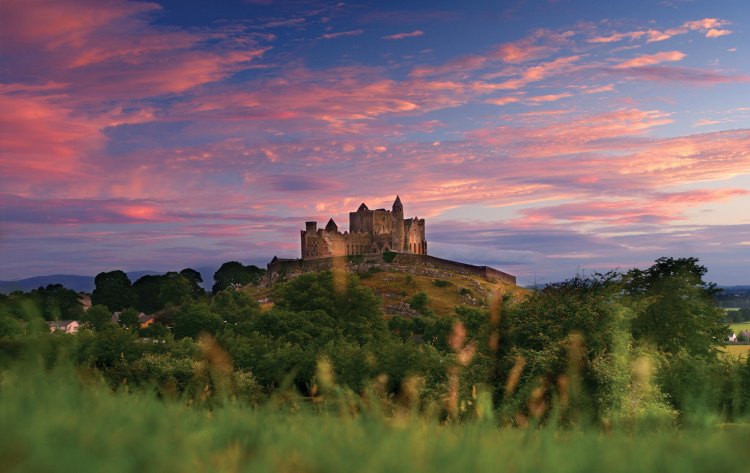
And here’s how it looks close up.
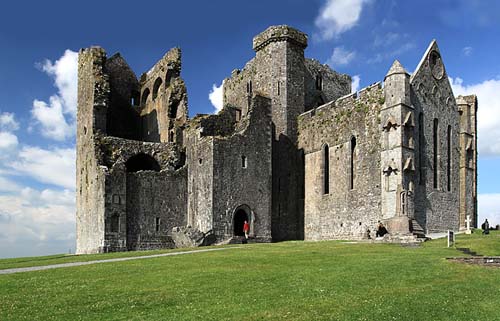
Either way, it was spectacular.
And then we were off to Dublin (161.1 km, 1 hr 48 min).
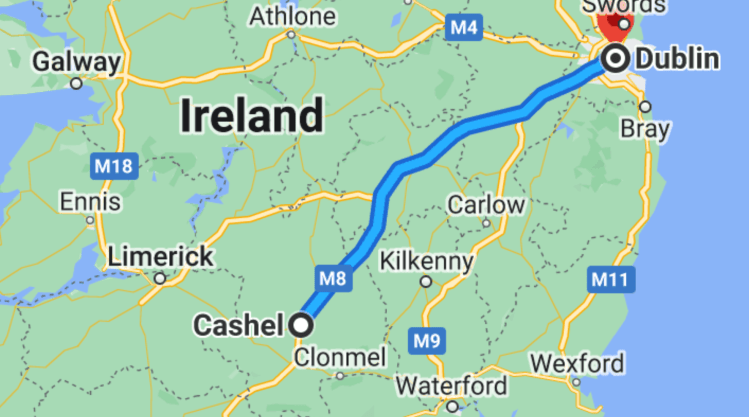
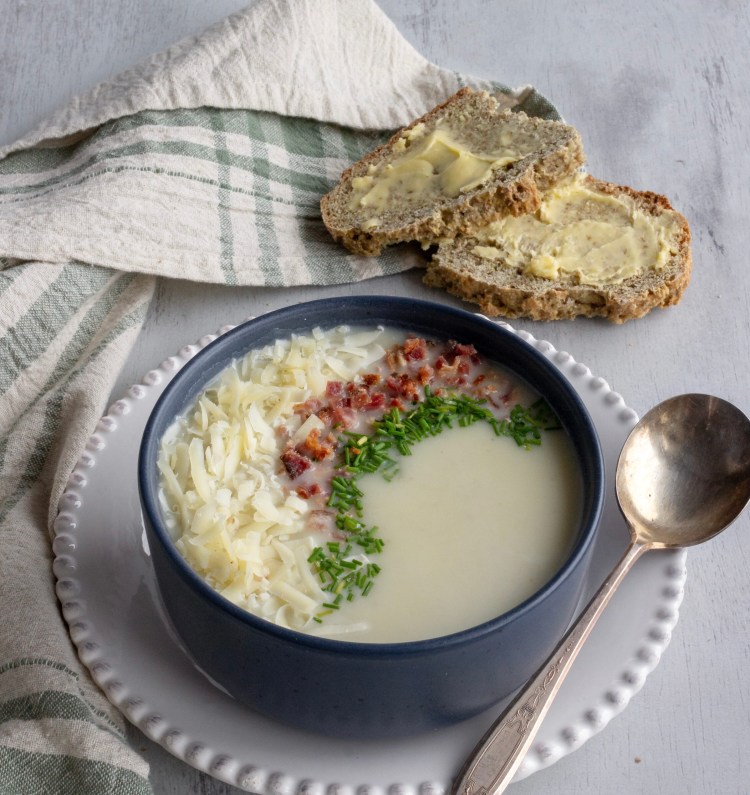
Along the way we stopped for lunch in Kilkenny, a totally lovely town where we ate in a pub that provided Irish newspapers on long wooden sticks. (Hey – what sticks in the memory sticks, yeah?)
The Missus:
Two things I’ll always remember about Kilkenny. First, at the aforementioned pub, one of the local papers had an article on the Irish having so many heart attacks because of the excessive cooking and eating of rich foods, especially cream-laden soups and butter-drenched breads. Guess what we were having for lunch? Well, it was delicious.
Second, and the reason we stopped there: Kilkenny is a wonderfully preserved Medieval town with glorious architecture and a fabulous castle. Actually, Kilkenny was given the status of a city by Royal Charter in 1609 by King James I of England. The locals are proud of their heritage and delighted to share their history with you.

Dublin, on the other hand, was less, well, welcoming. For starters there were the drivers, who navigated the streets with the same abandon – no turn signals, no yielding, straight on red – as Boston drivers, except on the opposite side of the road.
There also seemed to be two soldiers with assault rifles at every intersection, making it feel like Anything Can Happen Day the entire time we were there. Regardless, here’s what Dublin looked like around the time we visited.
We stayed at a nice hotel near St. Stephen’s Green (I don’t remember which one, but here are some candidates) I do remember that we visited Trinity College to view The Book of Kells. The scholarly group Smarthistory produced this conversation about the storied manuscript housed at the oldest university in Ireland.
The craftsmanship and intricate detail of the work is truly amazing.
There are at least 23 other Top-Rated Attractions and Things to Do in Dublin, but for the life of me, I can’t remember a single one we visited.
Given our track record, though, I gotta believe we window-shopped on Grafton Street and also swung by the National Gallery of Ireland, whose collections include “the Yeats Museum, seven rooms devoted to Irish art, Italian Painters, the Shaw Room, and Baroque Room.”
Here’s the NGI’s online collection and here are some virtual tours, including this one of the overall Gallery.
I also gotta believe we would have visited Dublin’s St. Patrick’s Cathedral, although I can’t swear to it.
Either way, here it is.

What I do vividly recall was our day trip to Malahide, which had just been designated Ireland’s 1990 Tidy Town – bringing our personal Tidy Town total to what might be an American Tourist Record of four.
It also brought us to Malahide Castle.

Malahide Castle, set on 250 acres of parkland in the pretty seaside town of Malahide, was both a fortress and a private home for nearly 800 years and is an interesting mix of architectural styles. The Talbot family lived here from 1185 to 1973, when the last Lord Talbot died. The estate was then sold and became a tourist attraction in the 1980s.
Representative mix of architectural styles.


Totally loved Malahide, even though it happened to be National Bring a Biddy to a Castle Day.
The Missus:
As the planner, I can guarantee we did all the things mentioned above, as my top picks to visit throughout Europe always include art museums, fabulous churches, glorious castles, and shopping – both window and inside. (I am a fashion consultant after all.) One thing I learned from a well-traveled friend – when in England and Ireland, you must leave time to tour the “grounds” at all historic sites, as they are often as striking as the well-preserved buildings. Below, a few photos of the sumptuous gardens at Malahide.


And then we headed off to Gregans Castle (236.3 km, 2 hr 45 min).
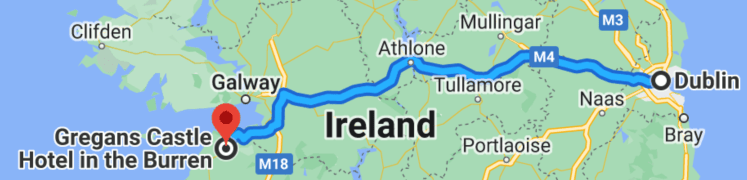
Concerned that we might encounter a radio desert on our cross-Ireland drive, we purchased a couple of cassette tapes to play in the Opel along the way. One was a Beatles tape lost to history; the other was The World of Sam Cooke, a compilation of tunes from his sadly foreshortened career as a recording artist. Released just that year, it featured a wonderful mix of songs and musical styles.
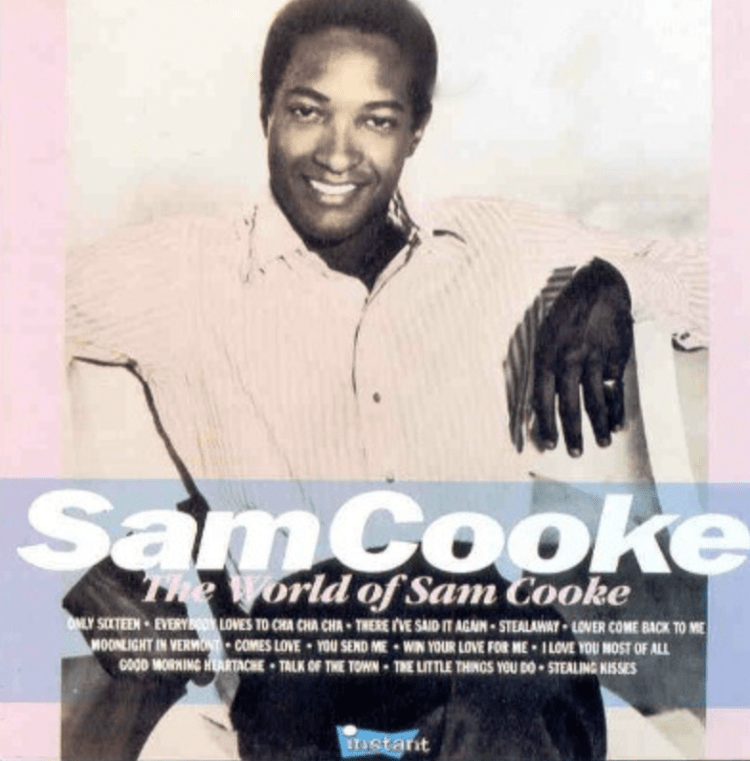
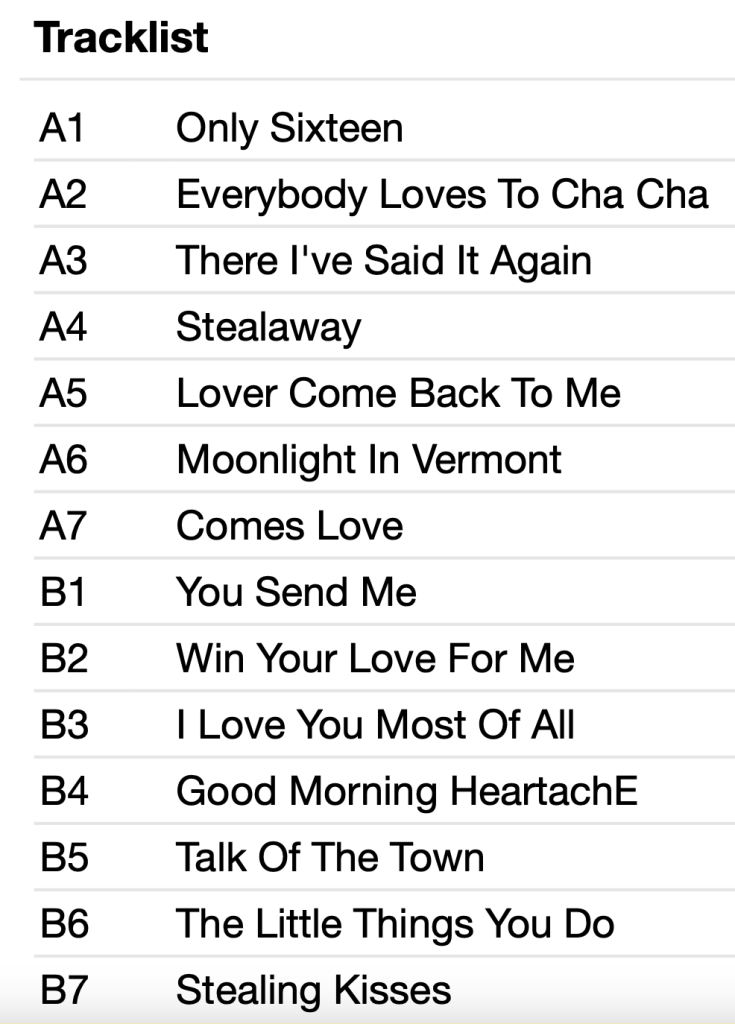
Here’s one of our favorites, originally recorded by Cooke in 1959.
Since it’s a long drive, here’s another great track.
The world of Sam Cooke would have been so much richer had he managed to live longer. What a shame.
Eventually, we arrived at Gregans Castle in Ballyvaughan, possibly our favorite place in all of Ireland.
For one thing, the rooms were beautiful.

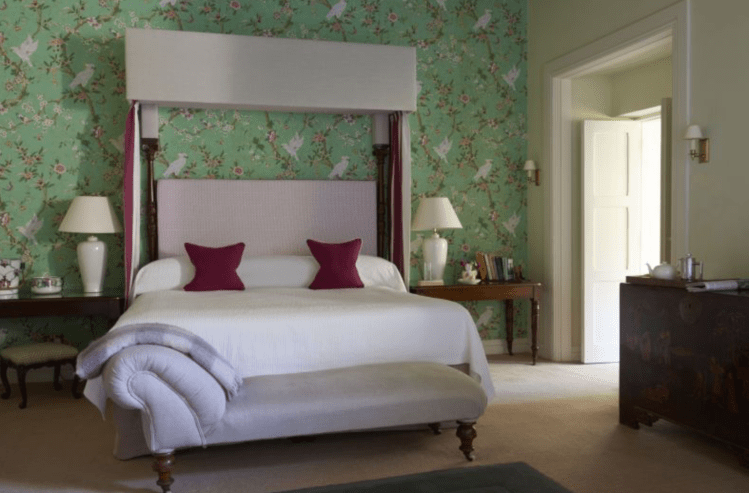
For another, the food was superb – quite possibly the best dining experience we’ve ever had, before or since.
Less satisfying, however, was our visit to the nearby Cliffs of Moher.
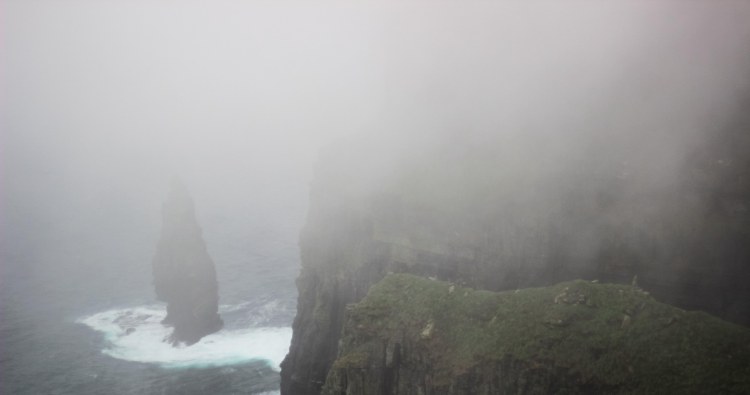
It was the Missus who dubbed them “The Cliffs of Moher or Less,” for those of you keeping score at home.
We had some very nice soup at the optimistically named Cliffs View Café alongside some other cliffhungers, then headed back to Gregans to console ourselves with one more fabulous dinner.
The Missus:
I concur 100% about Gregans Castle – one of the loveliest places we have ever stayed and dined. And about the Cliffs of Moher: the photo above gives a far better view of the natural wonder than we actually saw that day, which was absolutely nothing. The fog was so thick – the Brits call it a “real pea-souper” – I could barely see John standing next to me. And finding your car in the parking lot after lunch was like a scavenger hunt. The funniest thing was, we weren’t alone. We had loads of company in the cafe, everyone eating quietly and looking despondent. Why any of us bothered to visit on such an impossible day is beyond me. I guess it was on all of our itineraries and hope springs eternal. Sadly, not that day, but John and I did get to see the cliffs on our second visit to the Emerald Isle, and they are indeed spectacular!
The next morning it was back to Shannon Airport and Erin Go Bye.
• • • • • • •
Upon our return home, I published this recap in Adweek.
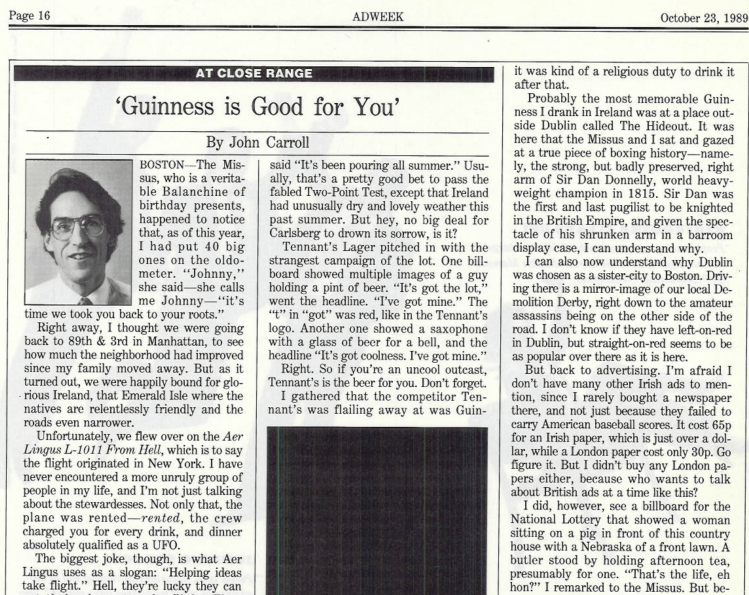
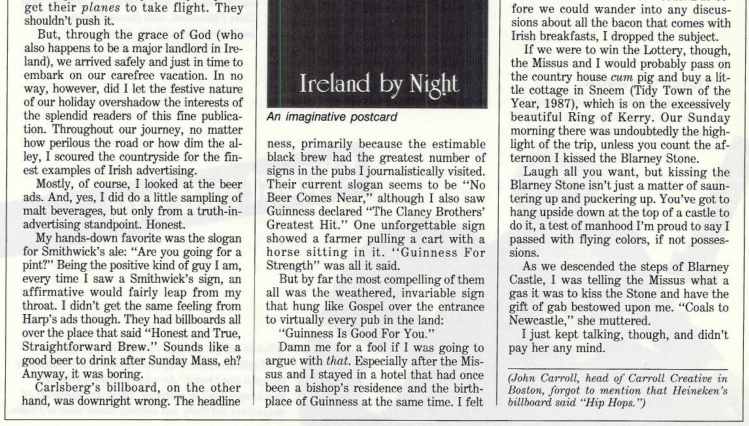
Favorite passage:
Probably the most memorable Guinness I drank in Ireland was at a place outside Dublin called The Hideout. It was here that the Missus and I sat and gazed at a true piece of boxing history – namely, the strong, but badly preserved, right arm of Sir Dan Donnelly, world heavyweight champion in 1815. Sir Dan was the first and last pugilist to be knighted in the British Empire, and given the spectacle of his shrunken arm in a barroom display case, I can understand why.
There was, however, much more to that story, as I chronicled some two decades later.
About 20 years ago [George] Kimball wrote a Boston Herald piece that opened with very detailed driving directions to The Hideout, a bar outside Dublin that prominently displayed the formerly strong right arm of Sir Dan Donnelly, the only Irish heavyweight champion in boxing history.
As the Missus and I were about to embark on a trip to Ireland, I xeroxed the Herald story and stashed it in my suitcase . . .
“Say,” I remarked to the Missus [on our way to Dublin], “maybe we could stop by the Hideout and see Sir Dan Donnelly’s formerly strong right arm hanging above the bar.”
“Maybe we could,” she replied dryly, which of course meant she’d rather have her own right arm cut off.
“Great,” I concluded, which of course meant I was willing to stand the gaff when it all went wrong.
That was our system.
So I pulled Kimball’s column out of my pocket and we soon cruised into the parking lot of The Hideout.
“I’ll wait out here,” said the Missus, until she noticed the sign on the Hideout’s wall that said Not Responsible for People or Property Left in Cars.
“Okay, I’ll come in,” she added.
Behind the bar hung the formerly strong right arm of Sir Dan Donnelly attached to a piece of cardboard with some hand-printed text about his Olympian status in Irish boxing history.
[Below is the current gussied-up shrine to the strongman.]

After I’d raised a pint to the legendary champion, I told the publican that I was from Boston and had come there because of a piece in the Herald which I had a copy of right here and proceeded to hand to him.
“Oh, yeah,” he said. “Someone just faxed that to me yesterday.”
Womp-womp.
-
How We Got Dunked Down Under
Here’s how I started my Adweek column about the Australia trip the Missus and I took in the fall of 1988.
“Australians are so hard up for heroes that a horse is in the top five.” – Paul Hogan
The horse he’s referring to is Phar Lap, the legendary Australian thoroughbred, winner of 37 races in 51 starts, and one of the few ways to make a dime in the 1930 Great Depression. They love Phar Lap in Australia. He’s there right now, in the Museum of Victoria, stuffed. His heart is on display in a separate case – at a museum in another city. They love that horse.
But if the Australians are that pressed for heroes, they ought to nominate the Missus and me for a couple of pedestals. We’ve just returned from fighting our way through the island continent on what had to be one of the most grueling carefree vacations in the history of man. And woman, of course.
For starters, it took us 30 hours to reach Melbourne, thanks to the efforts of our ex-travel agent. From that point, the Missus was plagued by an unending series of respiratory infections and sinus miseries. I lost my eyeglasses. A bird crapped on my head, which is said to be a sign of good luck by some people, usually those who weren’t hit.
I was also attacked by a killer parrot that wanted – and got – a French fry. On Dunk Island, which the Missus characterized as the Catskills of the tropics, we had to kill a lizard in our room. Hunger forced us to eat more than 10,000 bags of airline peanuts on the trip.
If we’re not Australian heroes, tell me who is.
The Missus:
Our continually precarious trip to Australia was 100% my fault. As we’ve established: I’m the planner, John’s the flâneur.
First, why Australia? Had we dreamed about visiting the continent our whole lives? Were we expert snorkelers desperate to view the Great Barrier Reef? Did we think “Crocodile Dundee” was that good a movie? None of the above. (We had actually never snorkeled in our lives before we found ourselves underwater – literally and figuratively – at the Great Barrier Reef, but more on that later.)
The simple answer is I had just finished one of the biggest nightmare jobs of my career, which though wildly successful and lucrative, definitely took a few years off my life. So the moment it was over I announced to my always amenable husband, “Let’s go on vacation as far away from any of my clients as we possibly can get where they still speak English so I don’t have to make any effort to be understood.” (If you have ever had problematic clients, this entire rationale will need no further explanation.)
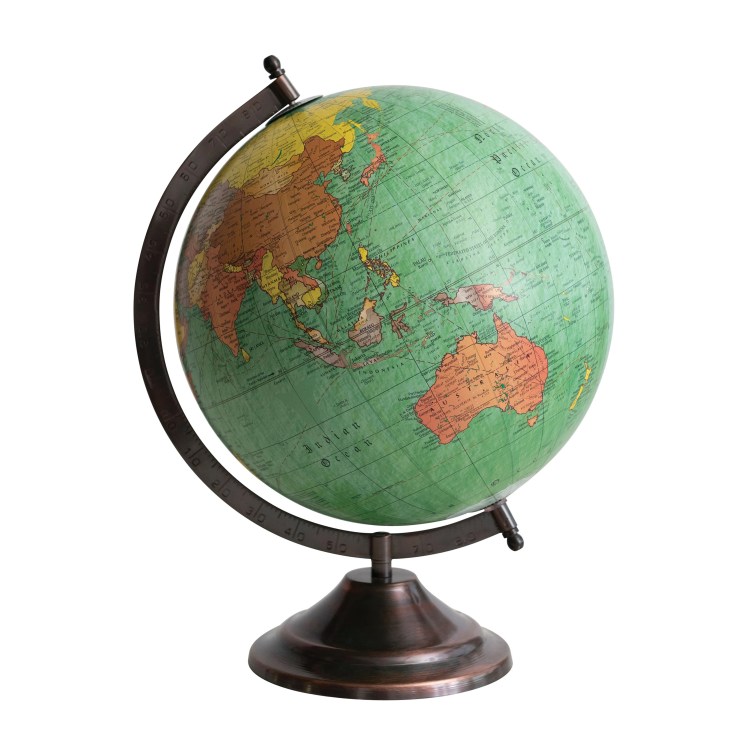
A quick spin of the World Globe on John’s desk and Australia came up the winner.
Since we’re city people, and I’m deathly afraid of snakes and alligators, Melbourne and Sydney were obvious destinations. But when I spoke to my travel agent, he talked us into the Great Barrier Reef side trip, which wasn’t difficult if you’ve ever seen any of the photos. He also insisted a weekend on an “unimaginably beautiful” resort island couldn’t be missed. Despite my city versus sand preference, John was enthused, and I felt I owed him one. Considering how long it takes to get down under and the 13-hour time difference, we had allotted two weeks – more than we ever have before or since – so side trips made sense. Sigh.
While our airline tickets only showed two planes: Boston to San Francisco, San Francisco to Melbourne, what was left out was a brief layover in the Midwest to pick up passengers, a flight from San Fran to L.A. to pick up more passengers, arriving in Sydney after a 15-hour flight before taking off again for our final destination of Melbourne. All that going up and down does wonders for your ears and sinuses.
What I remember most about our 30-hour Bataan Plane March was tossing paperbacks like Kleenex along the way (kindle at that time still just meant “light or set on fire,” which is what we wanted to do to our travel agent when we got home).
Once we actually got to Australia, though, we loved Melbourne, a totally British city with lots to do and see, as this video from that time (via mehmethaus) nicely illustrates.
Thanks to the upside-down Australian time zone, during our first couple of days there we managed to do and see not very much, mostly just returning to the swell hotel the Missus booked for us, ordering room service, and promptly falling asleep in the soup.
Shortly thereafter, though, we were good to go all kind of places, starting with Young & Jackson, one of the oldest pubs in Melbourne.

At the time the pub featured a “tourist” side for the looky-loos and a “prole” side for the locals. The Missus and I happened to wander into the latter, which several of the regular patrons pointed out to us.
No matter – we stuck to the prole side and spent the next hour in lively conversation with the natives, most of whose Aussie accents we absolutely could not understand, after which we parted as fast friends.
Excellent!
We also checked out the Old Melbourne Gaol, where “Edward (Ned) Kelly was the first person born in Victoria to be hanged. Convicted at Melbourne on 29 October 1880 for murder, Ned Kelly was a well-known bushranger who captured the public’s imagination. His death mask was created after his execution at the Old Melbourne Gaol on 11 November 1880. He was aged 25.”
Here’s an Urban Aerial Explorer tour of the legendary prison, along with a recreation of Ned Kelly’s execution.
After that we visited the Melbourne Museum, where we were lucky enough to catch a Phar Lap twofer.
Phar Lap died in 1932 under mysterious circumstances, according to Thoroughbred Heritage Portraits, with arsenic poisoning a definite possibility. Regardless, his horse corpse was divvied up like a British spinster’s Bank of England bonds.
Phar Lap’s hide was stuffed, and is now on display at the Melbourne Museum. His skeleton is on display at the Dominion Museum in Wellington, New Zealand. His heart, which weighed over fourteen pounds, was given to the Institute of Anatomy in Canberra, Australia. Thousands of visitors each year visit these relics of one of the greatest thoroughbreds of all time.
As it happened, Phar Lap’s hide and heart were both in Melbourne right when the Missus and I were.
The hide:

The heart:

Who’s luckier than us, right?
We also ventured beyond Melbourne. We took a bus tour out the Great Western Highway, during which the driver, Trusty Vic, safely navigated the “treacherous crosswinds,” as our tour guide informed us in hopes of a bigger tip for both of them.
We were subsequently introduced to Australian ant hills, Australian strangler figs, and the aforementioned Australian dive-bombing parrot when we stopped for lunch. I’ll be the first to admit I did not acquit myself well in that encounter.
The Missus:
I must interject here that parrots in Australia are as clever as they are striking.
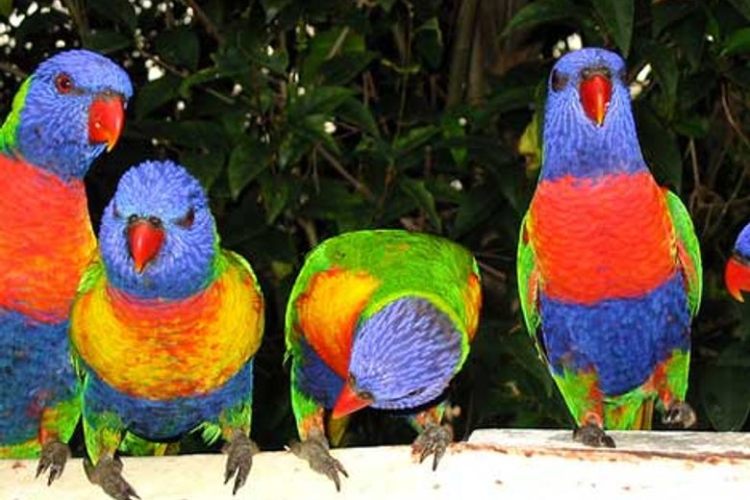
When a stunningly colorful one landed on our table eyeing John’s lunch, I suggested he give him a bite. John was starving and the portions were small so he instead covered his meal with one hand and shooed the bird off with the other. A few seconds later the parrot swooped down onto John’s head and as he raised his hands to fend him off, the feathered flyer dove down to grab a now unprotected french fry. What made it worse, he ate it while sitting on our table practically laughing – if a parrot could laugh – at my poor husband. A bird of prey indeed.
(After we returned home, the Missus presented me with a mechanical parrot she had programmed to say Gimme a French fry! – which was Exhibit Umpteen of why the Missus is the most fun you can have with another human being.)
Eventually we headed up to Sydney, which I described at the time as the Heather Locklear of Australian cities. Helpful photo of Ms. Locklear for the young ‘uns.

Sydney Harbor . . .

I was not wrong.
• • • • • • •
As the Missus and I quickly learned, there wasn’t much to do in Sydney outside of eating at waterfront restaurants with fabulous views.
The Missus:
Speaking of fabulous views, I had paid a pretty penny – lots of them in fact – for a Harborview room at the deluxe Regent Hotel. While the décor and amenities lived up to its crème-de-la-crème reputation, the view did not. First, we had just one window in our assigned room. Second, it was rather small. And third, it looked out on buildings.
Believing a terrible mistake had been made, I went back to the check-in desk to ask for our reserved room. “That is a water-view room,” said the polite, but officious reservations clerk. “You just have to open the window and look to your left.” I thought he was kidding. Apparently not. The hotel was fully booked so I went back upstairs and realized if you contorted your body against the wall at just the right angle, you could get a glimpse of the harbor. And that was that.
As mentioned, the hotel was otherwise lovely and had a beautiful bar. John and I ordered drinks late one evening – as I remember a glass of wine was something like $20, and this was in the ‘80s. The liquor came on a very elegant tray with nuts in a porcelain cup next to a white linen cocktail napkin monogrammed with a scripted “R” for Regent. I held it up and excitedly said to John, “This looks exactly like the monograms in ‘Rebecca!’” – one of my favorite Hitchcock movies based on the spooky Daphne du Maurier novel, co-starring Laurence Olivier as Maxim de Winter and Joan Fontaine as his shy, sweet second wife.
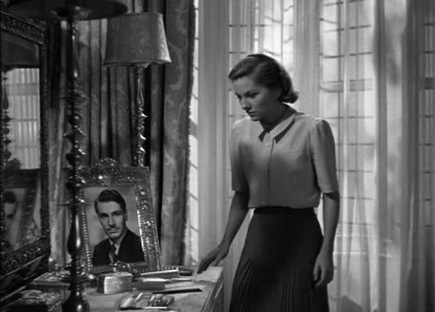
When the newlyweds arrive at the de Winter manse Manderley, poor, insecure Fontaine (who is never given a first name!) is constantly being reminded of Maxim’s impossible-to-live-up-to, glamorous first wife Rebecca, whose monogram is everywhere, even on the handkerchief he offers to “dry her tears.”
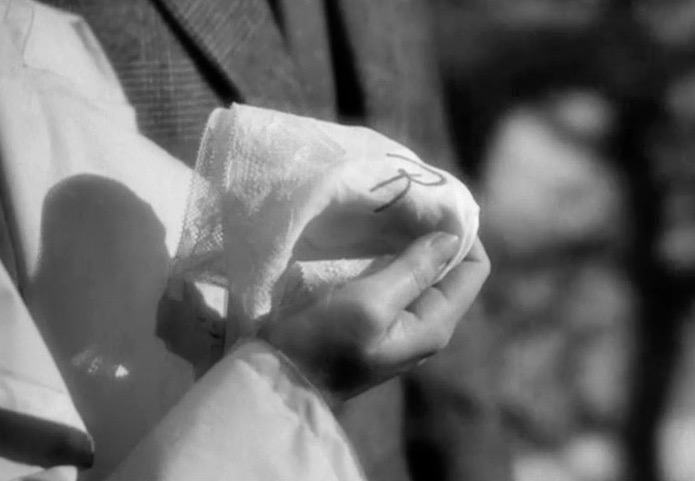
I thought it would be fun to have the look-alike cocktail napkin. After charging the pricey drinks with generous tip to our room, I asked the waiter if I could keep it. He said no and walked away. After living without a Harborview, I had no intention of not stealing that Rebecca cocktail napkin. So I did. Happily, no bill or recriminations for the purloined linen ensued.
In stark contrast to Melbourne, a city rich with history, Sydney offered exactly one historic building – Elizabeth Bay House, which at the time of our visit featured the exhibit For the public good : crimes, follies and misfortunes, demolished houses of New South Wales.
That met our minimum daily requirement of irony just fine, thank you very much.
Elizabeth Bay House itself, though, was thoroughly lovely.

With commanding views over Sydney Harbour, Elizabeth Bay House gleams like a Greek temple. Once surrounded by famous landscaped gardens, it is one of the most splendid private houses ever built in Australia and still arouses our delight and astonishment. Its elegant rooms and fine proportions, sweeping staircase and lavish furnishings reveal the tastes and aspirations of its original owner, Alexander Macleay, after the governor, the most important public official in colonial Sydney. But it was his magnificent gardens which most keenly expressed his tastes and passions, and in the economic downturn of the 1840s pushed him towards ruin. Elizabeth Bay House is an iconic Sydney home, with an iconic Sydney back-story of obsession for property and position stretched beyond means and undone by changing financial times.
The people at the city’s Last Manse Standing were just as nice as the place itself. The Missus and I had arrived there by cab, in which I stupidly left my eyeglasses. Faced with the prospect of wearing sunglasses indoors and out for the next ten days, I asked the fine folks at Elizabeth Bay House how we might track down that cab, which they themselves did by the end of our visit. The cab driver even dropped my glasses off at our hotel – no charge.
Throw another thank you on the barbie.
Later that day, in order to experience the Full Heather Locklear, the Missus and I ate at a waterfront restaurant with fabulous views.
Of course, no one visits Sydney without taking a tour of its fabled Opera House, which we also dutifully did. Here’s how it looks now.
We didn’t just settle for a tour of the Opera House, though: One night we also took in either 1) a Tom Stoppard play (I think), or 2) a Cole Porter musical (the Missus thinks). My money’s on the Missus, for those of you taking bets at home.
I totally remember what we did next: After a few days in Sydney, the Missus and I flew to Cairns and checked into a lovely hotel (the Missus has always had a knack for finding distinctive lodgings during our travels). From there we took a ride on the Kuranda Railway, which this 1988 video presents in some Nordic language or other.
The Missus, as usual, made several friends during that ride, especially one young lad and his boon traveling companion, Mr. Banana (pronounced ba-NAH-na). We also stopped off at the Tinaroo Dam, a source of Queensland farm irrigation and hydroelectric power.
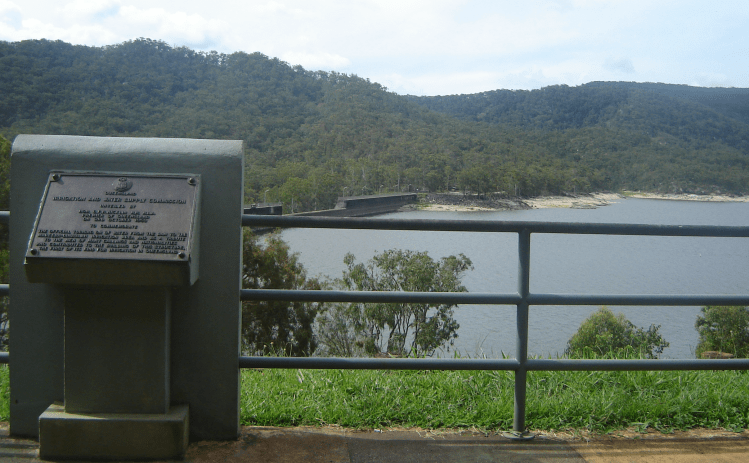
Not to mention the source of a visual pun: I took a photo (lost, alas, to history) of the Missus standing in front of the dam and holding up a little toy kangaroo.
You sort of had to be there.
Bright and early the next morning, we took a bus to Port Douglas, where we boarded a pretty big boat that took us to a much smaller boat that took us to the Great Barrier Reef.
The Missus:
That part of the trip took over 3 hours and I started regretting not booking a hotel room in the gorgeous Port Douglas to save the hour and a half drive.
Once on the really big boat, instructions for our Reef visit commenced. First, we were given wet suits. It was winter in Australia where the temperatures on land are quite moderate, but not so much in the water. I am happy to say wetsuits really suck you in and are remarkably flattering in addition to being warm. Next we were shown a video of what we would see at the Reef. It was breath-taking and 100% true to life.
There was one glitch for me however. A shark swam by in the video.

“Whoa, are there sharks in the water,” I asked the laid-back instructor? “If you don’t bother them, they won’t bother you,” he said reassuringly. I wasn’t reassured. Next up, a warning not to get too close to the coral as a scratch could result in a reef poisoning infection that could turn deadly. Seriously?
Learning that you had to spit in your mask before diving didn’t cheer me up either. But every worry disappeared the moment we plunged into the water and witnessed the brilliantly colorful coral, fish and marine life.
At which point the Missus and I snorkeled for the first and only time in our lives. Here’s a representative sample (via Adventures For Two) of what we saw.
It was fantastic, even if it did entail my swallowing about half the Coral Sea (the Missus proved to be a far better snorkeler than yours truly).
The Missus:
It was indeed fantastic. So spectacular in fact, that John and I stayed until the very last little return boat called us in. Giddy and starving – we hadn’t eaten since breakfast 6 hours earlier – we were told that the promised (and paid for) bountiful buffet lunch had been completely consumed by the other passengers. I’m not kidding. They offered us a few stale saltines while reminding us to check for any scrapes when we took off our wetsuits so they could treat the wound to prevent infections.
Unfortunately, the Missus returned to the hotel with a previously unnoticed scratch on the back of her leg. As we had been warned about coral reef poisoning, we stayed up most of the night watching movies and hoping she wouldn’t die. She did not, for those of you keeping score at home.
(Sad fact to know and tell: According to this BBC report, “Australia’s Great Barrier Reef has lost more than half of its corals since 1995 due to warmer seas driven by climate change.” And that was three years ago. It’s undoubtedly worse now.)
From Cairns we flew on a twelve-seater plane to Dunk Island, described this way in a January, 1988 New York Times piece.
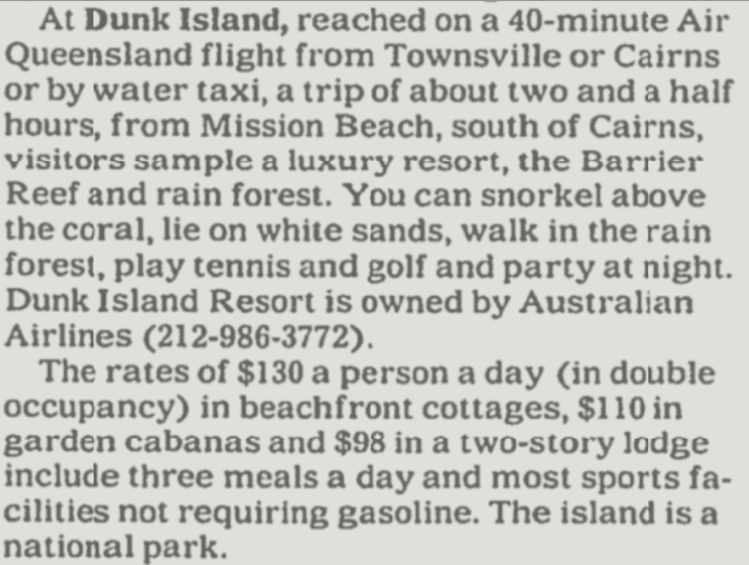
I’m pretty sure we stayed in one of the lodges, which cost today’s equivalent of $259 a night. I’m definitely sure that the minute we arrived on Dunk Island, we wanted to get off it.
It was entirely my fault we were there at all: The Missus knew I’d spent many happy summers during my youth at the Jersey Shore, and she thought a few days on an Australian resort island would be a treat.
It was a nightmare.
For starters, the luxury resort was crowded with the kind of cookie-cutter structures you’d find in the average American suburb. The main feature of our room was a gecko crawling up the wall above our bed. We immediately marched back to the reception desk, our pre-payment be damned.
“How soon can we get a flight back to Sydney?” the Missus inquired sweetly.
“Whenever your return flight is booked for,” the receptionist replied tartly.
The Missus: “No – like today?”
The Receptionist: “No – like I said.”
About a half hour later the Missus took another shot at the reception desk, citing a debilitating inner ear infection that needed immediate medical attention on the mainland. The receptionist was unmoved, as were we.
So we did our time on Dunk Island, sampling about three hundred yards of the rain forest before turning back, competing in the First Annual Dunk Island Invitational Ping Pong Tournament alongside a visibly annoyed exercise class (the Missus and I tied for the championship), and playing a few God-awful games of tennis in between.
The food wasn’t so great, either.
Eventually we made it back to Sydney, which we liked a lot better the second time, all things considered. The following day we flew home, which took only 21 hours. Regardless, we still wanted to set our travel agent on fire.
The Missus:
Another sad closing note. I was really looking forward to seeing Koalas, adorably pictured in practically every tourist ad for Australia. But guess what? Koalas are mostly nocturnal, foraging and looking cute as can be in the dead of night. During the day? They mostly sleep. And they don’t sleep out in the open where you can see them, but intelligently, up in a high tree branch hidden by leaves.

This seemed like the ultimate bait and switch to me. I had to suffice with a Koala hand puppet purchased at the airport gift shop which entertained children seated near us on the 15-hour return flight to the USA.

• • • • • • •
Upon our return, I filed the aforementioned Adweek column.


Favorite passage:
In spite of the rigors it posed, the trip was, in the word of the Linder Chocolate Balls ad, “Unforgettaball.” In fact, one moment made it all worthwhile: Coming back from snorkeling at the Great Barrier Reef, I stood in the stern of the Quicksilver II drinking beer and watching the endless roll of the Coral Sea as the gas fumes made perfect little rainbows in our wake.
A once-in-a-lifetime experience, as the Missus says. Because we’re not going back.
And we never did.
-
London and Paris: Take Two
For several years after our disastrous initial trip to London and Paris (see here for the gory details), I resisted any suggestion by the Missus that we revisit the City of Light, where I had so badly botched our first visit.
“That’s a bad idea,” I would say about a return trip. “Paris is not a place for us.”
In reality, I was eager to go back there, and soon enough I [checks notes] agreed to a second London/Paris voyage.
For which the Missus did all the planning, much to the relief of both of us.
And I’m sure she had us visit multiple swell historical attractions in London; ungrateful wretch that I am, though, I don’t remember any of them
(We had done the Greatest Hits – Buckingham Palace, the National Gallery, the British Museum, and etc. – on our first trip there. I think maybe we branched out to Windsor Castle and Hampton Court on our second visit, although I could be wrong. I often am.)
The Missus:
In many travel guides, the books open with a list of various itineraries depending on the length of your trip, e.g. if you only have three days, do this; if you have five days do this; and so forth. As Clifton Webb said in the 1946 film The Razor’s Edge, “All Americans are born tourists;” so who was I to argue with taking in the acknowledged top attractions? On our first trip to London we happily filled our days with the city’s greatest hits, but now we had time to venture out and enjoy the gorgeous British countryside, castles and delusions of grandeur estates – more later. . .
I do remember, however, that we stayed at the Strand Palace, which – despite its lofty moniker – seemed to be the preferred hotel of British soccer hooligans, who thanks to an antiquated local regulation were able to keep the Strand Palace bar open all night prior to a big match at Wembley Stadium, much to the dismay of the establishment’s non-hooligan guests.
Then again, the hotel did offer a free breakfast buffet to take the edge off.
The Missus:
Tip for checking into a hotel in London when you arrive early: don’t be too nice or accept the first room. I pride myself in being a quiet, polite American, always saying please and thank you. So when we arrived early morning at the (laughably named) Strand Palace after our overnight flight, I was totally understanding when the desk clerk said no clean rooms were available. He instructed us to check our luggage and come back at 10:30. Since we could barely keep our eyes open, we went to get some coffee and toast (served cold for some reason – the bread, not the coffee) and wandered sleepily nearby.
Returning at 10:30, we waited on line again at reception, only to hear that there were still no clean rooms available and we should come back at noon. We dejectedly moved away from the front desk and looked around for comfy lobby chairs where we could possibly nap. Suddenly we heard a man who had been behind us bellowing at the top of his lungs demanding a room pronto! He immediately got a key and was on his way.
I waited on line again and politely asked if I screamed like the man before me, would a room magically open up for us as well? A bellman was quickly called to retrieve our luggage and escorted us to what turned out to be a closet-size room resembling a World War I bunker. It was like the old Groucho Marx line: “The room was so small you had to leave to change your mind.” I sweetly turned to the bellman and asked if this was the typical Strand guest room. He seemed equally appalled and said, “No indeed Ma’am.” I tipped him well and asked if he would please wait while I returned to the front desk where I calmly asked the reception clerk if he would like spending the night in the room he gave us. Without saying a word, swish, click and new keys were printed for a lovely, large room. A friend who was a Maitre D once told me he only sits really nice people at the crummy table near the kitchen because he figures they won’t complain. Hotels too.
I also remember several places the Missus and I ate. Our go-to dining establishment was the then-affordable Ponti’s in Covent Garden. where we first encountered Chicken Kiev . . .
The Missus:
Unlike most visitors to Europe, we couldn’t care less about food. I know – this is sacrilege. But while tourists often spend gleeful days planning restaurant menus and reservations, I spend an equal amount of time researching museums, art exhibits, theater tickets and under-looked attractions. (You wouldn’t believe the pet cemetery on the outskirts of Paris!) So we choose to eat where locals dine, the kind of places that don’t even take reservations. (Rules – below – was an exception because I’ve always been fascinated by Lillie Langtry.)
This is a long-winded introduction to Ponti’s, a super casual eaterie where you order at a counter from uniformly surly staff and receive your choices plunked on a tray. The food was actually very tasty, until the Chicken Kiev debacle. If we were foodies eating in a high-end establishment, our Chicken Kiev would be brought to the table and carefully sliced by the waiter to let the melted butter run out. Food rubes that we are, we didn’t know that. So as I cut into my entree, melted butter squirted out all over my pricey, elegant sweater (we were going to the theater), whereupon I dashed to the ladies room in an ill-fated attempt to blot the damage. (It had to be tossed.) But here’s the worst part: My unflailingly sympathetic and well-mannered husband had waited for me to return before beginning to eat. As I glumly took my seat he cut into his Chicken Kiev, and the exact same thing happened. Now we were both covered in butter stains. Somehow, our stupidity actually amused us and we just had to laugh.
Our one upscale culinary experience was dinner at Rules, the oldest restaurant in London. It specializes in traditional British food, which is to say bland and expensive.

As we were leaving the dining room, we sought out the table from which, as The Independent’s John Walsh noted, “Edward VII, when still Prince of Wales, used to heave his royal tumtum up a secret staircase and romance Lily [sic] Langtry.”
Tum-ta-tum-tum, yeah?
It was a West End pub, though, that became our regular hangout in London for years to come.
After attending some theatre production or other – maybe The Mystery of Edwin Drood – the Missus and I wandered into the Opera Tavern, where we fatefully encountered pub manager John Pucci and his operatic wife, Nina.

(Rest assured that the current incarnation of the pub is far more posh than the one we encountered.)
Since World War I, in order to ensure that workers made it into the factories on time in the morning, pubs in Britain had to close at 11 pm. Except they sort of didn’t in many cases, as pubs throughout the land held after-hours gatherings for select patrons.
One of those cases was the Opera Tavern, where John and Nina held nightly revels with a group of regulars that came to include me and the Missus.
There was always a prodigious amount of drinking involved, and unfortunately very little food beyond bags of variously flavored crisps, which led to some unseemly results.
The Missus:
Unseemly refers to our post-theater dining plan going awry when we stopped by the Opera Tavern for just one drink. Yeah right. Drinking on an empty stomach with only sour cream potato chips as an appetizer had disastrous bathroom consequences and the worst hangover I ever experienced. Lesson learned.
For myself, the most regrettable incidents were fueled by my participation in endless rounds of spoof, “a game of chance often played in a pub to establish who buys the next round. It has the quirky character that it is a game without a winner, just a loser.”
Sadly, I was most often that loser, which led to mornings-after that sometimes stretched beyond noon. One of them featured a chambermaid who knocked on our hotel door around 2:30 to tidy up the room, only to be met by a clearly discombobulated me declaring, “The Missus isn’t feeling well, so can we just have some fresh towels?”
“Oh, it’s the Missus not feeling well, is it,” she replied tartly.
Point taken.
As if on cue, the phone rang. I picked up and heard John Pucci chirp, “Fancy a drink, John?”
Clearly, it was time to pack up and head to Paris.
Thanks to the excellent planning of the Missus, though, we took our sweet time getting there.
The Missus:
Since the Chunnel didn’t exist at that time, I thought why not rent a car and drive to Portsmouth where we had tickets for an overnight boat trip to Le Havre, France? (A train from there takes you directly to Paris.) That would give us a chance to visit several of England’s noteworthy historic sites on the way.
Number one on my hit parade was Stonehenge, which my father said was mesmerizing when he visited. Since we only had one day for our drive, I checked out what was nearby, discovering Longleat. As the Farcroft Restorations Blog attests, “As English stately homes go, Longleat House in Wiltshire is about the most remarkable you could hope to find. . . . The house was the first home built specifically to impress the then monarch Queen Elizabeth I, the first stately home to open its doors to the public and is the site of the first drive-through safari park worldwide outside of Africa. Besides all this, it also boasts lavish interiors and impressive collections of books, fine art and other collectables.”

The lavish State Drawing Room at Longleat That is actually an understatement. While we didn’t have time to explore the wonderful animal park – giraffes, zebras, lions and tigers, oh my – our tour of the “house” was jaw-dropping. It wasn’t just the size – 128 rooms – but the mind-boggling luxury of all the immaculately preserved architectural details, furnishings, lush textiles, art, hand-painted ceilings, and historically significant 17th century antiques. Then there’s “one of the largest private collections of books in Europe,” according to Farcroft, “with more than 40,000 across its seven libraries.”

One of the seven amazing libraries at Longleat. We’ve visited a lot of delusions-of-grandeur mansions/castles in our time, but this still ranks as one of the most amazing. And I haven’t even mentioned the ornate Capability Brown-designed landscape and gardens.

Maze garden at Longleat. Stonehenge proved more problematic. We arrived late in the afternoon, only to be told by the lone guard (no one else was there) that the monument was now closed. Incredulous, I asked, “What are you going to do, put a tarp over it?” The guard looked at me quizzically, so I changed tactics and started to beg. “We’re Americans who will never be here again. My father visited Stonehenge when he was a soldier during the war (true) and this is a memorial trip to him (also true). Please, please, please give us just 5 minutes.” That did the trick and we communed alone with Stonehenge, unheard of today, and it was as mysterious and eerie as one can imagine.

That wasn’t the last of my begging for the day. After we visited Salisbury Cathedral with Great Britains’s tallest spire, largest (and earliest-built) choir stalls, oldest working clock, and best preserved copy of the Magna Carta (that’s a lot of ‘ests), followed by a way-too-leisurely dinner at one of the historic Red Lion Inns, we arrived at Portsmouth’s rental car return lot just in time for our late-night departure to France. However, the ship wasn’t in walking distance as we had been led to believe, but a 10-minute drive. We asked a kindly policeman if we could call a cab, and he said it would take at least a half hour for one to show up and we would have missed the boat, as they say. I asked if he could take pity on two pathetic American tourists and see his way to driving us there himself, and surprisingly, he immediately said, “Right-O”! Clearly, had we been on the French side looking to get to England, this would never have happened. Thanks to kindly Brits, we ended a lovely day and boarded the packed ship with a few minutes to spare. Whew.
• • • • • • •
Here’s the lede of the Adweek column I wrote upon our return from the London/Paris trip.
As the splendid editor of this fine publication probably told you, the Missus and I took the Big Ride a couple of weeks ago and went abroad, although I never use that term around her. We went to London to soak up a little moisture and a few pubs, and then we sortied over to France, to give Paris its first last chance.
Paris, you see, has never been a favorite of the Missus. She says the reason the French invented servis compris (service included) on their restaurant tabs is that otherwise, they’d have fewer tips than the O’Neill family. It’s true. The official French slogan ought to be “Liberté, égalité, difficulté.”
Then there was the matter of our hotel rooms on the trip.
I will never again in my life believe a hotel ad. They talk about luxury and comfort and what have you, but when you finally check in, the body copy is nowhere to be seen. Take the Strand Palace in London. It seems that the Missus and I arrived just in time for the V-E Day special: 1945 was a good year, but not for hotel rooms.
And at the Hotel St. Louis in Paris, we were blessed with the room where Toulouse-Lautrec failed to grow up. Not to mention the bathtub. The five-foot ceilings left me in perfect shape to visit the cathedral of Notre Dame.
Indeed, we went for a second time to Cathédrale Notre-Dame de Paris – who wouldn’t? – which at the time still stood in all its centuries-long glory.
Now, of course, it’s all about the race to complete the cathedral’s $865 million restoration in time for the 2024 Olympic Games in Paris.
Bonne chance!
We also went to Sainte-Chapelle for the second time on a cloudy day in the hope that Paris’s everlasting overcast sky might brighten, which it did not. So it wasn’t until several years later that we saw the Gothic chapel in all its sunlit splendor.

Well worth the wait, the Missus and I agreed.
Back during our second Paris trip, we visited – for the first time – the Musée d’Orsay, that fabulous converted railway station across the Seine from The Louvre. We arrived just in time to catch Chicago : the Birth of a Metropolis (1872-1929).
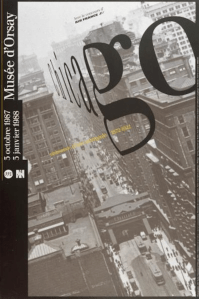 Organised jointly by the Art Institute of Chicago, the Musée d’Orsay and the Deutsches Architektur Museum in Frankfort, the exhibition opened on the great fire which, in 1871, completely destroyed Chicago. In little time, the city arose from its ashes. Its economic importance, the steady growth of its population forced architects to innovate in order to build quickly and with as little expense as possible, commercial buildings.
The first sky-scrapers soon appeared with the metallic armature of buildings which made the universal fame of the Chicago school.
The exhibition presented architectural drawings, objects and pieces of furniture, paintings, and photographs by personalities who made the glory of Chicago, such as Louis Sullivan, Franck Lloyd Wright or Daniel Burnham.
Some years later we took a river tour of Chicago’s skyscrapers, which was more, well, watery than the d’Orsay exhibit. The rest of the museum – which contained at the time, according to this Chicago Tribune piece, “2,300 paintings, 1,500 sculptures, 1,100 objects (furniture to enamels), 13,000 photographs and a film collection that people [were] flocking to see” – we found endlessly fascinating.
For that reason, we revisited the Musée d’Orsay just about every time we returned to Paris, which was a lot over the next 25 years.
Our second Paris trip, however, featured another first: A visit to Centre Pompidou, the architecturally inside-out museum that was a scandal at its opening in 1977 and a fixture ten years later when we went there.

Unfortunately, we did not get to the Pompidou in time to see its Otto Dix exhibit, advertised with this poster depicting his 1926 “Portrait de la Sylvia von Harden.”

We were also too late for the Pompidou’s 10th anniversary retrospective, L’Epoque, La Mode, La Morale, La Passion: Aspects De L’art D’aujourd’hui, 1977-1987, which was advertised with this Keith Haring poster.

I’m guessing we mostly visited the museum’s permanent collection our first time there, but I do know this: The Pompidou itself was – and is – something to see.
The Missus:
The Pompidou is indeed something to see – both inside and out. In fact we were actually lucky there was no blockbuster exhibit when we first visited or we would have been exhausted long before taking in their sensational collection of modern and contemporary art, the largest in Europe. Not sure what the word for blockbuster is in French, but the Pompidou doesn’t fool around as we learned on later visits. Their fabulous Dubuffet exhibit, for example, had so many incredible works we had never seen, it took almost half a day to get through. When they have two or more such exhibitions, you’ll collapse long before hitting the permanent galleries.
Our favorite floors were bursting with stellar works by Braque, Picasso, Matisse, Modigliani, Derain, Dufy, Vlaminck, Jawlensky, Gontcharova, Delaunay – both Sonia and Robert – Gris, Léger, Lipchitz, Chagall, Soutine, both Arps, the German Expressionists and on and on and on.
And the Atelier Brancusi, a separate glass-enclosed building outside, is the ground-breaking sculptor’s actual studio bequeathed to the French state after his death. It perfectly preserves the artist’s workshop as he left it, chock full of both his most iconic pieces and works in progress. No matter how many times we visit, we are always astounded.

Then there’s the Pompidou’s inside-out architecture designed by star-chitect Renzo Piano. As you ascend the glass-enclosed outside escalators, your views of roof-top Paris get more and more breath-taking.

I’m pretty sure we also checked out The Conciergerie, in large part so the Missus could shout out Robespierre!
The Missus:
Funny the things you remember from grade school. I never forgot the story that Robespierre was shot in the mouth prior to his being guillotined so he couldn’t say any last words. Talk about overkill! It turns out the story may have been apocryphal as later history books suggest the shot through his jaw was more likely a suicide attempt.
The Conciergerie is memorable for more than stories about that architect of the French Revolution’s Reign of Terror. There are ghoulish scenes of prisoners’ cells and torture devices everywhere, in addition to a recreation of Marie Antoinette’s comparatively luxurious accommodations prior to her execution, complete with a wax figure of the deposed Queen herself. Needless to say, kids love the place.
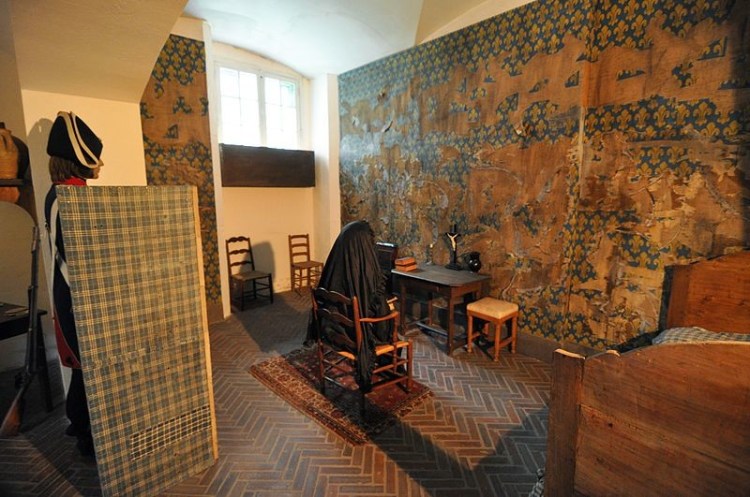
Marie Antoinette’s cool crib at the Conciergerie. And with that, our Paris do-over was over.
• • • • • • •
Upon our return home, I filed the requisite Adweek column.


Favorite passage:
The movies are a big source of ads. For the most part the French don’t advertise them in the newspapers, but are content instead to poster the town every time a new flick arrives. I’ll never forget the transit poster we saw three years ago, with a big photo of Valarie Kapriski naked from the waist up. But that’s mostly because the Missus will never forget it. Luckily, the ads were a lot tamer this year, so I’ll skip them.
We did go to the movies, though, and we made sure we got there early, so we could see the seances. Those are the commercials that run for about 20 minutes before each feature presentation, and they’re always very well attended. The sales reps must love pushing the seances as a media buy. “I’m tellin’ ya, Jean-Paul, it’s like the audience is in a trance or something. It’s an advertiser’s dream. Trust me, J-P.”
It was true: Our reviews of the commercials ranged from “the audience laughed” to “the crowd went wild” to “absolute bedlam.”
Formidable!
-
North by Northwest to Mt. Rushmore
In 1987 I was a very unhappy creative director at a mid-sized ad agency in Boston (representative samples of my work here), when my boss decided it would be a good idea to get me out of town – specifically for a pricey road trip (on his dime) down the California coast.
As I recounted some years later at Campaign Outsider:
Thirtysome years ago, my boss at the time, thinking I was on the verge of quitting his ad agency, sent me and the Missus on a deluxe, all-expenses-paid trip down the California coast from San Francisco to LA.
About halfway through our Golden State jaunt, we encountered the two highlights of the trip: the Hearst Castle and the Madonna Inn, both located in San Luis Obispo.
The Madonna Inn boasts “110 whimsical guest rooms, each with their own unique charm and decor.” We stayed in the Highway Suite, for those of you keeping score at home.
The Missus:
First, the Madonna Inn has nothing to do with either religion or the pop star. Not sure where the name came from but the hotel interiors were not to be believed. Seemingly designed by someone on an acid trip – like the clashing neon colored everything in the restaurant – the place is actually renown for its hallucinogenic public bathrooms, including “the ever-popular motion activated waterfall urinal.”

Madonna Inn Women’s Restroom 
Madonna Inn Waterfall Urinal Our suite had a distinctive design split personality with a huge Fred Flintstone-style boulder fireplace bizarrely paired with an ornate, gold brocade-covered bed.

Then the bathroom combined delicate French floral pedestal sinks with a discomfiting craggy, rock shower in jet black. It had malevolent rather than outdoorsy vibes once inside.
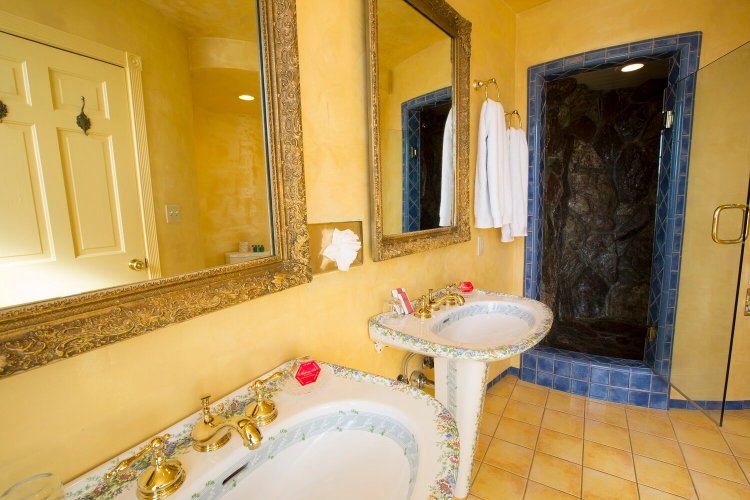
Not since I saw the movie “Psycho” was I that nervous washing up, but the place was great fun overall.
The main event in San Luis Obispo, however, was the San Simeon Hearst Castle. Since the Missus is a certified cinema junkie, we wanted to take all four of its tours.

To get to the Castle, you took a 15-minute bus ride up La Cuesta Encantada (The Enchanted Hill). We asked if we could just stay up there for all four tours, but we were told we had to ride back down to the Visitor Center and take another bus back up each time.
So we did: four round trips, 15 minutes each way.
It was totally worth it.
The Missus:
Unfortunately for my easy going husband, the Sutton family travel motto is “Nothing Succeeds Like Excess!” I knew this was our once-in-a-lifetime visit to the Hearst Castle and figured, what the heck? Why not see it all? Other than the four-round trips up and back, the tours weren’t remotely repetitive (except you saw the amazing pools each time – which was swell). Each guide had a different interest and expertise to share from the architecture and obsessive furniture/objet d’art collections to the Marion Davies/Hearst love story, famous Hollywood guests and over-the-top entertainment. Even the four round trip rides were interesting as Hearst picked the Castle hilltop location to be above the area’s typical fog and cold. It was like an airplane ride where you suddenly see the sun come out and the clouds disappear. It was a completely memorable trip with my always game travel companion.
• • • • • • •
Eventually we made our way to San Diego, where it rains roughly five days a year, including the one on which we arrived.
Undaunted, we checked into La Valencia Hotel in La Jolla. That night at roughly 11 p.m. the Missus and I competed in the First Annual La Valencia Invitational Shuffleboard Championship, to which only we were invited.
More than several of La Valencia’s uninvited guests were not amused. Regardless, the Missus was crowned champion round midnight in an insouciantly boisterous post-tournament ceremony.
The Missus:
I seriously had considered booking the Hotel del Coronado where our favorite movie “Some Like it Hot” was filmed, but I read that the place was rather rundown at the time and La Valencia was a cool alternative. Both were true as we visited del Coronado just to walk around where Jack Lemmon gave the funniest performance of his career.
(You’ll note a through-line in our travels of my having to visit famous movie locations wherever possible.) By the way, the renovated hotel looks pretty spiffy today.
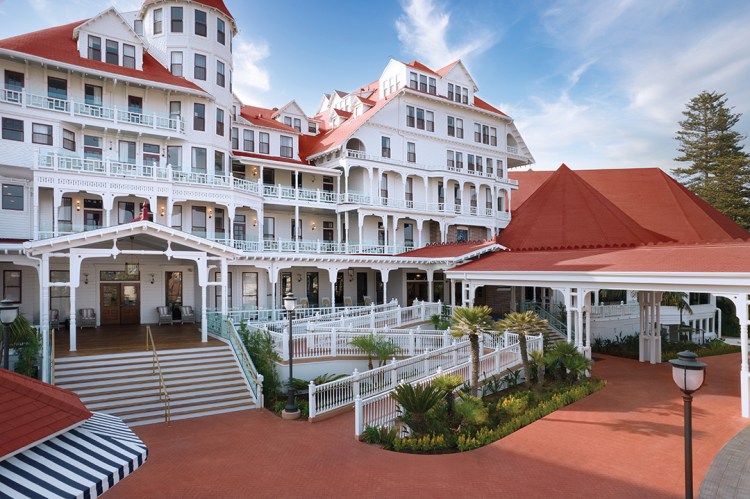
Bright and early the next morning, we trundled over to San Diego’s Sea World, which at that time featured a supersized map of the U. S., with prominent tourist attractions displayed in each state. (It was replaced not long after, according to a post on MiceChat, by stables for the Budweiser Clydesdales.)
The Missus turned to me and said, Anywhere in America – where do you want to go the most? I immediately walked to South Dakota and Mt. Rushmore.
So the Missus took me there.
The Missus:
Have to say I was rather non-plussed when John so decidedly picked Mt. Rushmore, but since I loved Hitchcock’s “North by Northwest,” was totally on-board, thinking what a great surprise birthday gift. Again pre-internet, I asked my travel agent if he could find bargain airfares to fly to Rapid City for the weekend. “A weekend,” he asked incredulously? With only connecting flights, did I know how long it would take to get there? I nodded. “I mean, what else is there to do after Mt. Rushmore,” I asked. “You should go hiking in the Badlands,” he suggested. “We don’t do hiking.” “How about camping in Yellowstone?” “We don’t do camping.” “Well if you’re asking me if there’s a Bloomingdale’s, there isn’t,” he finally said, exasperated. “Right – so let’s book that weekend,” I said, smiling. And we did.
• • • • • • •
Before you could say Four Presidents, No Waiting, we were winging our way to Rapid City, SD. After we got to our room in the Presidential Tower of the Rapid City Hilton, we threw open the drapes and saw, atop a hill in the distance . . . dinosaurs. Five of them, for those of you keeping score at home.
“We gotta go there,” the Missus said quickly.
So we unpacked our bags, jumped in the rental car, and went there.
Representative dino-sample.

We can all thank Franklin Delano Roosevelt’s Works Progress Administration for Rapid City’s Dinosaur Park, as Roadside America notes.
The five sculptures were a Depression-era project cooked up by the Rapid City Chamber of Commerce, who saw them as a way to make jobs, get the government to pay for it, and capitalize on the flood of visitors to nearby Mount Rushmore. Emmit A. Sullivan is credited as the sculptor — the same artistic genius who created the Christ of the Ozarks and the dinosaurs at Dinosaur World in Arkansas.
The next morning we went to Mount Rushmore National Memorial.
American History, Alive in Stone…
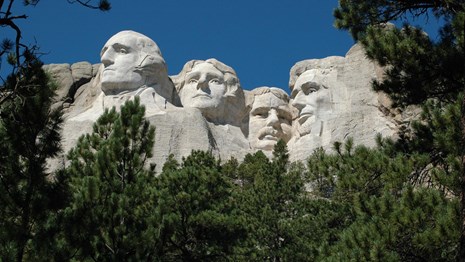
Majestic figures of George Washington, Thomas Jefferson, Theodore Roosevelt and Abraham Lincoln, surrounded by the beauty of the Black Hills of South Dakota, tell the story of the birth, growth, development and preservation of this country. From the history of the first inhabitants to the diversity of America today, Mount Rushmore brings visitors face to face with the rich heritage we all share.
Or the rich heritage we all used to share, not to get technical about it.
Regardless, the monument (which was dynamited by Gutzon Borglum to within inches of its final form) is spectacular. Every American should go visit it.
The Missus:
Another fascinating tidbit we learned: Jefferson originally was being carved to the left of Washington, but when a dynamite charge was over-estimated, it blew the nose right off his face. (Your joke goes here.). They started all over again, more successfully, on the right. Also amusing, passers-by during the early carving days thought the memorial was for George and Martha Washington due to Jefferson’s long tresses.
Then there was the matter of the Mt. Rushmore cafeteria, immortalized by Alfred Hitchcock in North by Northwest.
The Missus can tell you about our activities in that regard.
The Missus:
Since you can’t walk around on the top of the monument as Cary Grant and Eva Marie Saint dramatically did in the movie, I chose instead to reenact the fake shooting scene in the cafeteria which I’m happy to say, looked exactly like it did in the film. So I stood in the middle of the room, had John fake shoot me with a hand gesture, and then fell dramatically to the ground where he took my picture. Couldn’t believe other diners were surprised – clearly not movie buffs.
Afterwards we went to the Big Thunder Gold Mine, where we [checks notes] mined for gold.
What that entailed was pounding away at a wall of rock for roughly 20 minutes to eventually produce a stone roughly the size of – irony alert – a silver dollar. If we added another ton of rock, according to the Big Thunder guy, it might actually yield a single ounce of gold.
Might being the operative term.
Consequently, we went back to the rental car and took a nap.
• • • • • • •
Contrary to the suggestions of our travel agent, we did not go to Wall Drug or Badlands National Park. We also didn’t get to the Crazy Horse Memorial, although given a mulligan, we certainly would have driven the half-hour to see that great work in progress.
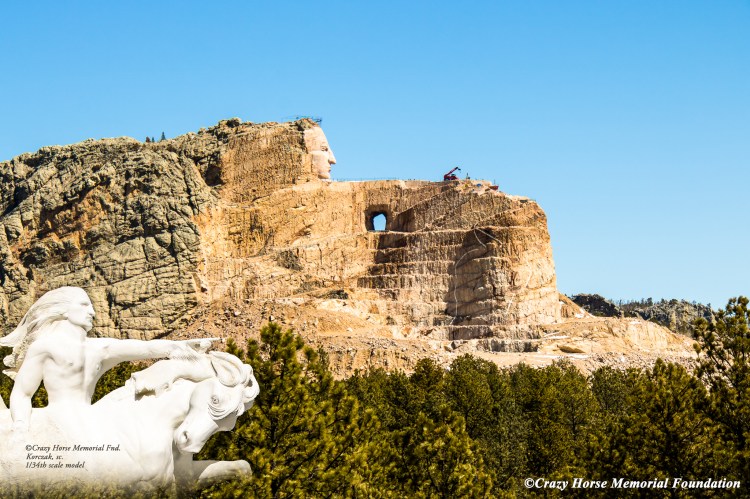
We did, however, visit Bear Country U.S.A., where we learned that 1) bears are really really big; 2) bears are really really messy eaters; and 3) when bears surround your car, it’s really really scary.
Other than that, we had a swell time in the bruin house.
We also returned to Mt. Rushmore for its Evening Lighting Ceremony, multiple home videos of which you can watch here, none of which, however, capture the actual magic of it.
The Missus:
Mt. Rushmore illuminated is truly awe-inspiring. Pictures don’t do justice to the enormous scale and detailing of the sculptures – can’t imagine how they dynamited the outlines of Teddy Roosevelt’s glasses, for example. The nightly ceremony began with a very entertaining Ranger telling stories about the monument. He ended his talk cautioning everyone that any photos they tried to take of the lighting would never come out because of the vast distance from the foot of the mountain where we all stood and the monument so high up. “Trust me,” he said, half-laughing, adding, “I know none of you will believe me.” Sure enough, the second the night lights came on, a zillion flashbulbs popped from every tourists’ camera.
And then, our weekend over, we went home.
• • • • • • •
Never one to be shackled by reality in my Adweek columns, I produced this piece upon our return to civilization.
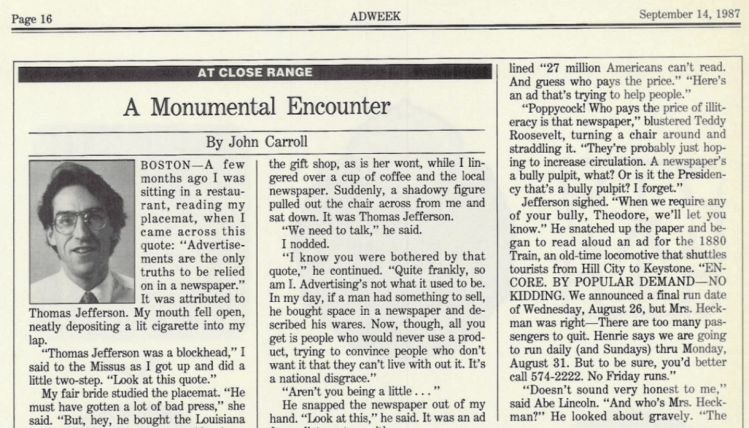
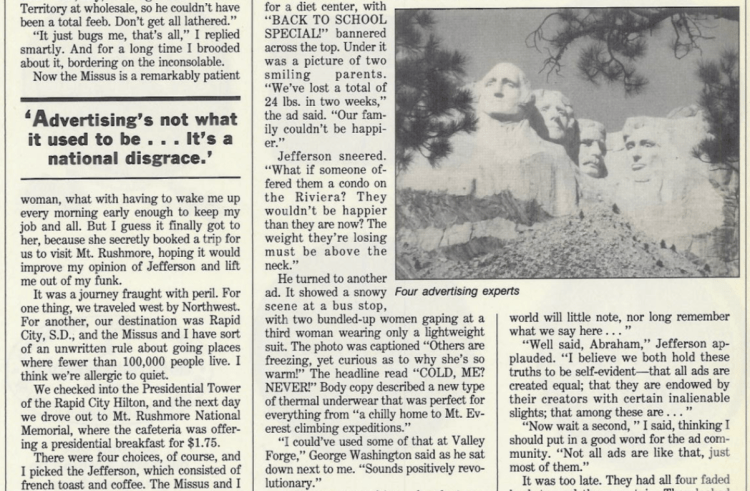
 Favorite passage:
We checked into the Presidential Tower of the Rapid City Hilton, and the next day we drove out to Mt. Rushmore National Memorial, where the cafeteria was offering a presidential breakfast for $1.75.
There were four choices, of course, and I picked the Jefferson, which consisted of french toast and coffee. The Missus and I agreed that probably the least popular of the four was the Teddy Roosevelt “Rough Rider” breakfast – biscuits, gravy and coffee. Maybe that’s what made the ride so rough.
Our ride that weekend, though – thanks to the Missus – was totally smooth.
-
Egg Month in Canada: ‘You Could Feel the Excitement in the Air’
For reasons that remain lost in the mists of time, during the summer of 1987 the Missus and I decided to celebrate the Fourth of July in Toronto, a city I described this way in an Adweek column I wrote upon our return to the Hub of the Universe.
[Our trip] tied in nicely with Toronto’s slogan, “Discover the Feeling.” We tried our best, but all we could come up with was this – Toronto’s a good town, if you like them on the dull side. It’s also the safest town in North America, so you don’t have to worry about muggers taking advantage of the general stupor.
Whatever. We had inadvertently stumbled upon a special time in the Great White North – namely, Egg Month – which was trumpeted by a billboard that featured half a hard-boiled egg, some broccoli, and a guy swimming. The billboard was, as I later noted, “signed by Alex Baumann, who must’ve been the swimmer because food can’t write. Underneath the signature, we were all urged to ‘Get Cracking.’”
So, the Missus and I tried – but I can’t exactly remember what we managed to crack.
Except for these two things.
On the Fourth we ventured out to Ontario Place, which was billed as “a tiny, ultra modern Venice,” but decidedly was not.
Aerial view from City of Toronto Archives.
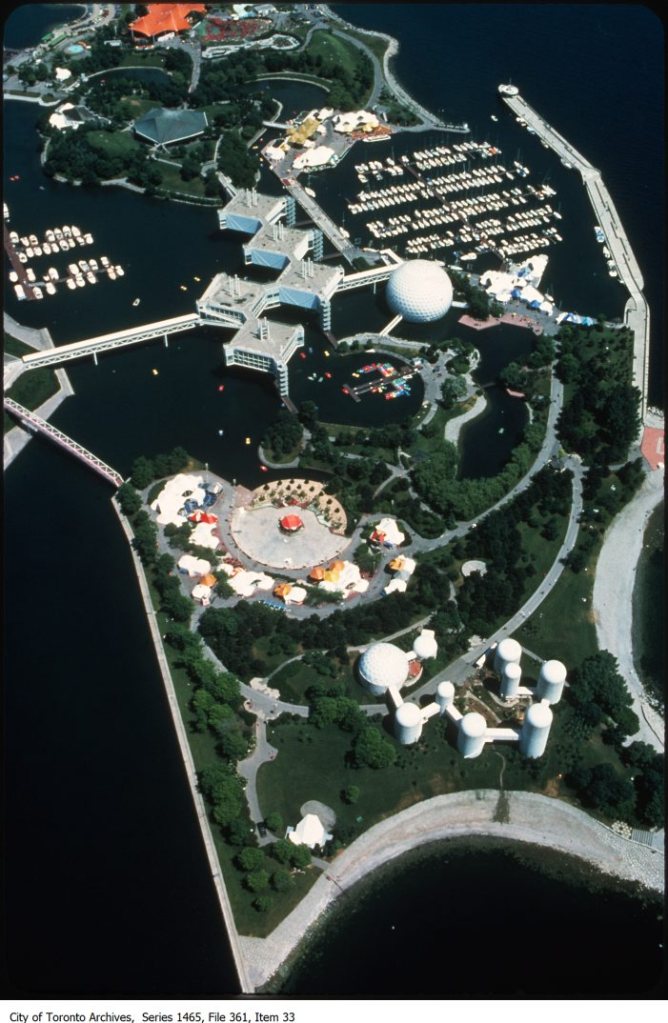
The Missus:
No offense to Toronto, but the only things I remember clearly from that trip are that it was egg month – come on, that truly is bizarre – and that it was the cleanest city I have ever been in. It felt like Camelot, where as the song goes, the autumn leaves blow away completely, “at night of course”. They must have had midnight cleaning crews for the streets to be so void of any trash. It was very impressive.
I also fondly remember the oldies concert discussed below, and we weren’t even that old at the time.
We wandered into the Ontario Place Forum, an outdoor arena that happened to be hosting an Oldies Concert that night.
It featured, in no particular order, 1) The Spencer Davis Group, whose leader memorably appeared in a white polo shirt, plaid Bermuda shorts, black dress socks, and high-top Chuck Taylors; 2) Jan and Dean, who were both still alive at the time; and 3) Gary U.S. Bonds, who at the end of his set thanked “each and every one of [us] individually and collectively.”
All the while, Madonna was appearing right next door in front of 50,000 fans at the CNE Stadium, where her Who’s That Girl tour sort of turned into What’s That, Girl? when she opened the concert with “Happy Fourth of July, Toronto!”
Unfortunately, both concerts ended around the same time, so we got to ride back to our hotel in a streetcar stuffed to the gills with amped-up Madonna groupies. So much for Toronto’s general stupor.
The next day, however, it was Toronto as usual, so the Missus and I decided to take a trip to Niagara Falls, which looked like this according to a YouTube video recorded the following month. (Fair warning: Lots of Niagara, less of The Falls.)
Undaunted by how tacky the town was, we ventured onto the Maid of the Mist to experience the Full Niagara, as documented in this YouTube video.
(Resorting to other people’s videos, of course, is further evidence of our deeply ingrained resistance to recording every aspect of our lives, except in print.)
I do remember that the Maid of the Mist folks gave us rain slickers to wear and that The Falls were totally awesome.
Everything else about that trip, though, is lost in the Mist of time.
The Missus:
Niagara Falls really lives up to its reputation as a true wonder of the world. It’s awe-inspiring both from above and below, though Maid of the Mist is a bit of misnomer. If you don’t carefully button your yellow rain slicker all the way up with the hood, you will get absolutely soaked, not misted. The rocky boat trip also brought to mind the hair-raising denouement of the movie thriller “Niagara” starring Marilyn Monroe, where her murderous husband George (Joseph Cotton) almost succeeds in killing the innocent honeymooning ingenue (Jean Peters).

But happily, we lived to tell the tale.
As for the tacky surroundings, there were countless souvenir shops and various game entertainments for the kiddies. We wandered into one with bumper cars and carnival type games which were actually fun. You had to buy a roll of tickets which we hardly put a dent into when it was time to leave. So we offered all our remaining stash to family after family on the ticket line, and shockingly, everyone said no while eyeing us suspiciously. We kept saying they were free, to no avail. Finally, I just put them on the ground and walked away hoping someone would eventually pick them up. Since the people of Toronto were so uniformly friendly and polite, one would have thought tourists more trusting. Then again, we were on the Buffalo, New York side, so there’s that.
In retrospect, my saddest memory of Toronto is that the Bata Shoe Museum didn’t open until 1995, long after our visit. Currently holding nearly 15,000 shoes and related artifacts spanning 4,500 years of footwear history, this would have been manna from heaven as my fashion consulting business was flush with numerous national shoe companies at the time.
Ah well, back to John and his amusing ad commentaries.
• • • • • • •
When we got home, I wrote this piece for Adweek.


Favorite passage:
And while we’re talking about my favorite vices, get a load of this tag on a Benson & Hedges bus-shelter ad: “WARNING: Health & Welfare Canada advises that danger to health increases with amount smoked – avoid inhaling.” C’mon now. If you don’t inhale, why smoke? Just so you can smell bad? It doesn’t make sense.
Yeah – maybe just have a hard-boiled egg instead, eh?
-
‘Hey! Fungoli!’: How the Missus and I Railed Our Way Through Italy
Several years after our misbegotten maiden voyage to Europe, the Missus and I embarked on a Grand Tour of Italy: Milano to Venezia to Firenze to Roma.
First stop: Milan, about which I remember exactly nothing.
The Missus:
For me, Milan was indeed memorable, but for all the wrong reasons. Why go at all one might ask? In the 1980s, the industrial city was most often recommended for being much less touristy than vacation mainstays like Florence, Venice and Rome. But that was like saying, visit Trenton, New Jersey to avoid all those Manhattan crowds! OK, Trenton doesn’t have a magnificent Duomo and “The Last Supper,” but you get the idea.
However, Milan was the fashion capital of Italy at that time, so as a trend forecaster I planned a two-day stopover for exploring the chic boutiques and elegant hotspots. After checking into the aptly named Hotel Diana Majestic – favorite of models, photographers, and buyers – I donned my cutting edge, black Karl Lagerfeld (pre-Chanel) coat – thank you Filene’s Basement – for window shopping the high-end Corso Venezia.
The first la-de-da shop we walked into was filled with racks of my personal favorite designs – minimalist silhouettes in exquisite materials. As I touched the sleeve of a beautiful jacket, a sales woman quickly came over and slapped my hand away. I stared at her, stunned. I gathered from her barking Italian that one had to ask for help and perusing was not allowed. Before angrily turning her back on me, she pointed to a loud American couple sitting on a couch. They both wore unattractive clashing bright colors in shiny fabrics with sneakers, yet were being waited on hand and foot. Had I entered fashion Bizarro world?
No. I soon realized the only color the sales woman noticed was the gold of the husband’s American Express card as he approved his wife buying anything and everything presented to her, which I couldn’t imagine her ever actually wearing. We walked out of the store, me dejected, John finding humor in the situation. He was right of course, so we decided to take in the city’s art offerings to cheer up. That didn’t go much better. (See John’s story about our visit to “The Last Supper” in his AdWeek column below.) Needless to say, we never went back.
Second stop: Venice, which was totally memorable. But first we had to get there, an enterprise that generated more than a little drama.
We had decided to travel from city to city on the vaunted Italian railway system. So we made our way to the Milano Centrale railway station to catch the train to Venezia.
Problem #1: Mussolini was no longer there to make the trains run on time. (Spoiler alert: He never actually did.)
Problem #2: The Missus had smartly purchased our train tickets in advance, but they were all in German, which did not sit well with our Italian ticket collector. He started machine-gunning whole paragraphs at us – in Italian, of course – while the Missus went back at him hammer and tongue – in English, of course.
The two of them went around the maypole for more than several minutes, until the Missus successfully browbeat him into punching our tickets.
The Missus:
Why were the tickets in German? I have no idea. Pre-internet days, I booked all our Italian train trips through a travel agent. They were stamped official, pre-paid and even had seat assignments. In my battle with the conductor – who I think was just trying to hijack me for personal pocket money – my vehement refusal to pay any surcharge clearly surprised him, as I’m guessing most Americans cave pretty quickly. Clearly frustrated, he finally proclaimed – in English – “You’ve paid for the seats but not the train! You owe me money.” I told him fine, put the seats out on the train track as we’re not moving. Exasperated, he punched our tickets and stormed off. Arrivederci!
Eventually we arrived in Venice and say, it was swell. To get to our hotel, we caught a vaporetto, which is way more fun than a taxi from Charles de Gaulle to the Marais in Paris or a Blue Line train from Logan to downtown Boston.

Our hotel, thanks to the Missus, was the spectacular Bauer-Grünwald, which FamousHotels.org describes this way: “The Bauer (Grünwald has been dropped from the name) is one of the last great Venice establishments still in private hands, with a strict, utilitarian facade and subdued interiors providing a refreshing antidote to all the gilded and baroque excesses of the city.”
When we stayed there, our room was all warm, rich, polished wood you could see your reflection in. It was a knockout.
As was Venice itself.
The Missus:
I was as surprised as John that we were able to afford such a sumptuous hotel, but that’s what traveling off-season will do for you. The March weather might have been chilly, but the sight of the mesmerizing green lagoon was beyond warm and inviting. When we reached our hotel’s vaporetto stop, we were greeted by rows and rows of rectangular plank wood tables. At check-in, I asked if there had been a festival the day before. “No Signora,” the manager said with a smile. “The flood waters were so high yesterday that one had to walk on the tables just to get down the street.” What a difference a day makes . . .
We delightedly soaked up every gilded and baroque excess of the city, starting with Piazza San Marco, which is where every tourist begins in Venice.
We also toured the Doge’s Palace: “A masterpiece of Gothic architecture, the Doge’s Palace is an impressive structure composed of layers of building elements and ornamentation, from its 14th and 15th century original foundations to the significant Renaissance and opulent Mannerist adjunctions.”
Whatever. It was indeed totally impressive.

We also took in Santa Maria della Salute . . .

and the Bridge of Sighs . . .

But mostly we just wandered through that beautiful city, except for the part where Venice street urchins relentlessly surrounded us asking for money which we resolutely refused to fork over.
The Missus:
Normally I’m a sucker for cute kids begging, but I had recently watched a Diane Sawyer report warning Americans that children in Venice were being used for serious street crimes. Wailing, “Mama sick. Mama sick. Please come,” a child would take the hand of a sympathetic tourist who was led to a back alley where adult robbers were waiting. Thanks to 60 Minutes, we avoided any trouble.
In the evenings, we also had to run the gauntlet of restaurant barkers who stood outside their establishments hawking that night’s blue plate special.
The Missus:
This being off-season, we were the only people dining in our selected trattoria – hence the waiters standing outside begging for business. The food and service was wonderful, but there was one wrinkle. The restaurant had a terrible singer playing the piano, and as we were the only patrons, he kept crooning our way in badly accented English. It kept getting funnier and funnier. At one point, he said he was dedicating the next song to the owner’s wife, with the memorable opening lyrics: “Try me. Don’t be afraid, you can try me! Maybe it’s late, but just try me!” Sitting at a nearby table, the imposing boss either wasn’t listening or didn’t care. Either way we were happy to pay our bill and be on our way.
In the end, it was all special.
At one point we stumbled on the canal-side filming of the TV series Una donna a Venezia, which kept us from having a drink at the fabled Harry’s Bar in the Cipriani Hotel.
Just as well, since it left us a few extra lira to take to our next destination, Firenze.
The Missus:
Who knew Florence is called Firenze in Italian? Well, Italians of course. Since I was counting the train stops from Venice (Venezia was a no-brainer), I knew just when to get off. I later found out that Americans often miss the stop because the station sign doesn’t say Florence. We tourists can be pretty dense sometimes.
• • • • • • •
Presumably because the conductor on the train from Milan punched our tickets, the one on the train from Venice did the same. Upon our arrival in Florence, given that we had only a couple of days there, we went straight for the Greatest Hits Tour.
First stop: the Duomo, described this way by Visit Florence.

Florence’s cathedral stands tall over the city with its magnificent Renaissance dome designed by Filippo Brunelleschi, with the baptistery right across. The cathedral named in honor of Santa Maria del Fiore is a vast Gothic structure built on the site of the 7th century church of Santa Reparata, the remains of which can be seen in the crypt.
The inside of the Duomo is equally spectacular.

After we drank in the Duomo, it was off to Le Gallerie Degli Uffizi, the crown jewel of Florentine museums.
The Gallery entirely occupies the first and second floors of the large building constructed between 1560 and 1580 and designed by Giorgio Vasari. It is famous worldwide for its outstanding collections of ancient sculptures and paintings (from the Middle Ages to the Modern period). The collections of paintings from the 14th-century and Renaissance period include some absolute masterpieces: Giotto, Simone Martini, Piero della Francesca, Beato Angelico, Filippo Lippi, Botticelli, Mantegna, Correggio, Leonardo, Raffaello, Michelangelo and Caravaggio, in addition to many precious works by European painters (mainly German, Dutch and Flemish).
Among the collections . . .

It was altogether impossible to take in everything during one visit, so we saw what we saw and moved on (but went back for a longer look a few years later).
Our next stop was The Accademia Gallery to see Michelangelo’s David.
After that eye-popping experience, all we had left was the sublime Palazzo Pitti. Once again from Visit Florence:
This enormous palace is one of Florence’s largest architectural monuments. The original palazzo was built for the Pitti family in 1457, designed by Filippo Brunelleschi and built by his pupil Luca Fancelli . . .
Today, the Pitti Palace houses some of the most important museums in Florence: on the first floor is the Palatine Gallery, containing a broad collection 16th and 17th century paintings (including works by Raphael), and the Royal Apartments, containing furnishings from a remodeling done in the 19th century.
Representative samples:

The whole place was staggeringly beautiful, as was the adjacent Boboli Gardens, well represented by Neptune’s Fountain.
It was all so . . . captivating.
On several occasions, though, we did actually stop and eat something in Florence, which proved rather costly on the whole. In 1986 the Italian lira was The Biggest Loser of monetary units, as the South Florida Sun-Sentinel noted at the time.
After nearly a quarter century of hemming and hawing, the government finally has decided to put the bloated Italian currency, the lira, on a crash diet.
It’s about time in a country where a single-scoop ice cream cone costs 1,000 currency units, a cab costs 2,800 for simply turning on the meter, an average dinner for two eats up 50,000 currency units and you have to be a millionaire many times over to rent an apartment — 2 million lire a month is not uncommon.
You bet I was doing a lot of long division in my head during that trip.
Exhibit Umpteen: On our first night in Florence, we cruised around the many restaurants near the Duomo and chose one that looked inviting. Once inside, it felt a little pricey, but there we were.
Scanning the menu, I found the least expensive secondi – or main dish – which was, as best I recall, Polpo Bolognese. Hey, Bolognese Whatever, I thought – that’s gotta be okay, right?
Wrong.
Because polpo was – and is – octopus.
Rest assured, I went to bed hungry that night.
Soon enough, though, it was on to Roma, where we had a much more satisfying – and downright theatrical – dining experience.
• • • • • • •
Once we arrived at the Eternal City, we checked into the coincidentally named Hotel Boston near the Spanish Steps. It was a lovely room with large French windows, but, given our limited time in Rome, we quickly headed out to catch that city’s Greatest Hits.
First stop: The Colosseum, described this way by the encyclopedic Civitatis Rome.

The Colosseum is the main symbol of Rome. It is an imposing construction that, with almost 2,000 years of history, will bring you back in time to discover the way of life in the Roman Empire.
The construction of the Colosseum began in the year 72 under the empire of Vespasian and was finished in the year 80 during the rule of the emperor Titus. After completion, the Colosseum became the greatest Roman amphitheatre, measuring 188 meters in length, 156 meters in width and 57 meters in height.
After that, it was on to the Roman Forum, which is a total wreck.
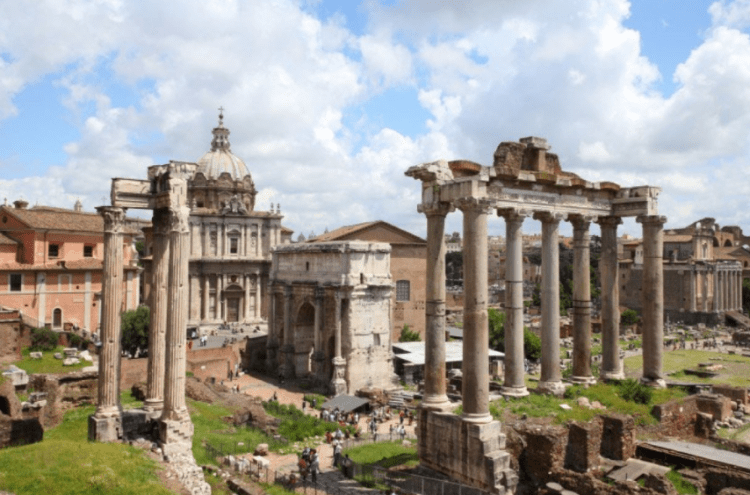
The Missus:
As the name suggests, the Colosseum truly is colossal. Despite the fact that it is now located in the middle of a huge, noisy traffic circle, inside it is downright eerie. You can walk where the Christians were imprisoned before being thrown to the lions and can’t help but picture the horrific violence amongst huge cheering crowds. It’s quite sobering.
Levity came soon after as we explored the Roman Forum with countless other tourists, all of us trying to figure out which bit of ruin had been what. As we all turned our guidebook photos sideways and upside down to no avail, one could make out in various languages, “You think that was the temple of the Vestal Virgins, or is it Castor and Pollux?” Too bad Gladiator wouldn’t come out for another 20 years.
And then there was Rome’s main event: Vatican City. Our first stop, of course, was St. Peter’s Basilica, which I’ve always thought of as God’s parish church.

Once inside, I knew it was.

We also checked out the Sistine Chapel, whose vaunted ceiling was at the time in restauro, as this Britannica piece detailed: “In the 1980s and ’90s, the Sistine Chapel underwent a long and elaborate restoration scheme sponsored by a Japanese television corporation and carried out by top Italian and international experts. The cleaning removed centuries of grime, dust, and candle smoke from the frescoes and revealed unexpectedly brilliant colours . . .”

We saw about one-third of the restoration on our visit there, and it was totally eye-popping. Representative before-and-after.
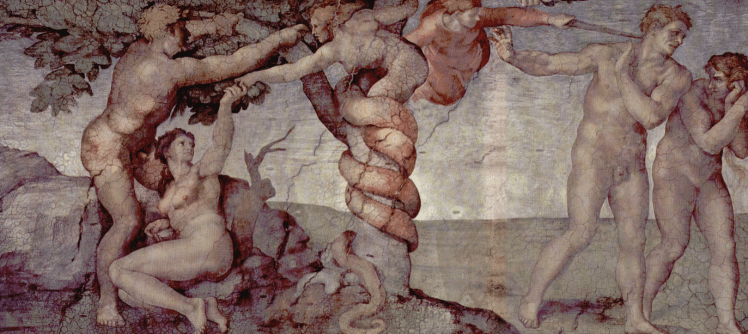

Just wow.
We also toured the Vatican Museums, which, according to Wikipedia, “display works from the immense collection amassed by the Catholic Church and the papacy throughout the centuries, including several of the most renowned Roman sculptures and most important masterpieces of Renaissance art in the world. The museums contain roughly 70,000 works, of which 20,000 are on display.”
Luckily, we did live long enough to wander into a Sardinian restaurant that night, to be met by a totally pleasant-looking young waiter who watched us puzzle over our menus, walked up, took them away, and said “Trust me, trust me.”
So we did.
Within minutes we had a bottle of chianti and an antipasti dish sitting in front of us. From that point on, Trust Me Trust Me just kept bringing rich, savory dishes to our table and we just kept eating them. (We were much younger then and ate far more wantonly than we do now.)After three pasta dishes (primi) followed by a meat course (secondi) and vegetables (contorni) followed by insalata followed by formaggi e fruitta followed by dolce (in our case tiramisu) followed by caffe, it was time for digestivo.Trust Me Trust Me came to the table with a bottle of grappa and poured each of us a glass.Grappa is winemaking’s potluck: Skins, pulp, seeds, and stems left over from the winemaking process get distilled into a liquid that tastes how I imagine a glassful of kerosene would.Except here’s the thing about grappa: Right around your third glass, it starts to taste better and better.Trust Me Trust Me came by our table at increasingly frequent intervals to shake the grappa bottle, a clear sign I wasn’t holding up my end of the deal. So I kept drinking it. I felt I owed him that much after he’d orchestrated such a fabulous meal.When the grappa was – gulpily – gone, it was time to play Guess the Check, a game the Missus and I created early in our trip.Restaurant bills in Italy (contos del ristorante) notoriously feature more add-ons than a burrito buffet. Did you sit? Did you stand? How many napkins did you use? Did your sandwich contain spinach, whether you asked for it or not? And etc.We figured the tab from Trust Me Trust Me was going to be astronomical. When we got the conto, it was the equivalent of $54. We left a 50% tip.All that remained was for the Missus to roll me back to the hotel and pour me into bed.Great night.Not so great morning, though, as you might imagine.It wasn’t just the jackhammers in my head that woke me up. There was a tour bus loudly idling right beneath our delightful French windows, which augmented the aural assault on my battered brain.I rushed – naked – to the nearest window, flung it open, and yelled at the world in general, Hey! Fungoli!I had no idea what that meant; chalk it up to the lingering grappa grip from the night before. Subsequently, I’ve come to realize what I really should have yelled was, Hey! Fongool! (“generally interpreted to mean f**k you”).My bad. But I think the world in general got the drift.The Missus:John being a very mild-mannered kind of guy, I was pretty shocked when he started screaming out the window. Come to find out he inadvertently was yelling something about mushrooms rather than cursing. However, I think the shock value did the trick as quiet soon prevailed and John slept like a log until checkout.Later that day, the Missus and I said ciao bella to Italy.• • • • • • •
Upon our return to Boston, I wrote this column for Adweek.
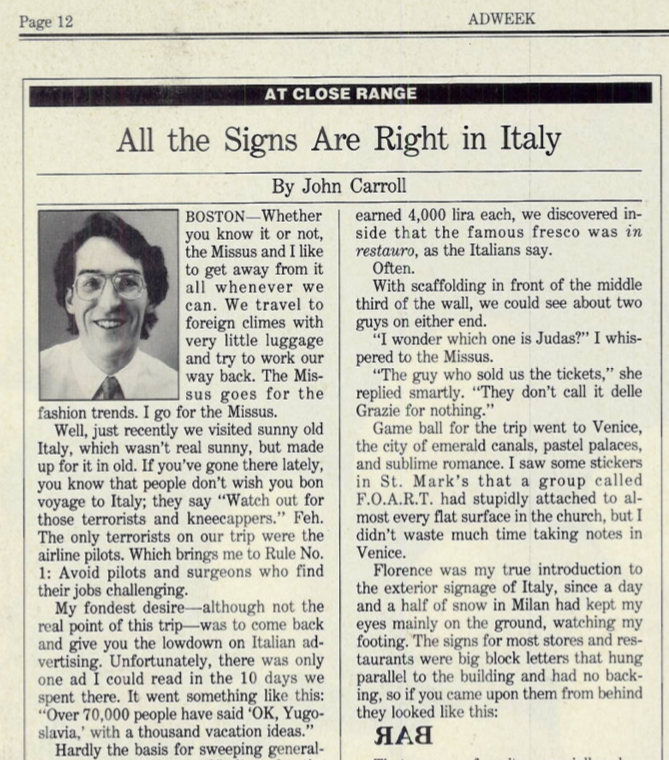
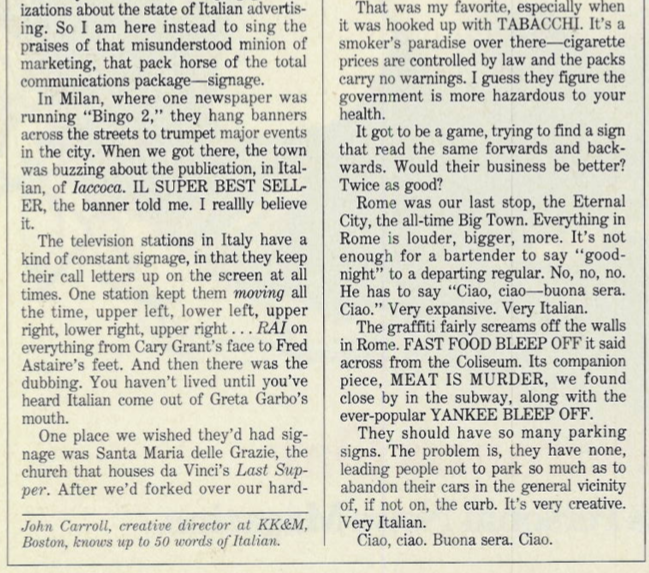
Favorite passage:
One place we wished they’d had signage was Santa Maria delle Grazie, the church that houses da Vinci’s Last Supper. After we’d forked over our hard-earned 4,000 lira each, we discovered inside that the famous fresco was in restauro, as the Italians say.
Often.
With scaffolding in front of the middle third of the wall, we could see about two guys on either end.
“I wonder which one is Judas,” I whispered to the Missus.
“The guy who sold us the tickets,” she replied smartly. “They don’t call it delle Grazie for nothing.”
That is why you always want to travel with the Missus.
-
That Honeymoon Trip
In 1980 the Missus and I met while we were both working at Filene’s flagship department store in downtown Boston (she was the store’s Executive Shopper, I was a copywriter in its advertising department). My route to the copywriting job was somewhat unorthodox, as I’ve described elsewhere. But once there, I took maximum advantage of the opportunities that presented themselves, especially regarding the (future) Missus.
The most lasting impact of my work at Filene’s . . . came from promoting the flagship store’s Executive Shopping Service created by the lovely and talented Tina Laurie Sutton, late of Glen Cove, Long Island. My first encounter with her was thoroughly memorable: I was enjoying the peace and quiet of the eighth-floor Glamour School Room (a leftover from the Filene’s Working for the Working Girl days) where I often went to do my writing, when Tina passed through on her way to the cafeteria. She was wearing a teal skirted suit that fit in all the right places. She had alabaster skin and a cascade of dark hair that would have made Botticelli swoon. I knew her by sight so I asked, “how’s business?”
“Thin as the gold on a weekend wedding ring,” she shot back.
Wow – smart, beautiful, and quotes Raymond Chandler? That’s the trifecta all day long. (To be honest, I was thinking about a different Chandler quote: “She gave me a smile I could feel in my hip pocket.”)
The next time I saw Tina she was standing in my office doorway (by then I’d been bumped up to Copy Chief) and said, “My boss told me you’re supposed to produce an ad for my service.” “Sure – let’s have lunch.”
Classy guy that I was, I took her to the Superior Deli, where a bowl of beef stew cost $1.25. She had an egg salad sandwich. Once we got settled in, Tina said, “So what do you want to know about my service?” “I never talk business at lunch,” I replied smartly.
Soon enough, though, I produced this ad, which I managed to sneak into the Wall Street Journal on multiple occasions when the department buyers didn’t come through with the merchandise that was supposed to be featured in the store’s monthly ad.

I also produced this Boston Magazine ad aimed at those pathetic guys who wind up at Filene’s around seven o’clock on Christmas Eve looking for something to buy for the wife or loved one (or both).

Meanwhile, Tina and I ate lunch at the Super Deli every weekday for the next ten months until I went off to work for a local ad agency. Two years later we were married.
In May of 1983, to be precise, we got hitched by a justice of the peace in the ballroom at Longwood Towers in Brookline, Mass.

At the same time the doors opened to our modest group of guests, the (open) bar also opened. That nicely set the proper tone for our happy occasion. The wedding ceremony was to take place on the balcony. Right before it began, I looked down at the ballroom and didn’t see anyone I knew. Then the (almost) Missus looked down and didn’t see anyone she knew. So we’re both thinking, are we at the wrong wedding?
We weren’t. We were at the perfect wedding. Some months later, we embarked on our honeymoon – a double dip to Québec City and Montréal. First stop: Le Château Frontenac.

We had the biggest hotel room ever: I paced it off as 40 feet by 20 feet. And Québec City was totally charming, although I don’t remember us doing a whole lot of touristy things there, just wandering around the Old Town, which looked a lot like this.
Beyond that, we dined at the most appealing restaurants we came across in our rambles. One night we ate at the sadly defunct La Jalousie, where the waitress asked us after the entree, Want somesing sweet? We absolutely did.
We found Montréal, on the other hand, somewhat less captivating. mostly because the Montréal of 40 years ago in no way resembled Montréal today. One of Montréal’s cultural highlights the Missus and I sampled was McCord’s Mukluk Museum, which was pretty lame back then but might be more engaging now. We also ventured to the Musée Marguerite-Bourgeoys Chapelle Notre-Dame-de-Bon-Secours.
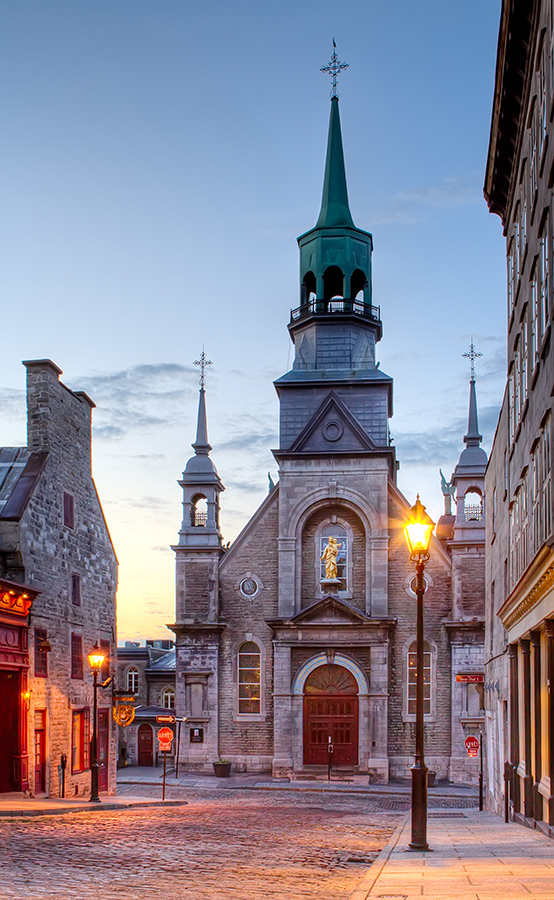
Crowning an ancient promontory above the Saint Lawrence River, once a campsite favoured by the Native peoples, a 300-year-old chapel, a museum of history and an archaeological site invite you to hear what they have to say about the people who founded Montreal. Through the achievements of Marguerite Bourgeoys, a woman of courage and compassion who lived in 17th-century Montreal, you will find yourself transported back through time to another world, that of our ancestors.
As we approached the Chapelle, we noticed that there was a line alongside it, so we took our place at the back. We soon noted that we were getting a lot of side eye from the others in line, which we thought was strange until it dawned on us that we were in the church’s soup line.
So we moved around to the front of the Chapelle. Once inside we gazed with utter amazement at a display of vignettes populated by dime-store dolls depicting the various activities of Marguerite-Bourgeoys. Representative samples:


Presumably, the Marguerite-Bourgeoys dolls look better these days. The Missus and I might not, but we’re just as much in love as when we took the aforementioned snapshots in a Montréal Métro photo booth.
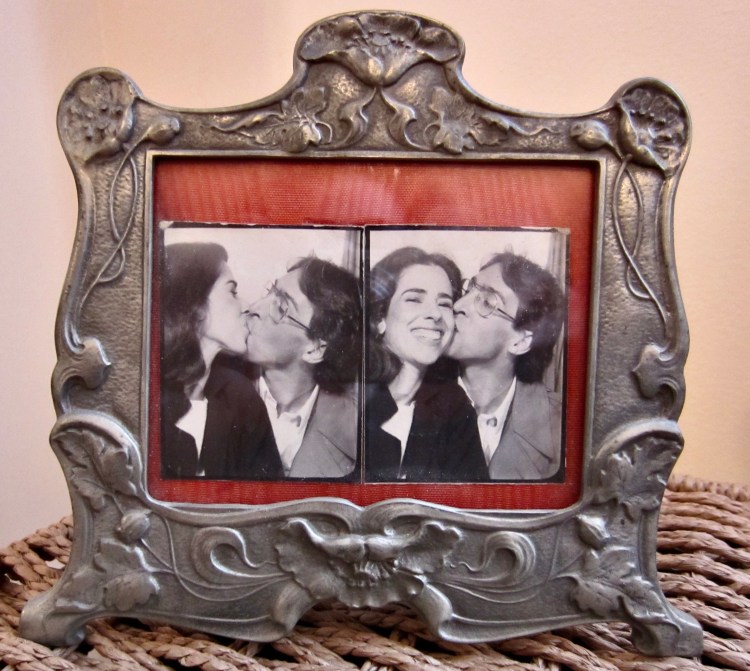
As our waitress at La Jalousie said, somesing sweet.
Postscript
In the mid-1980s I worked my way into writing regular columns for Adweek, which I produced from 1986 to 1994. (Details about how that came to pass here.)
In 1990 I wrote a piece which “casually mentioned that Larry Glick, a talk-show host at WHDH-AM in Boston, was going to broadcast his upcoming nuptials over the airwaves. His umpteenth marriage happened to take place in Las Vegas, which is certainly a charming venue for a wedding. If it’s on the radio, of course.”
I then proceeded to wax nostalgic “about the happy occasion of my own wedding to the Missus [in 1983], an event which was highlighted for many by the availability of cocktails during the ceremony. There was nothing sacrilegious about it, though, because we had a JP presiding. Or was it a J&B? Well, whatever.”
Kind of nuts graf:

Here’s the whole piece.
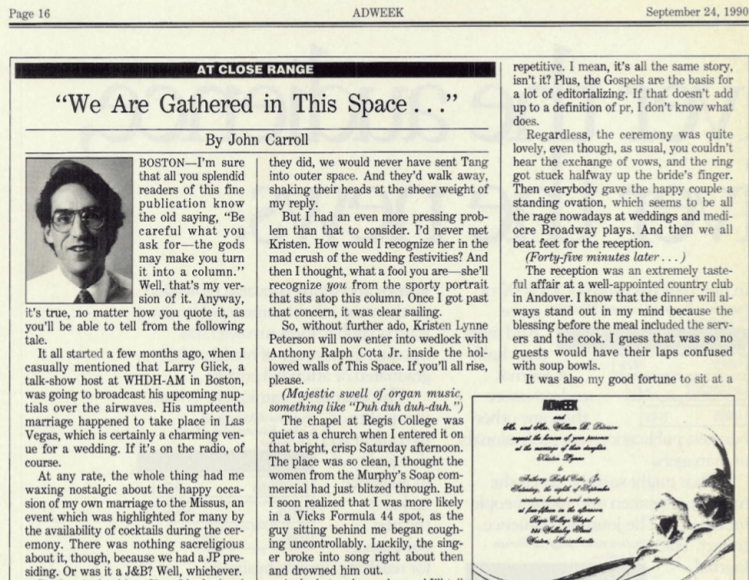

A shoutout to my splendid Adweek editor Greg Farrell, who was willing to board any amusement park ride I proposed.
Those nine years at Adweek were a total gas.
-
Prologue
It was an unmitigated disaster, and it was entirely my fault.
The Missus and I were finally making our maiden trip to Europe – first England, then France. The division of labor: She would organize our time in London, and I’d do the same for Paris.
Mais non.
Mind you, this was during the pre-Internet 1980s. That was no problem for the Missus, who is to travel planning what Winston Churchill and Franklin Delano Roosevelt were to the D-Day invasion.
Me, not so much.
I vaguely recall glancing at a few travel guides in our local bookstore and leafing through a French-English dictionary on the flight to London.
Our time there was terrific: I don’t remember where we went, but I do recall it was totally great.
Then there was Paris.
I had bupkis – no itineraries, no opening or closing times, no nothing.
The Missus was not amused. It hardly helped that Parisians didn’t need no stinking tourist dollars at the time, so they were routinely rude to both of us.
It got so bad we were accused of using counterfeit money at the ticket window of the Picasso Museum. Vous êtes forgeurs! the irate ticket-taker screamed, throwing the francs back in our faces. Shaken, we promptly went to the nearest banque and asked to change the large bill to smaller denominations. They had no problem cashing it.
Overall, the trip taught us this essential truth: The Missus was the planner and I was the flâneur.
And it’s been all good ever since.
The Missus:
First, for anyone who thinks the above term of endearment is remotely sexist, let me assure you it is not. One of the Mister’s favorite writers is sports columnist, journalist, author Ring Lardner, who used the term affectionately for his own wife. And under that moniker, I was quoted liberally in columns throughout my husband’s long career, always saying something pithy, funny or smart. Couldn’t have been more flattering.
It was also our private joke that while readers might picture the “Missus” in a housecoat and scuffy slippers, I am actually a fashion consultant and writer.
As to the aforementioned first trip to Europe, learning who does what best in any marriage bodes well for the future. We’ve now been the happiest of travel companions for over 40 years.
But it was on our honeymoon prior to that European vacation that we discovered a common travel quirk very few people share: we don’t take photos. Yes – unbelievable as it may sound – neither of us ever thought to pack a camera. To document the momentous occasion, we instead popped into a Photo Booth at the Montreal Metro receiving four charming snapshots 60 seconds later.
Even with camera phones today, we still don’t take pictures. A friend once admitted she spent more time framing the perfect photo than enjoying her trip experiences. We remember the best and worst of each trip because we were engaged at all times. Try it.

